
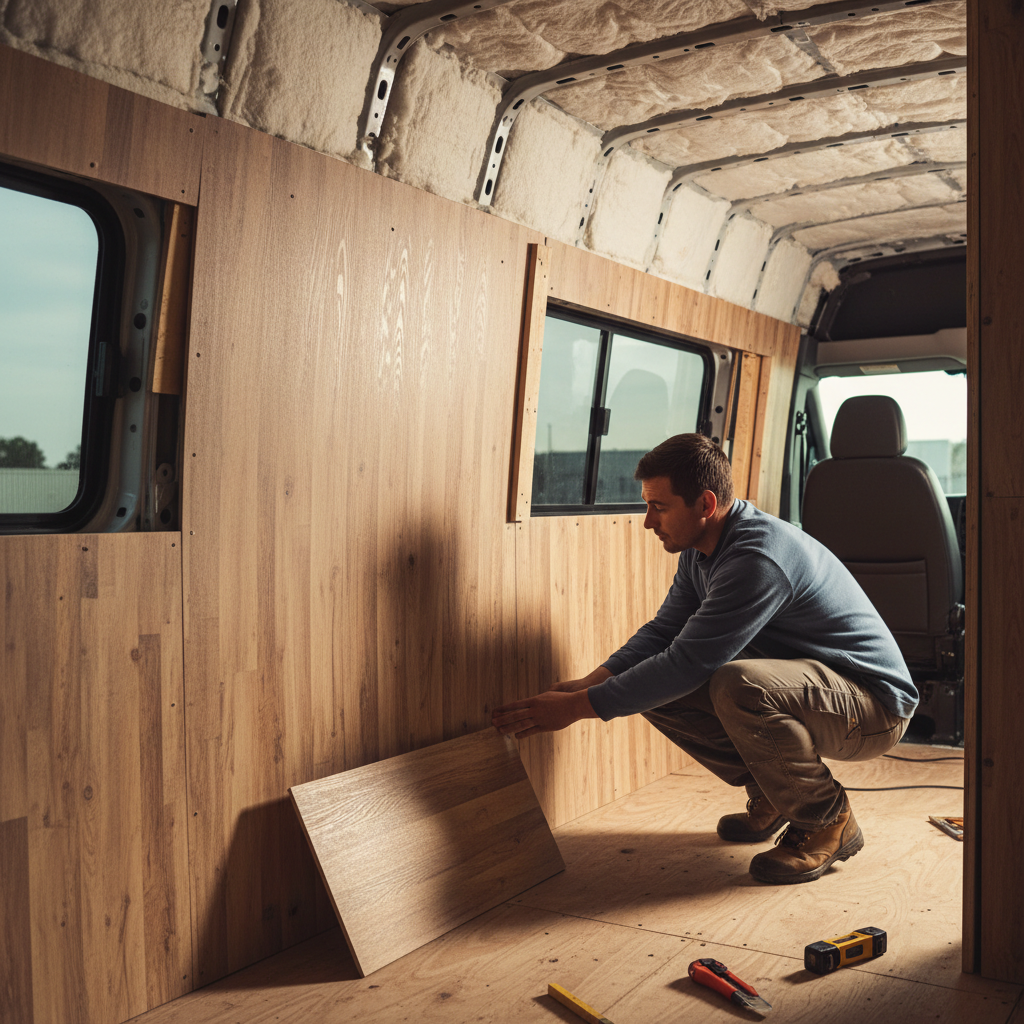















A new camper van conversion sits on dealer lots right now for anywhere from $80,000 to well over $150,000, and that number alone tends to end the conversation fast for anyone buying on a budget. But the used market tells a different story, and reading it correctly is harder than most van-life content lets on.
For a weekend warrior, the decision between used and new camper vans isn't purely about sticker price. It turns on three variables that rarely get addressed together: how many weekends per year you actually plan to go, what your realistic repair tolerance looks like, and whether the van you're considering has chassis mileage that predates or outlasts its conversion work.
That last factor is the one that bites people. A conversion built on a high-mileage commercial chassis can look stunning and price attractively, but the underlying drivetrain doesn't care about the cedar-paneled interior. Here's the tension worth sitting with before you go further: used vans can save you $30,000 to $60,000 upfront, but the savings evaporate quickly on the wrong chassis, and most sellers don't advertise which category their van falls into.
What Depreciation Actually Does to Van Pricing
New vans depreciate hard in the first two to three years. That's not a vague observation - it's the core mechanical reason the used market exists as a genuine value play for budget buyers. A professionally converted Sprinter or Transit that retailed at $95,000 new can sell for $55,000 to $65,000 at two to three years old with moderate mileage, assuming no major mechanical issues. The conversion components (cabinetry, electrical, insulation) don't depreciate the same way the chassis does, which is why used conversions often retain more functional value relative to their price than used passenger vehicles.
Or rather: it's not that conversions hold value better in all cases. It's that the depreciation is uneven. The chassis drops fastest. The conversion work drops more slowly if it was done well, and sometimes barely at all if it includes quality lithium battery systems or solar setups that would cost $8,000 to $15,000 to replicate today. What you're actually buying used is discounted chassis depreciation bundled with near-intact conversion value. That's the deal, when it's a good one.
The derived math matters here. If a new conversion costs $95,000 and depreciates to $62,000 after three years (roughly 35 percent), you've captured $33,000 in savings by buying used. Set aside a practical repair reserve of $3,000 to $5,000 for a well-maintained used van in that range, and your net savings still land between $28,000 and $30,000 compared to buying new. That calculation assumes the chassis inspection comes back clean. It falls apart completely if it doesn't.
This article is not for buyers considering full-time van life or long cross-country expeditions. The math and risk tolerance for that use case are genuinely different, and the recommendations here don't apply.
The Chassis Problem: Where Used Vans Go Wrong
Weekend warriors tend to underweight chassis condition because the visible parts of a conversion look so good. A builder who spent $25,000 on interior work isn't going to let the paint look rough, but they may have sourced a high-mileage commercial fleet van as the base. That's not inherently a problem, but it requires honest assessment.
For Ford Transit and Mercedes-Benz Sprinter vans, two chassis platforms that dominate the US conversion market, most experienced mechanics draw a practical line around 100,000 to 150,000 miles as the threshold for elevated repair risk. Below that range on a well-maintained example, you're typically looking at normal wear items. Above it, transmission service history, DEF system condition on diesel Sprinters, and timing chain or belt intervals become genuinely load-bearing questions, not optional curiosities. A pre-purchase inspection (PPI) by a mechanic familiar with the specific chassis costs roughly $150 to $300 and is the single highest-return action a used van buyer can take.
Buyers skip the PPI constantly. They get attached to the aesthetic, they're worried someone else will buy the van, and they rationalize that a seller who put good conversion work in wouldn't sell something mechanically compromised. That reasoning is a mistake. Conversion builders and van resellers are often separate people entirely, and the current seller may have bought the van knowing about a problem they've learned to live with. Get the inspection. Every time.
So what happens if you don't? A diesel Sprinter with a failed DEF/SCR system can trigger a limp mode that limits the van to around 5 mph. The repair bill for an injector or SCR catalyst replacement can run $2,500 to $6,000 at a shop. That single repair eliminates a year's worth of weekend trips at realistic camping budgets, and it's one of the more predictable failure points on older high-mileage Sprinters specifically.
When New Actually Makes Financial Sense
New vans have a real argument for a specific type of buyer, and that buyer isn't who most used-van advocates picture. If you're financing the purchase, intend to use the van 30 or more weekends per year, and have limited mechanical knowledge and no existing shop relationship, new has a compelling case. The warranty coverage on a new conversion from a reputable builder typically includes the chassis manufacturer's warranty (3 years/36,000 miles bumper-to-bumper on most US-market vans) plus the builder's own workmanship warranty on the conversion components, often one to two years.
That warranty has measurable dollar value. A weekend warrior putting 8,000 to 12,000 miles per year on a van will clear 36,000 miles in three to four years. During that window, any drivetrain issue gets covered. Any electrical fault in the conversion that traces to builder workmanship gets covered. You're not calling shops at 7 PM from a trailhead parking lot and pricing tow trucks.
The best alternative to buying used isn't buying new, strictly speaking. It's renting. Companies like Outdoorsy and RVshare have made peer-to-peer camper van rentals genuinely accessible, with rates in many US markets running $150 to $300 per night for a well-equipped conversion. If you're realistically going out 10 to 15 weekends a year, the annual rental cost at $200 average per night comes to $4,000 to $6,000. Amortized over five years, that's $20,000 to $30,000, which is competitive with the total cost of van ownership when you factor in insurance, storage, registration, and maintenance. The honest comparison isn't used vs. new. It's used vs. rent vs. new, and for genuinely occasional users, renting wins on pure math.
But renting doesn't satisfy the itch of having your own setup dialed in. That framing misses something. For many weekend warriors, the van isn't just transportation to a campsite. It's a project, a creative outlet, and a piece of equipment they've optimized over time. If that's your situation, the rental math is irrelevant because you've already decided you want ownership. Own that decision clearly and then optimize within it.
How to Buy a Used Conversion Without Getting Burned
What you'll notice when you start comparing used conversion listings is that price correlates poorly with actual quality. A $45,000 van from a known builder with service records beats a $55,000 van from a private seller with no documentation, almost every time. The documentation tells you what the price can't.
Request the full service history on the chassis before you discuss anything about the conversion. A seller who can't produce it isn't hiding something necessarily, but you're buying without evidence, which means pricing should reflect that gap. For professional conversions, ask for the builder's name. Most reputable builders in the US maintain customer records, and you can often verify the original spec and any warranty transfer terms directly with them.
The electrical system deserves particular attention. A weekend warrior running lights, a refrigerator, and phone charging needs a system sized correctly for that load. Check battery bank capacity (measured in amp-hours), inverter rating, and solar panel wattage. A 100Ah lithium battery with 200 watts of solar handles a weekend trip comfortably for moderate use. Undersized systems are common on budget builds, and upgrading them post-purchase costs real money. Check amp-hours, inverter size, solar capacity first.
The most common mistake I see prospective buyers make is negotiating on the interior while ignoring the electrical age. A two-year-old lithium system at 95 percent capacity is worth more than a four-year-old AGM system at 70 percent, even if the latter looks cleaner on paper. Ask for battery age and chemistry before you make an offer.
If you do nothing else in this process, do these two things: get the PPI from a chassis-specialist mechanic, and verify the battery bank's actual amp-hour capacity with a load test, not just the seller's claimed spec. Those two data points will tell you more about what you're actually buying than everything else combined.
The Real Budget Decision: Total Cost of Ownership
Sticker price is a bad proxy for what a camper van actually costs. The total cost of ownership (TCO) calculation for a weekend warrior should include acquisition, insurance, registration, storage if you don't have a driveway, annual maintenance, and the expected repair reserve. Let's run those numbers honestly.
A solid used conversion at $50,000 financed over five years at a typical auto loan rate in the current US market runs roughly $900 to $1,000 per month in principal and interest. Add full-coverage insurance (camper vans typically run $1,200 to $2,400 per year depending on state and coverage level), registration (varies widely by state but budget $200 to $500 annually), and storage if needed ($100 to $250 per month in most markets). Annual maintenance on a well-maintained used chassis runs $500 to $1,500 per year for a weekend-use vehicle. That puts realistic monthly TCO between $1,300 and $1,700, excluding major repairs.
A new conversion at $95,000 financed over the same term runs closer to $1,700 to $1,900 per month before insurance and storage. The warranty reduces expected repair costs in years one through three, but the spread between new and used TCO is still substantial. For a weekend warrior going out 15 weekends per year, the used van delivers roughly the same experience at meaningfully lower monthly cost, provided the chassis inspection was clean.
The temperament here matters: don't let the romance of a well-photographed new conversion override a TCO calculation that clearly favors used. A van that photographs beautifully but costs $800 more per month than a mechanically equivalent used option is a financial pain that compounds over time, not a lifestyle upgrade.
Making the Call
If the chassis has under 80,000 miles, passes a professional PPI, and comes with documented service history, the used van wins for a budget weekend warrior in almost every scenario. The depreciation savings are real, the functional gap versus new is narrow for weekend use, and the financial flexibility you retain by not overpaying on acquisition has genuine value.
If the chassis mileage is above 120,000 with incomplete records, or the seller can't name the builder or provide any conversion documentation, treat that van as a project vehicle requiring a project-vehicle budget. Adjust your offer accordingly or walk away.
And if you're going out fewer than 10 weekends a year, seriously price out rentals before committing to ownership. The math on that comparison is closer than most buyers want to admit.