














Van conversion specialists will tell you interior standing height before they discuss anything else, and there's a reason for that. Once you've spent a weekend bent at the hip in a van that looked fine on paper, the spec sheet becomes the only thing you trust.
Finding a small camper van with genuine headroom is harder than it sounds. Interior height varies by four to ten inches depending on roof configuration, and manufacturers routinely publish exterior measurements that flatter. A van rated at 75 inches of cargo height might deliver 68 inches of livable space once flooring and ceiling panels go in, and if you're 6'2", that gap is the difference between a functional home on wheels and a rolling chiropractor bill.
The tension nobody addresses clearly: the vans that pack the best amenities into a small footprint tend to sacrifice roof height to keep width manageable. You can have compact or comfortable, or you can pay attention to the three specs that actually determine which vans work for tall travelers and which ones look good only in brochures.
Why Interior Height Numbers Lie
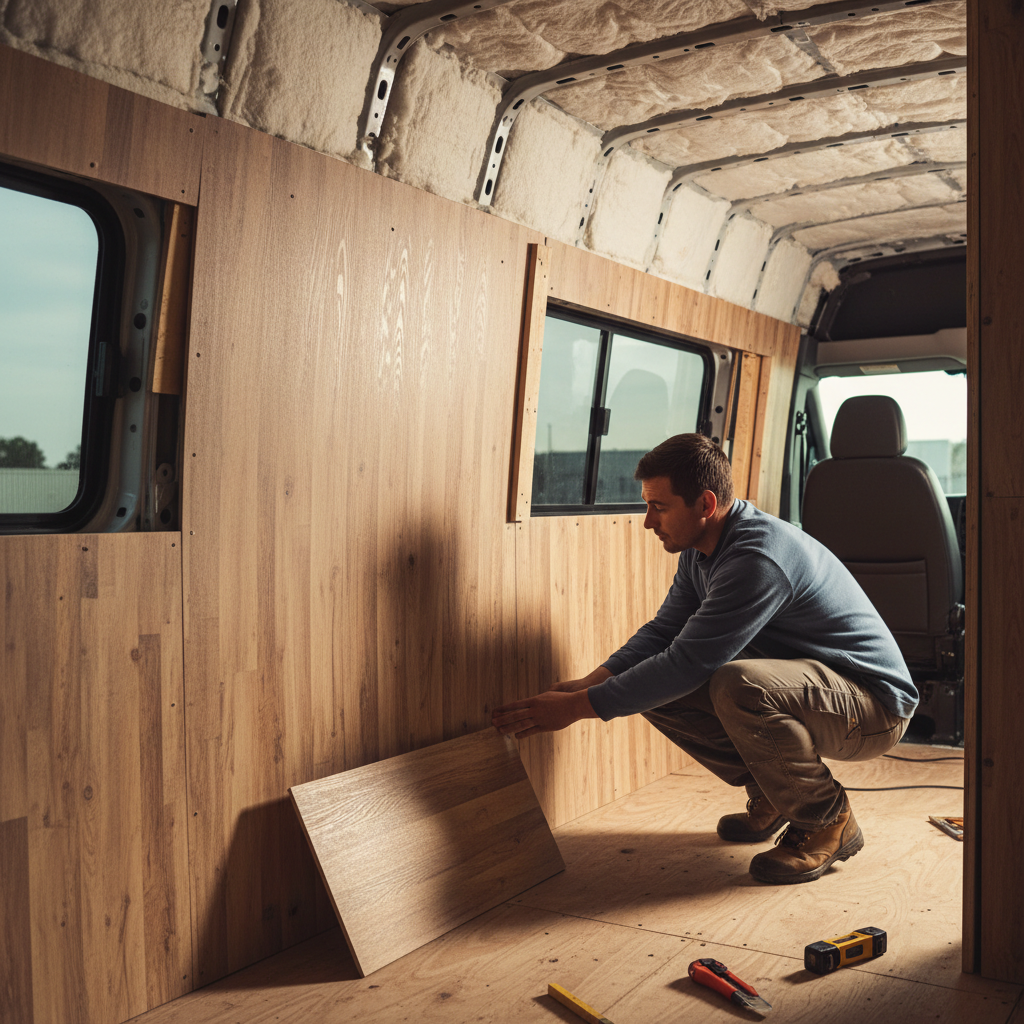
The measurement problem starts with how Ford, Mercedes, and Ram publish their cargo dimensions. High-roof designations describe the sheet metal, not the finished interior. A standard Transit high roof advertises roughly 81.5 inches of cargo height, but the livable headroom after a 1.5-inch subfloor and a 2-inch insulated ceiling panel is closer to 78 inches. That's still workable for most people up to about 6'4", but the number you found in a forum post was probably the unfinished cargo figure.
Or rather: the problem isn't just the raw number. It's that different vans lose headroom at different rates during conversion. The Mercedes-Benz Sprinter 170 high-roof loses less to conversion finishing than a Ram ProMaster 159 WB high-roof because the Sprinter's roof arch is flatter and builders can run ceiling panels without the compound-curve cuts that eat vertical space at the sides. That matters most if you're tall and broad-shouldered, because you're standing closer to the wall than a slender person would.
The three numbers that actually matter for a tall buyer are finished interior height at centerline, finished height at the shoulder-width position (roughly 18 inches from center), and sleeping platform length. A van can pass the centerline test and still leave a 6'3" sleeper with their feet pressed against a wheel well.
The Short List: Which Small Vans Actually Work
This article isn't a guide to full-size Class B motorhomes or purpose-built Sprinter luxury builds costing $150,000. It's for buyers looking at cargo vans under roughly 220 inches in overall length that can be converted or purchased as entry-level camper vans without a custom fabrication budget.
Three platforms consistently come up for tall buyers in the US market.
The Ford Transit 148 Extended High Roof delivers approximately 78 inches of finished interior height at centerline after a standard conversion build. At 219 inches overall length, it sits at the upper edge of "small" but fits in most standard parking structures. The sliding door opening is generous enough that a 6'4" person doesn't have to crouch-and-pivot to get in. Ford's parts network is the widest in the country, which matters for roadside repairs in rural areas.
The Mercedes-Benz Sprinter 144 High Roof is shorter at 212 inches overall and delivers comparable finished interior height to the Transit, typically 77 to 78 inches at centerline. The Sprinter commands a price premium of roughly $8,000 to $12,000 over a comparable Transit in base form, and diesel maintenance costs run higher outside major metro areas where independent European diesel shops are sparse. But the flat roof arch is genuinely friendlier to conversion builds, and used Sprinter van conversions hold value better at resale.
The Ram ProMaster 136 WB High Roof is the most compact option at around 201 inches overall and the most affordable entry point. Finished interior height lands around 75 to 76 inches at centerline, which works for people up to about 6'1" but starts to feel tight above that. The front-wheel-drive layout frees up floor space (no rear differential tunnel), which is a real advantage for bed platform design. A 6'3" buyer who can sleep at an angle gains more from the flat floor than they lose from the slightly lower ceiling.
If you want a comparison of how these three platforms stack up on the specs that matter for tall buyers, here it is:
| Van Platform | Overall Length | Est. Finished Interior Height | Max Bed Length (flat floor) | Relative Cost |
|---|---|---|---|---|
| Ford Transit 148 Ext. High Roof | ~219 in | ~78 in | Up to 90 in | Mid |
| Mercedes Sprinter 144 High Roof | ~212 in | ~77 - 78 in | Up to 88 in | High |
| Ram ProMaster 136 WB High Roof | ~201 in | ~75 - 76 in | Up to 84 in (angled) | Low |
The height figures above are practical heuristics drawn from common conversion build specs, not manufacturer certifications. Your finished dimensions will vary depending on insulation thickness, subfloor material, and ceiling panel depth. Verify measurements with your builder or against completed build logs for the specific roof configuration you're buying.
Bed Length: The Other Dimension Nobody Checks Early Enough
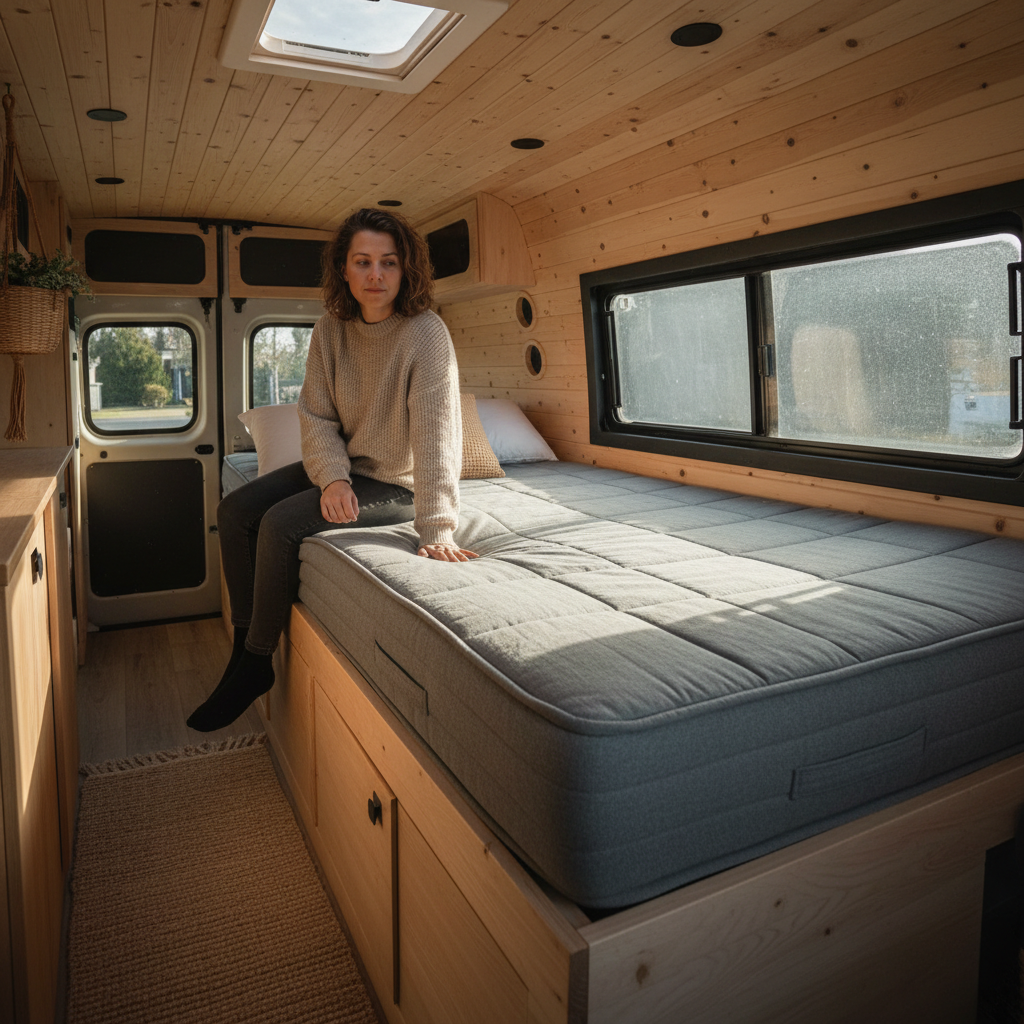
Most tall buyers obsess over standing height and then discover their sleeping platform is 78 inches long when they're 76 inches tall. That sounds fine until you realize a mattress compresses two inches and your pillow stacks another three. You need at least 82 inches of sleeping platform length if you're 6'3", and 84 if you want genuine comfort without your feet hanging.
The Transit 148 Extended wins this comparison outright. Its extra wheelbase allows platform builders to run a full longitudinal bed (head-to-tail along the van's length) up to 90 inches in many build configurations, which is the only layout that gives tall people room without compromise. The Sprinter 144 can hit 88 inches longitudinally with careful placement. The ProMaster 136 is tighter, but its flat floor (no rear differential hump) allows diagonal bed placement that can reach 84 inches, a layout that works well for solo travelers.
Buyers who skip the bed-length calculation early tend to discover the problem after they've already committed to a van. Measure the distance from the back doors to the bulkhead or front seat position before you buy, and do it with the wheel arch covers in place.
When the High-Roof Van Is the Wrong Answer
The high-roof platforms above are the right answer for most tall people who want to stand up inside their camper van. But there's a real scenario where that recommendation weakens: urban full-time living or regular parking in cities with low-clearance structures.
High-roof Transits and Sprinters typically clear between 9'2" and 9'6" with roof rack systems installed. Standard US parking garages are commonly built to a 7'0" or 8'2" clearance. That makes a high-roof van unusable in most urban structured parking, period. If you live in a city and plan to use your van as a daily driver or occasional overnight vehicle in urban areas, a mid-roof Transit or a low-roof ProMaster may be a better fit even if you have to sleep on a diagonal or modify your layout. A van you can't park where you live isn't a camper; it's a logistics problem.
The same constraint applies to ferry crossings and some covered campgrounds. Check clearances before you commit to a roof height. Tall people who ignore this trade-off and buy high-roof vans for urban use routinely end up parking blocks away from their destination (or paying for open-air lots at a significant premium). That's the cost of skipping the clearance check.
What to Actually Do Before You Buy
I'd start with the Transit 148 Extended High Roof as the default recommendation for tall buyers in the US who want the best combination of headroom, bed length, and parts availability. It's not the cheapest or the most glamorous platform, but it solves the most problems for the most tall people at a price point that leaves budget for the conversion itself.
Before you sign anything, run through these four checks: measure finished interior height in a completed build (not spec sheet cargo height), verify sleeping platform length against your height plus four inches, confirm your primary parking locations accommodate the roof clearance, and test the sliding door entry with your actual body if you're above 6'2".
The Sprinter is worth the premium if you prioritize resale value and plan to sell or upgrade within five years. The ProMaster earns its place for budget-conscious buyers under 6'2" who need urban parking flexibility. Neither of those is the wrong answer; they just serve a different buyer.
One more thing worth knowing: the conversion build quality matters as much as the van platform. A poorly built Transit with a thick subfloor and heavy ceiling insulation can deliver worse finished headroom than a well-built ProMaster. Ask every seller or builder for the finished centerline measurement on a completed build, not the factory cargo spec. That single number will tell you more than any brochure.