


A cargo van sitting empty at a rental lot costs roughly the same per day as a passenger van with three rows of seating, and that gap shapes everything about how your trip actually goes. You're planning a rental van weekend with kids and a dog, which means you're juggling vehicle capacity, a pet policy that varies by company and location, and a packing logic that most road-trip guides don't bother separating out. None of those variables work the same way twice.
The piece most families miss before booking is that pet fees and pet policies are not the same thing. A fee you can plan for. A policy that bars dogs entirely, or restricts to crates only, can cancel your trip on pickup day.
Van class matters too, and not in the obvious way. The question isn't just how many seats you need. It's whether you can get all three things into one vehicle simultaneously: seating, dog space, and enough gear storage that nobody is riding with a bag on their lap for six hours. That constraint is tighter than it looks on a spec sheet.
Choosing the Right Van: Passenger, Cargo, or Minivan
The decision between a passenger van, cargo van, or minivan is the single choice that determines whether the rest of your planning is easy or a constant workaround. Get it wrong and you're either cramped or paying for space you can't use.
Passenger vans, typically 12- or 15-passenger configurations from companies like Enterprise and Budget, give you seating for the whole family plus rear storage. The catch: with two adults, two kids, and a medium-to-large dog, that rear storage shrinks faster than the spec sheet suggests. A 15-passenger van has roughly 65 cubic feet behind the last row. That sounds generous until the dog's crate takes 24 of it.
Or rather: the crate isn't optional if your dog isn't reliably settled in a moving vehicle. An unsecured dog in a van is a safety issue, not a preference question. The American Kennel Club recommends crash-tested crates or harnesses rated for vehicle use, and that recommendation exists because an unrestrained 60-pound dog becomes a projectile in a sudden stop.
Cargo vans are a different calculation. A standard cargo van, like a Ford Transit or Ram ProMaster, gives you the driver cab and open cargo space. No rear seats. That works if you're traveling with one or two kids who can share jump seats or if you're willing to build out a sleeping platform. It does not work for a family that needs five seatbelted passengers and a dog. Don't rent a cargo van thinking you'll improvise seating. You can't.
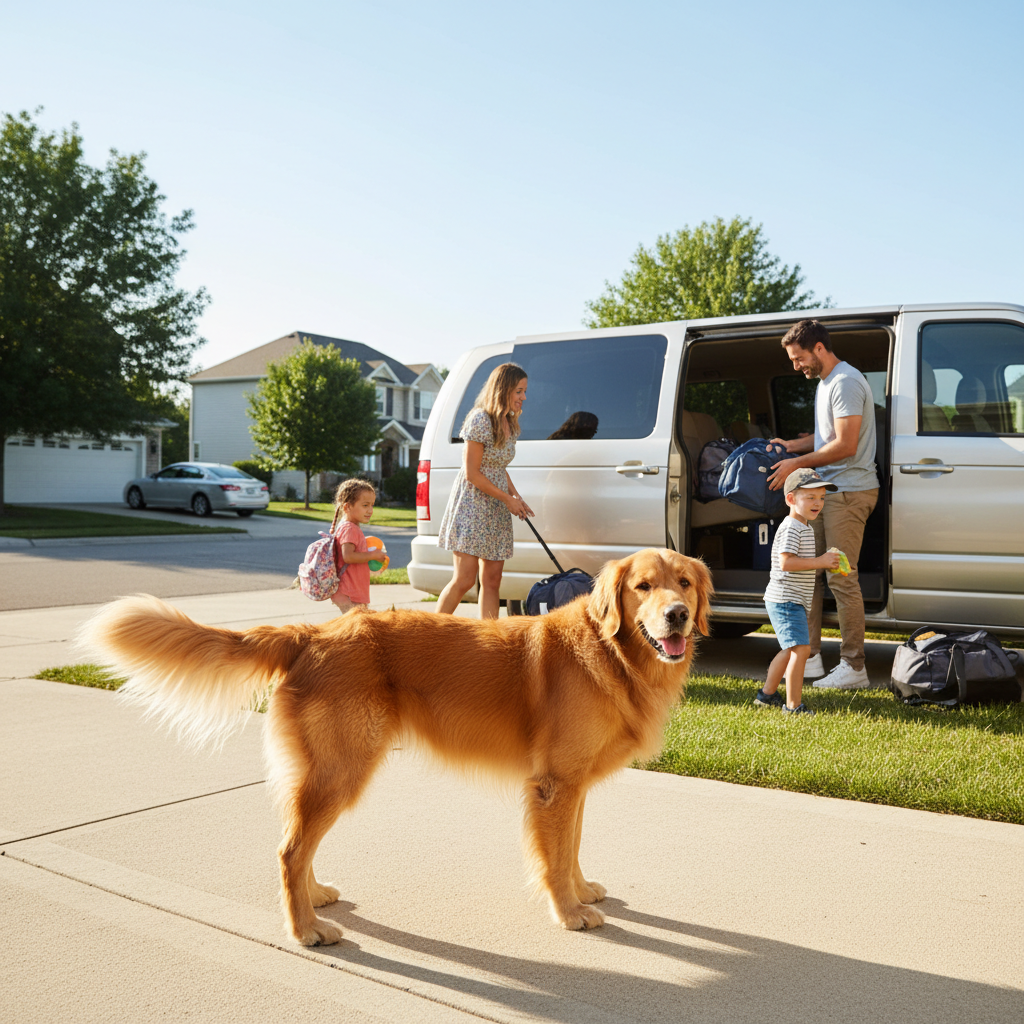
Minivans split the difference for smaller families. If you're two adults and one or two young kids with a dog under 50 pounds, a minivan from Enterprise or Hertz often costs $40 to $80 less per day than a passenger van and carries more than enough. The folding third row creates rear cargo space that fits a soft-sided crate, a weekend bag per person, and a cooler without stacking. For families of three or four, this is usually the right answer. Check Enterprise's pet policy for your pickup location before booking, since local franchises sometimes set their own rules on top of the national policy.
The practical shorthand: count your passengers, then add 25 cubic feet per large dog crate and 15 per medium. If your passenger van's rear cargo zone covers that math, you're fine. If it doesn't, you're pulling seats or leaving gear behind.
Pet Policies: What to Confirm Before You Book
Rental companies' national pet policies and their actual on-the-ground enforcement are two different things. This is the part that burns families most often.
Enterprise generally allows pets in its vehicles but charges a cleaning fee, often in the range of $250 or more if the vehicle requires detailing. That fee isn't always disclosed upfront at booking; it shows up on return. Budget and Avis have historically been less permissive, and their policies vary by franchise location. Hertz's policy has shifted over time and is worth confirming directly with the specific branch, not just the 800 number. National and Alamo operate under similar Enterprise Holdings policies but may apply them differently at airport versus neighborhood locations.
Three things to confirm before you show up with your dog:
- Does this specific location allow pets, and is there a fee? Get it in writing or via email confirmation.
- Are there breed or size restrictions? Some locations restrict breeds classified as aggressive by local ordinance.
- Is a crate required, or is a harness sufficient? This affects how you pack.
Buyers skip the location-specific call until they're burned by it. The national customer service line will give you the corporate policy. The branch manager is the one who actually decides what happens when you show up with a 70-pound Labrador.
If you can't confirm the pet policy in writing, book through a company that lists pet fees as a line item during checkout. That transparency tells you the system is set up to handle it, not just tolerate it.
Packing the Van: A Logic That Actually Works
The failure mode for van packing with kids and a dog isn't bringing too much. It's loading in the wrong order and spending the first rest stop completely reorganizing.
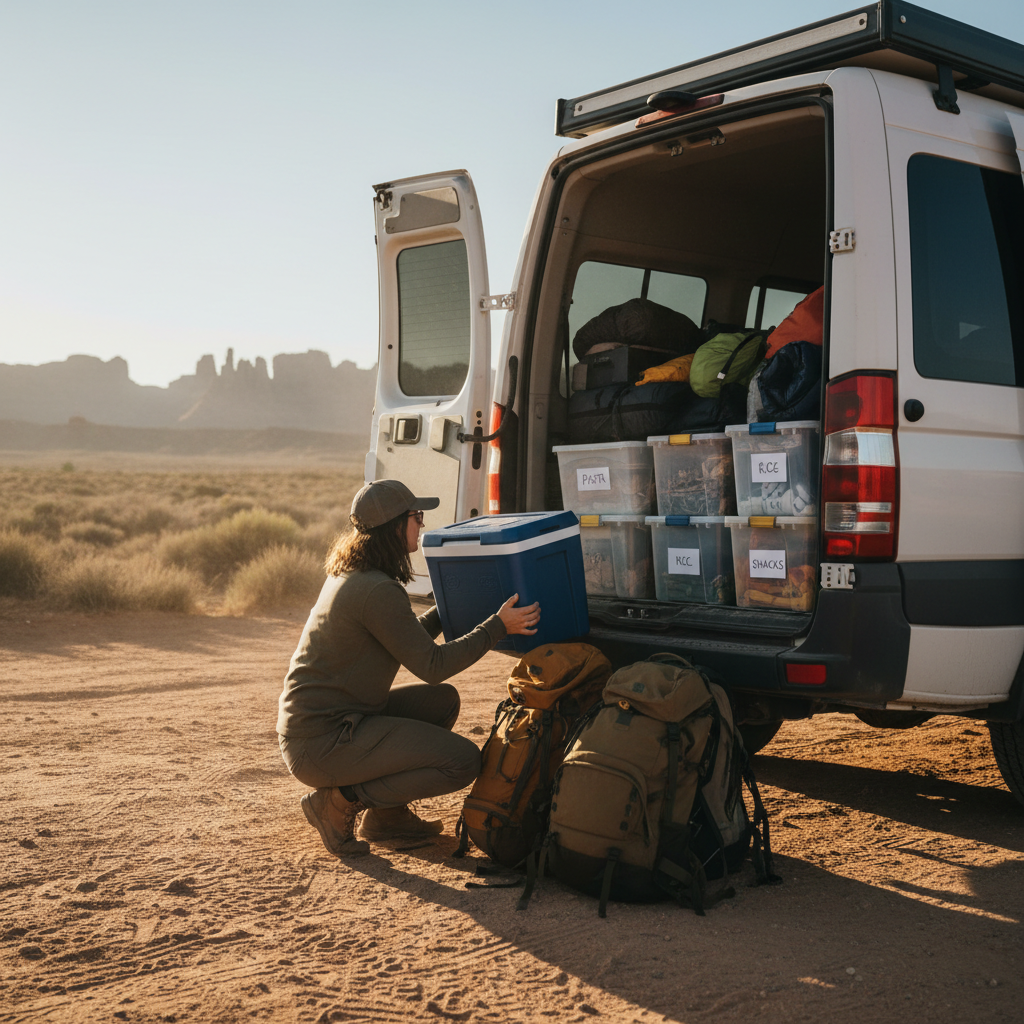
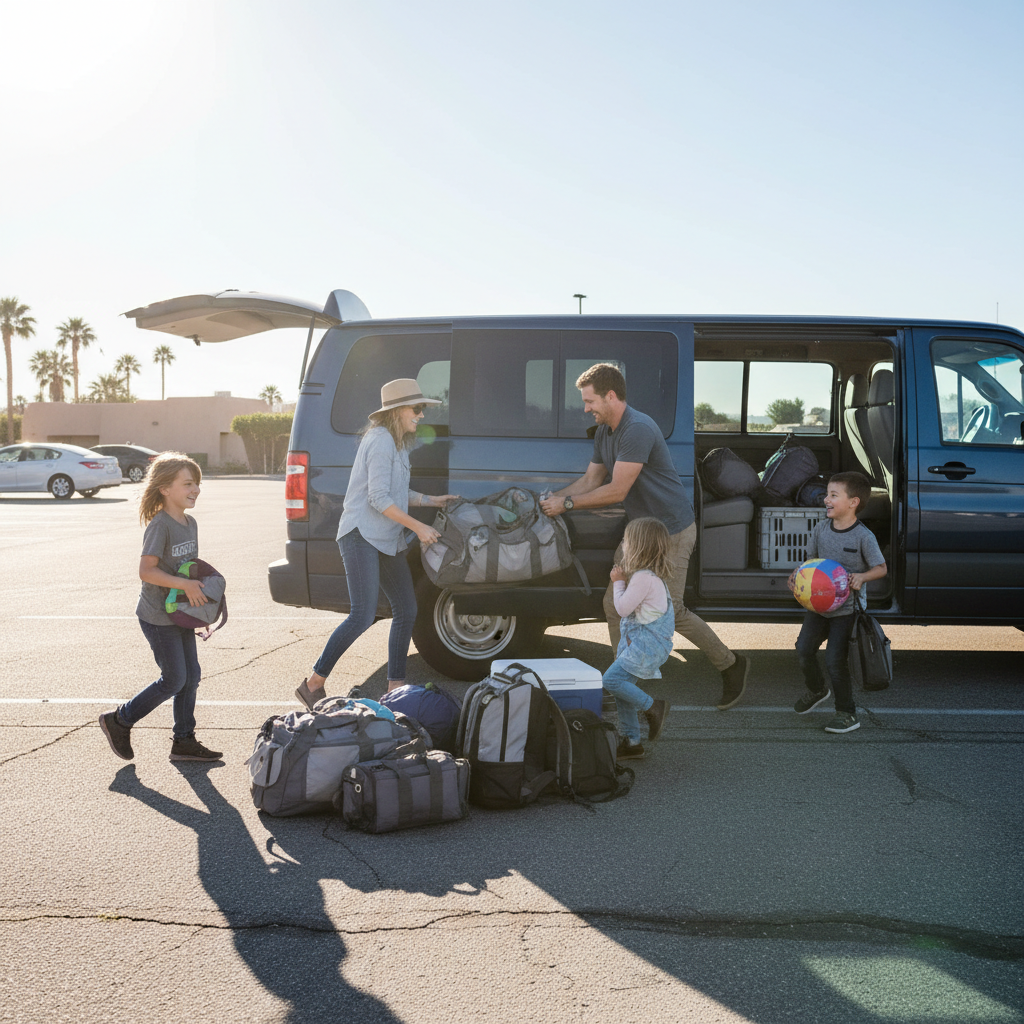
Load in reverse priority: the things you need last go in first. Weekend bags and sleeping gear go in against the bulkhead. Then the dog's gear: crate, bed, food, and water bowls. Kid activity bags and snacks go in last, within reach of the passenger doors. The dog's water access point should be reachable from the rear without moving anything else.
What you'll notice when you actually lay it out on the driveway before loading is that the crate placement drives everything. The crate is the least flexible object. It can't be compressed, it shouldn't be stacked on, and it needs to be positioned so the dog isn't riding facing backward through hard braking. Place it first, then build around it.
Kid packing for a weekend van trip runs leaner than most parents expect. Two changes of clothes per day is the default, but for a two-night trip, one set per day plus one extra each is enough. What you actually need more of: wipes (two full packs minimum), a second changing outfit for each kid that lives in the cab, not the cargo area, and a bag of activities per child that doesn't require a flat surface. Coloring books require a flat surface. Audiobooks do not.
A common guideline for road trip packing: if you need two trips to carry everything from the front door to the van, you've overpacked. That's not a hard rule, but it's a useful pressure test before you start loading.
Don't skip the overnight bag that lives in the cab. One bag per adult with tomorrow morning's essentials: phone charger, medications, dog leash, and anything you'd need if the cargo area were inaccessible. At a motel stop with two tired kids and a dog, you don't want to open the back of the van twice.
On the Road: Routines That Keep the Trip From Unraveling
A weekend van trip with kids and a dog runs on stops, not miles. The planning failure is treating it like a driving trip instead of a sequence of structured breaks.
Dogs need a real stop every two to three hours. Not a parking-lot bathroom break where the dog gets walked in a circle for 90 seconds. A stop with ten minutes of actual movement, a water drink, and a chance for the dog to decompress. Kids traveling under ten benefit from roughly the same interval. These stops overlap, which means you can plan one stop per two-to-three-hour segment that serves everyone instead of stopping separately for kids and again for the dog.
That framing misses something. The stop isn't just biological. It's the pressure-release valve that determines whether the second half of the drive is manageable or miserable. A 15-minute stop with a dog run, a snack, and a chance for kids to run burns off enough energy to buy you another two hours of relative calm. Skip it to save time and you'll lose more than that fighting the back seat.
Rest area locator apps like iExit and Rest Stops USA show which rest areas have dog-walking areas versus which are fuel-only. Pre-selecting two or three stops before you leave keeps you from improvising at 4 PM when everyone is tired and options are limited.
Keep the dog's feeding schedule as close to normal as possible on travel days. Motion sickness in dogs is real and more common than most owners realize, and a full stomach makes it worse. If your dog has a history of car nausea, talk to your vet before the trip. This is one call worth making, because cleaning a van interior with rental-grade supplies at a rest area is exactly as bad as it sounds.
Where the Plan Weakens: Conditions That Change the Math
This guide assumes a dog that travels reasonably well, kids who are past the infant stage, and a trip distance under six hours one way. If any of those conditions don't apply, the recommendations above need adjustment.
A dog with severe travel anxiety is a different trip. Anti-anxiety medication prescribed by your vet changes the rest stop schedule and the dog's energy budget, and it means you need a crate, not just a harness, because a sedated dog needs full lateral support. Don't wing this. Call your vet, describe the trip length, and get a plan in writing. An anxious dog in a rental van for four hours with two kids is not a minor inconvenience.
Infants and toddlers change the vehicle equation significantly. Car seat installation in a 15-passenger van is not always straightforward, and the rear bench geometry on some vans makes a rear-facing infant seat impossible to install correctly per NHTSA standards. Check the van model's car seat compatibility before booking, or call the rental company and ask which vehicle class supports rear-facing installation in the second row. This is load-bearing information, not a preference.
And if you're planning this trip with a dog you've never traveled with before, a weekend in a rental van is a high-stakes first test. Run a trial: a two-hour round trip with the dog in a crate or harness before the booking is final. You'll learn more in that drive than in any amount of reading. Skip that trial run and you might discover on the highway that your dog doesn't just dislike car travel. It hates it.
The Weekend Logistics: Accommodations and What to Book First
Pet-friendly accommodation for a family of four plus a dog has gotten easier in recent years, but the inventory is still thinner than general availability. Book the dog-friendly lodging before you finalize the route, not after. The accommodation is the constraint. The driving route bends around it.
Pet-friendly chains with consistent national policies include La Quinta (historically no pet fees at many locations), Kimpton Hotels (no size or breed restrictions, no pet fees), and Motel 6 (allows pets at most locations, typically no pet fee). Policies change, and La Quinta's post-merger terms under Wyndham have shifted at some properties, so verify at booking. Airbnb and Vrbo pet-friendly filters work well for a family that needs space, a yard, and a kitchen. The yard matters more than it sounds when you're arriving at 7 PM with a dog that hasn't had a proper run since lunch.
I'd start with Airbnb for this trip type, specifically filtering for fenced yard and full kitchen. A fenced yard eliminates one coordination problem at every outdoor dog break. A kitchen means you control dinner timing instead of managing a restaurant with tired kids and a dog in a hot van in the parking lot.
Book refundable rates where you can. A weekend trip with a dog and young kids has more single points of failure than an adult trip. A sick kid Thursday night changes everything. The $15 difference between refundable and non-refundable is cheap insurance.
Before You Drive Away: The Pre-Departure Checklist
The rental van pickup is where the trip either starts right or starts messy. A few checks at the lot take less than ten minutes and prevent most of the avoidable problems.
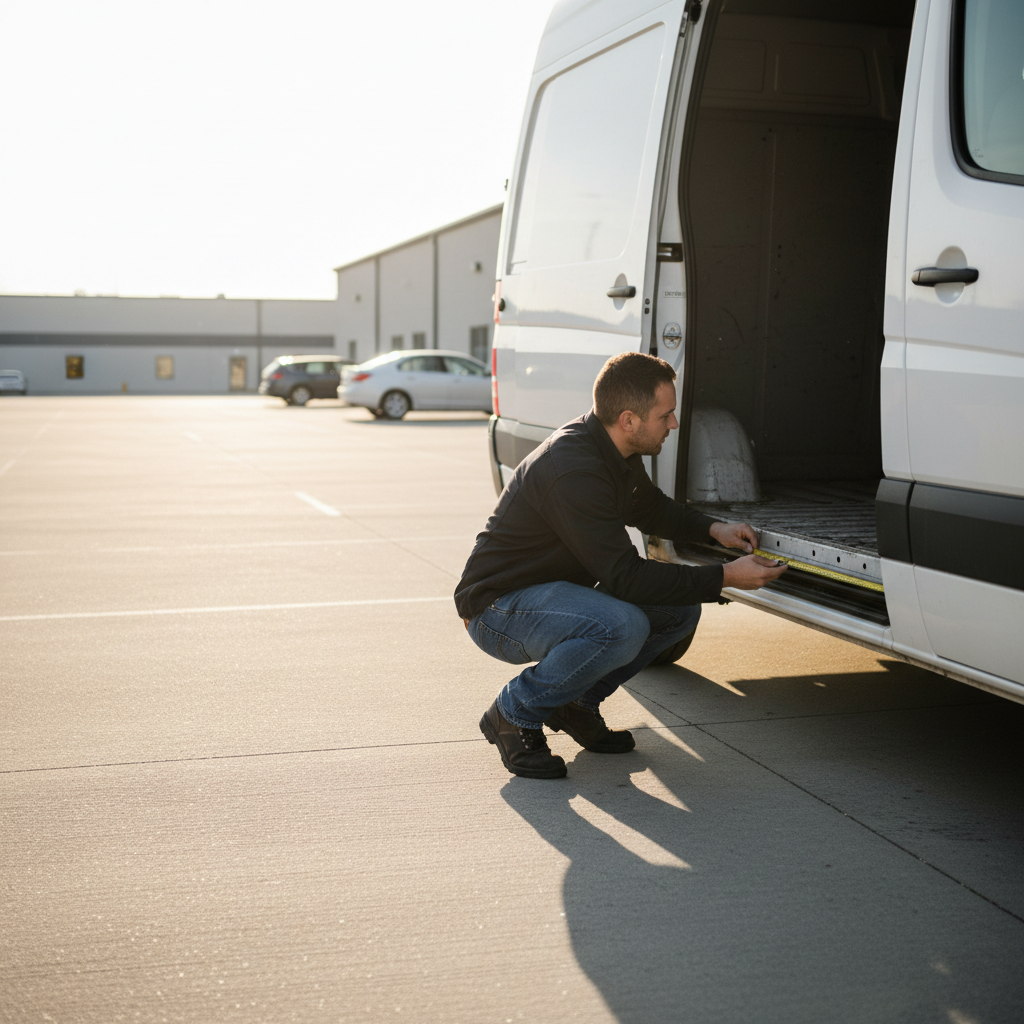
Document the interior with photos before loading anything. This is standard rental practice, but most people skip it on cargo vehicles because the interior looks empty anyway. A rental company claiming dog damage on an interior that was already scratched isn't a hypothetical. It happens. A timestamped photo record from before you loaded is your evidence.
Test the sliding door and rear cargo door before you put anything in. A stiff or broken rear door is a minor annoyance on a furniture haul and a significant problem when you're trying to open it one-handed at a rest stop while a kid needs the bathroom and the dog is pulling toward a tree.
Check the fuel grade. Most passenger vans run on regular unleaded, but confirm at pickup. The difference between regular and premium on a weekend fill-up in a 15-passenger van is roughly $8 to $15 depending on fuel prices in your region. Not significant. But finding out you've been fueling wrong on return is a headache you don't need.
Confirm the return policy on pet hair. Some locations will waive the cleaning fee if the interior is reasonably clean; others apply it automatically for any dog rental. Knowing which you're dealing with lets you decide whether a $25 handheld vacuum at the destination is worth it. It usually is.
Final Moves Before You Go
If you've confirmed the pet policy in writing, chosen the right van class for your actual passenger and cargo math, and booked refundable accommodations with a fenced yard, you've done the work that prevents the worst outcomes. Book the accommodation first. Then pick the van. Then plan the route around the stops, not the other way around.
Families who skip the pet policy confirmation and just show up hoping for the best don't always lose. But when they do lose, they lose the whole trip at the rental counter before they've driven a mile. That's a recoverable situation only if you have a backup plan, and most people don't.
So confirm in writing, load the crate first, and stop more than you think you need to. The trip runs on those three decisions.