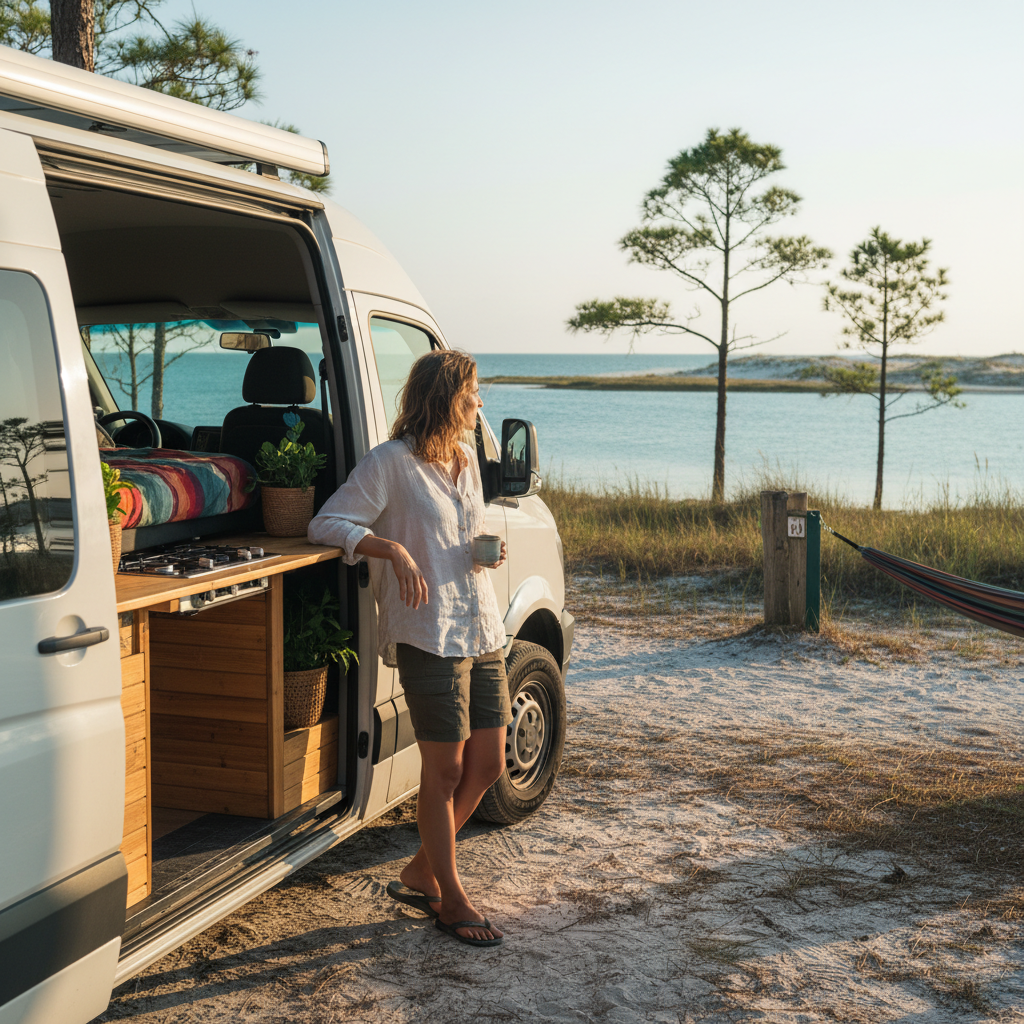
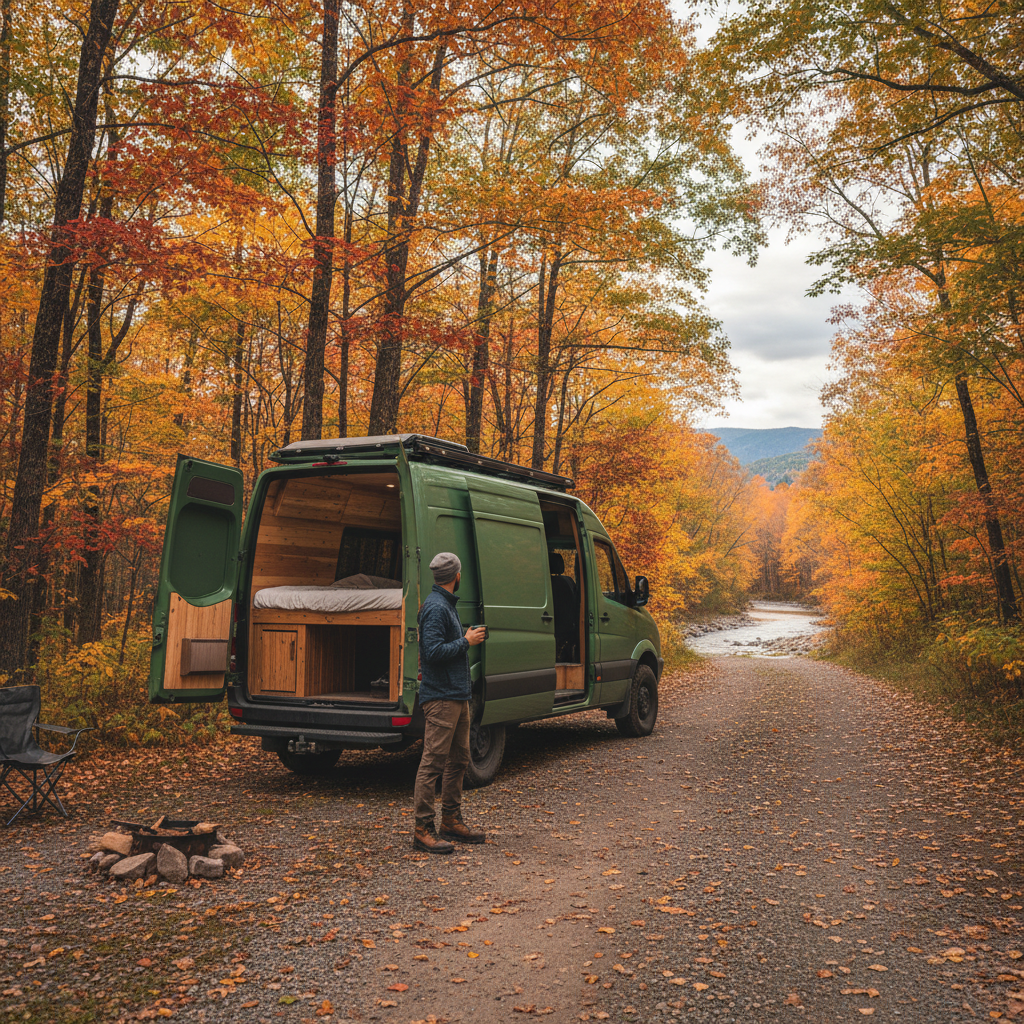
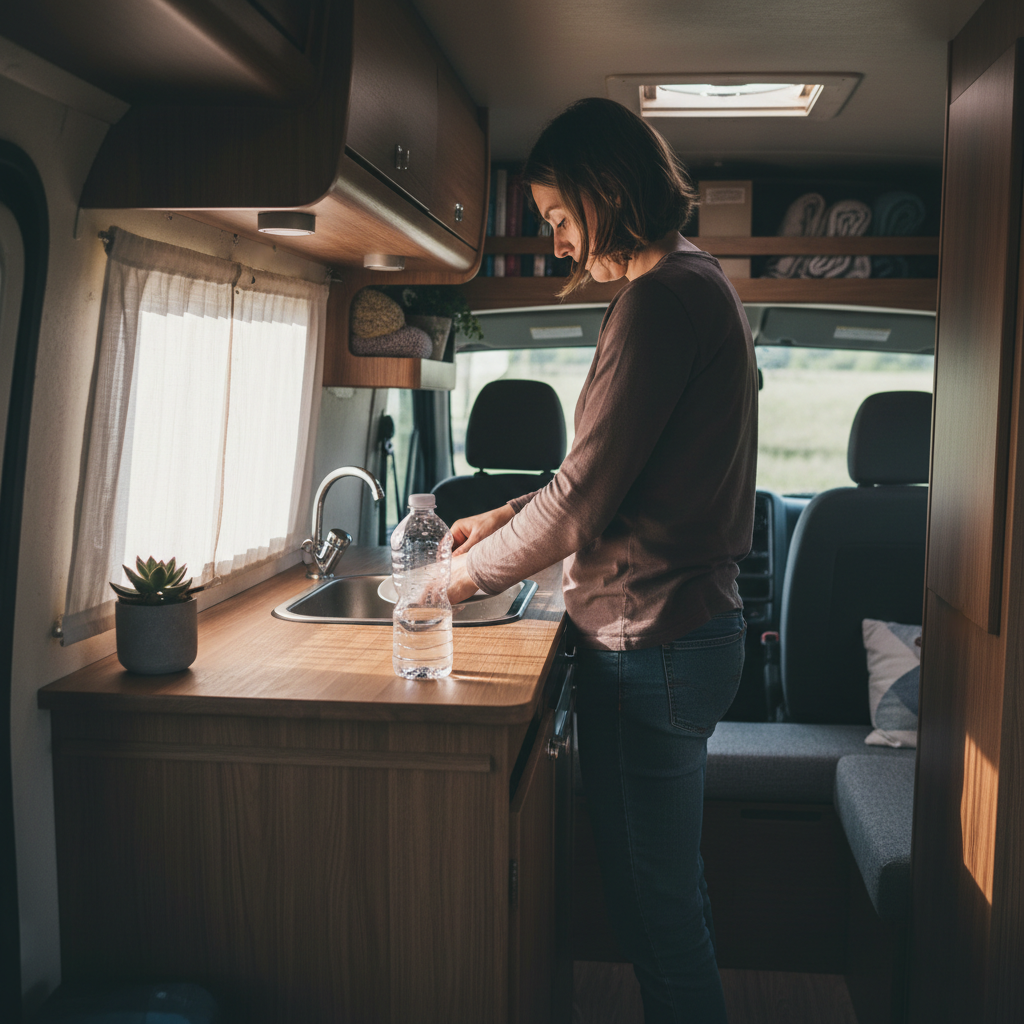
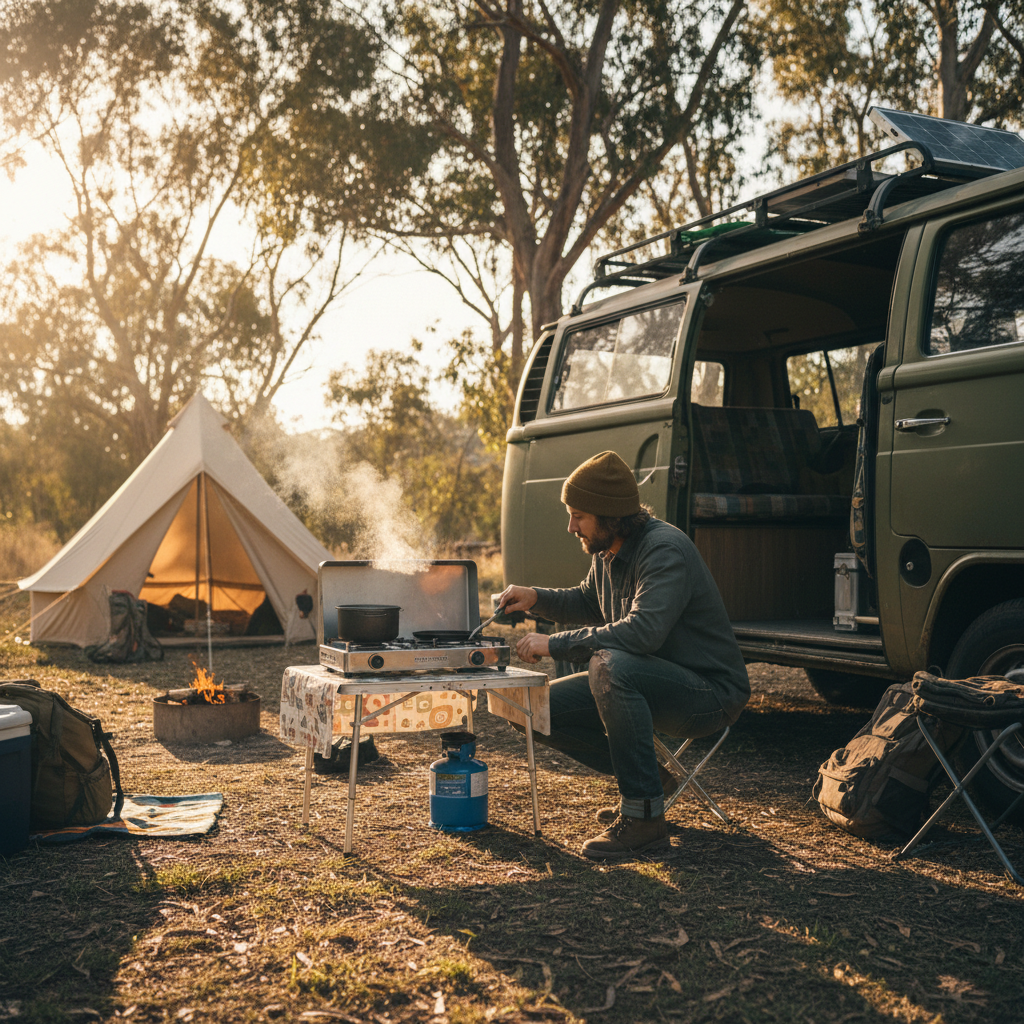

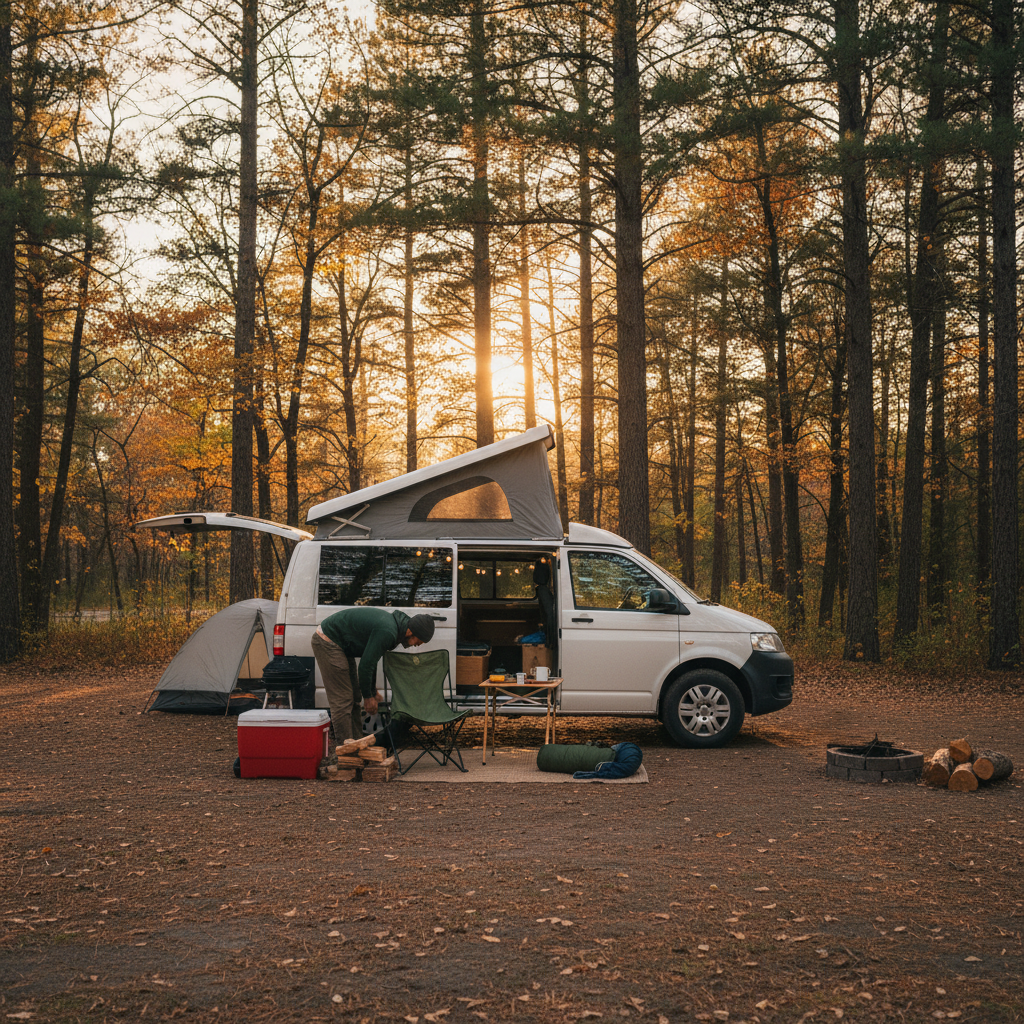
Camper van rental companies in the US hand over the keys without handing over a packing strategy, and that gap costs first-timers more than they expect. You'll figure out quickly that a weekend in a van is less like a road trip and more like moving a small apartment to a campsite for two nights. The stakes aren't huge, but the discomfort of getting it wrong is very real.
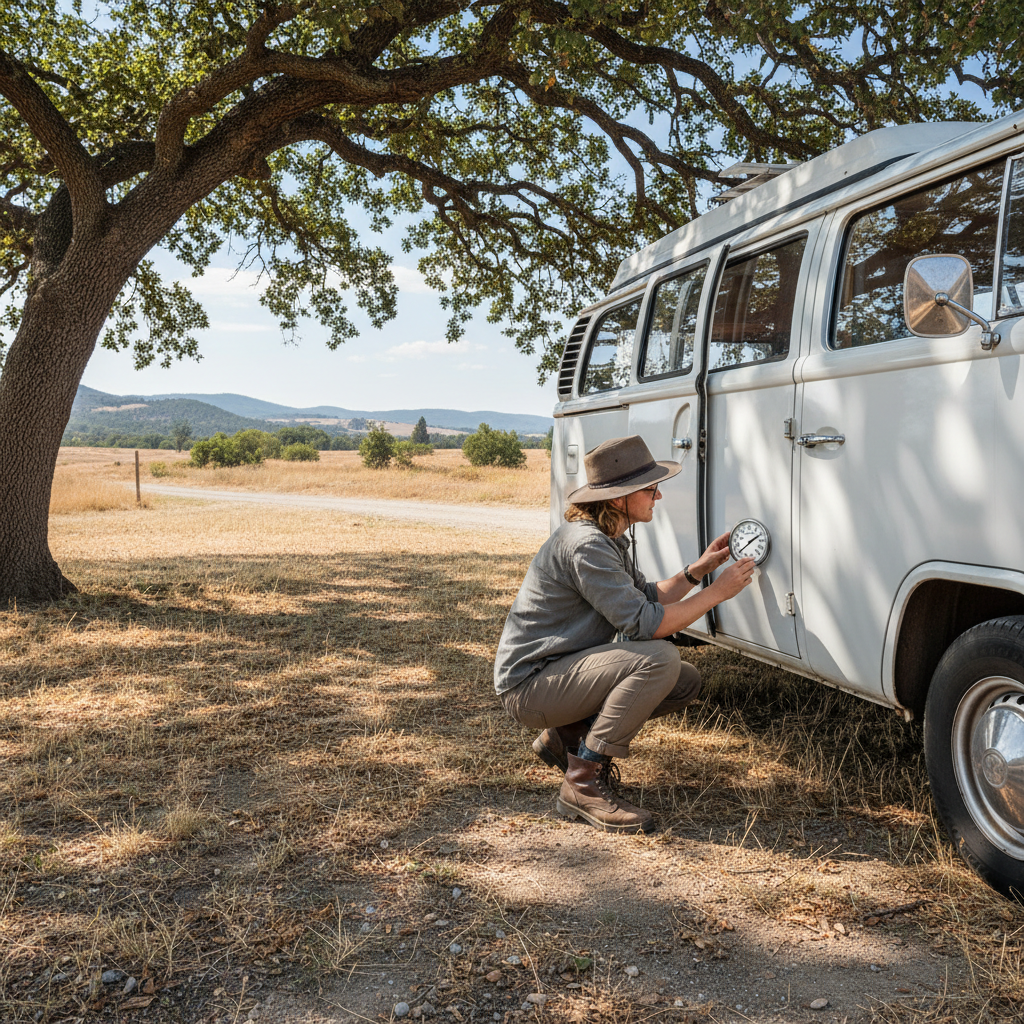
What you actually need depends on three things most generic lists ignore: whether your campsite has electrical hookups, what size van you rented, and the overnight low where you're headed. Pack for a 70°F California coast weekend the same way you pack for a 35°F Rocky Mountain trip and you'll be buying emergency blankets at a truck stop. That's not a hypothetical.
There's also a tension here that most renters don't see coming: the instinct to overpack fights directly against the van's limited storage. Bring too much and you spend the weekend rearranging gear instead of enjoying the trip. The constraint is the point, and learning to pack inside it is what separates a good first rental from a miserable one.
What the Rental Company Actually Provides (and What It Doesn't)
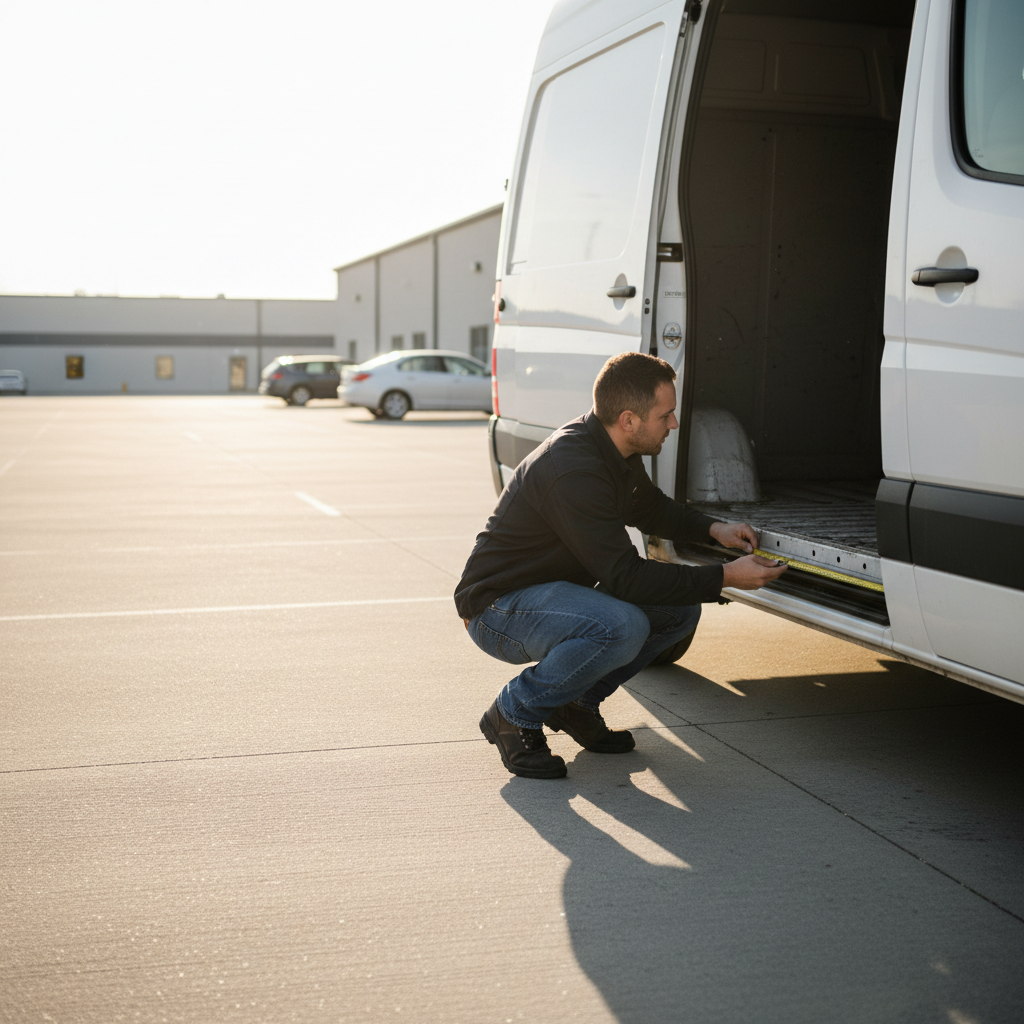
Before you build a packing list, find out what your specific rental includes. This varies more than people expect. Companies like Outdoorsy and RVshare connect you with private owners whose kits range from fully stocked to completely bare. Fleet rental companies such as Escape Campervans and Jucy typically include bedding, a basic kitchen kit, and camp chairs. Private owner rentals on peer-to-peer platforms often list inclusions in the vehicle description, but those descriptions aren't always complete.
Call or message the owner before you pack. Ask four specific things: Does the van include bedding and pillows? Is there a kitchen kit with cooking utensils? Does it have a portable toilet or access to a cassette toilet? And what's the propane situation? Showing up to find an empty propane tank is a common first-timer problem, and one that a two-minute message prevents entirely.
What almost no rental includes: a first aid kit, your personal toiletries, a reliable phone mount for navigation, and any food. Those four go on every list regardless of what the van provides. So does a power bank rated at least 20,000 mAh if you're camping without electrical hookups, since running your phone off the van's USB port while the engine is off drains the house battery faster than renters realize.
The Packing Framework: Divide by Category, Not by Bag
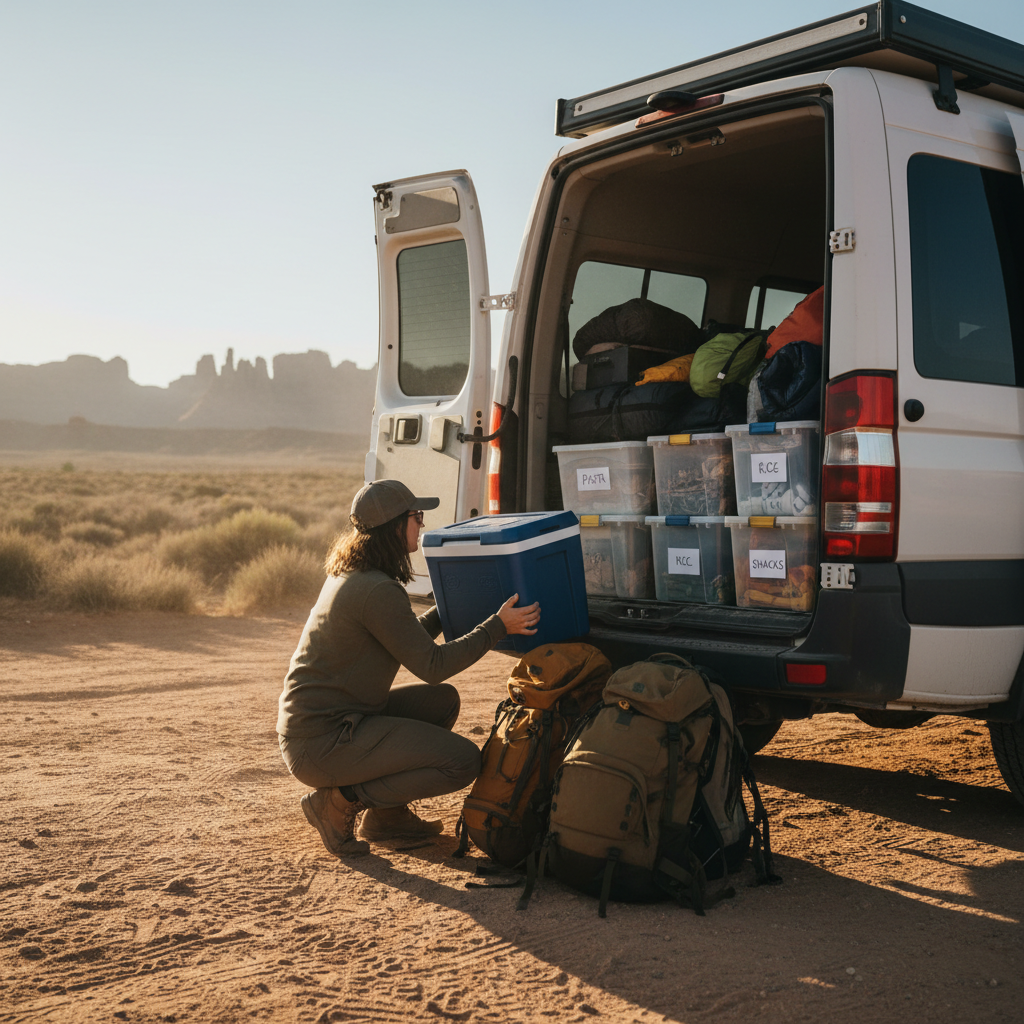
The single most useful thing I'd tell a first-time renter: organize your gear by use category before you touch a bag. Vans don't have closets. What you can't find in thirty seconds you'll dig for in the dark, and that's where frustration starts. Think in four zones: sleep, cook, clean, and personal. Everything gets assigned to one zone before it gets packed.
Here's the honest priority stack for a two-night trip. Sleep gear comes first because a bad night in a cold van is the fastest way to swear off van camping forever. Cooking gear comes second because eating out defeats most of the cost advantage of renting a van in the first place. Cleaning gear is third. Personal items last, and ruthlessly edited.
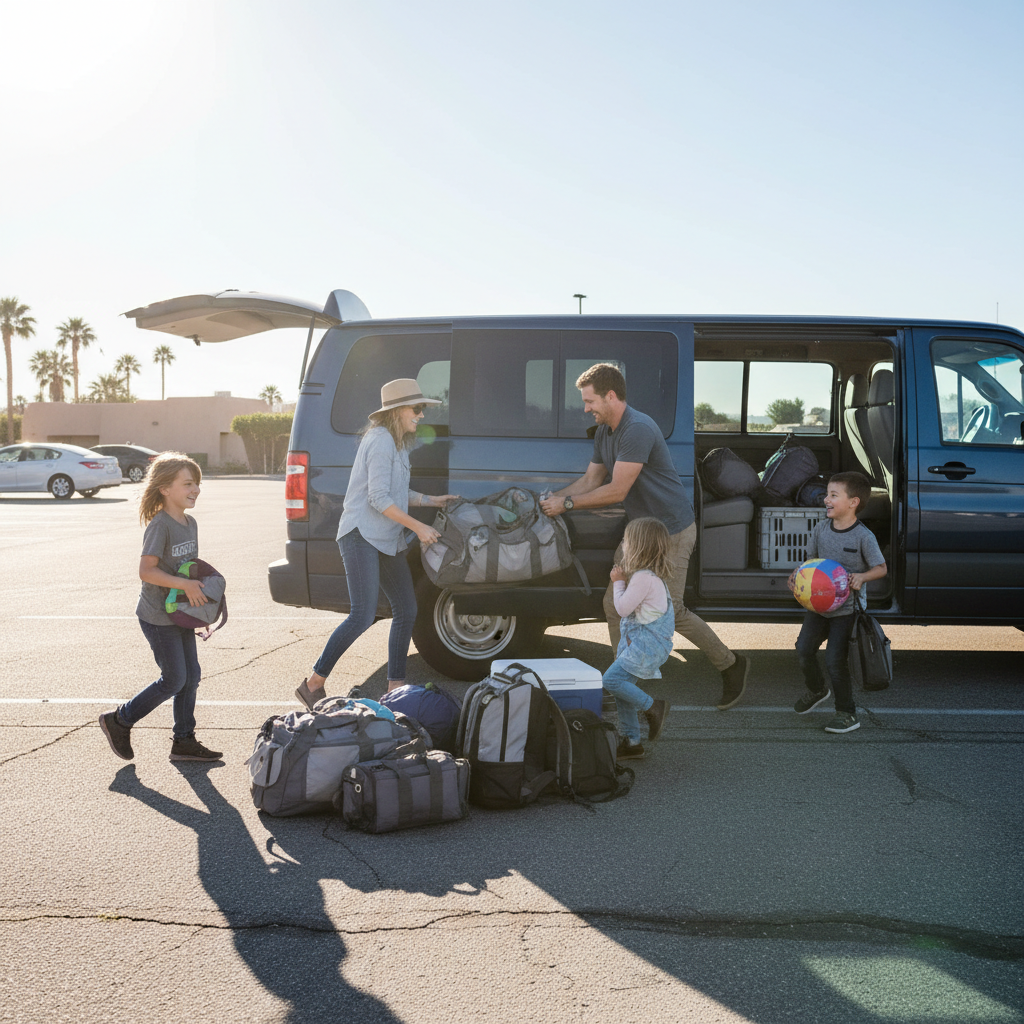
Or rather: ruthlessly edited means something specific. For a weekend, two changes of clothes plus one layer you won't wear unless the temperature drops ten degrees below forecast. That's it. The biggest packing mistake first-timers make isn't forgetting something critical; it's bringing a full suitcase into a space that has no room for one. A duffel bag that fits under the bed platform is the right container, not a hard-shell roller.
A few items that routinely get skipped until they're desperately needed: a small broom and dustpan (sand and dirt migrate into vans fast), a headlamp with fresh batteries per person, a bottle opener, and a doormat. That last one sounds absurd until you've tracked mud into a 60-square-foot living space at 10 PM.
Sleep System: The One Area Where You Cannot Improvise
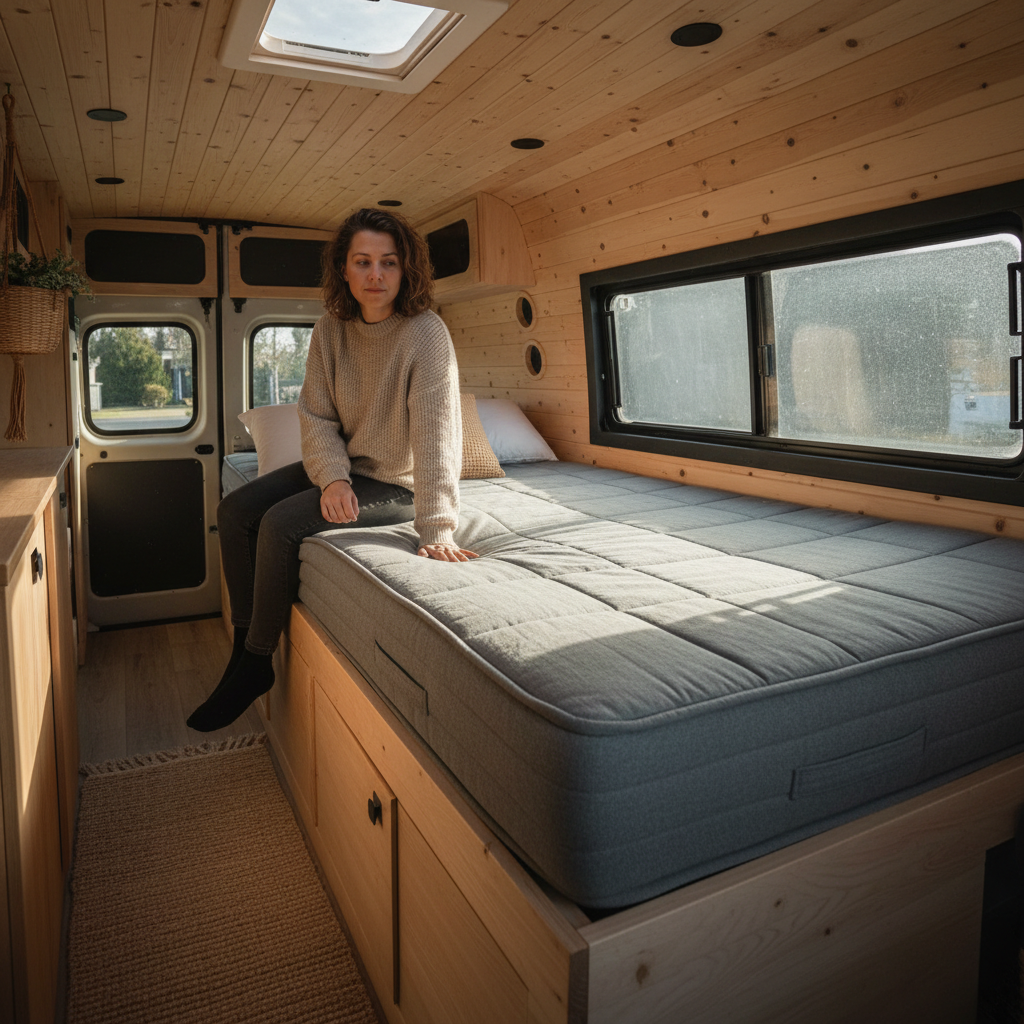
Rental van mattresses vary from surprisingly decent foam to what is essentially a yoga mat glued to plywood. You cannot know in advance. What you can control is your sleep system on top of it. For three-season US camping, a sleeping bag rated to 20°F paired with a thin sleeping bag liner solves almost every temperature scenario you'll encounter in a van, because the van shell itself adds meaningful insulation beyond what you'd have in a tent.
If the rental includes bedding, you still want a backup layer: a packable down blanket or a fleece throw weighs almost nothing and takes up minimal space. Overnight temperatures in popular van-camping destinations like the Colorado high country or the California Sierras can drop 30 degrees below the daytime high. A bag rated to 20°F sounds like overkill in August until it isn't.
Pillow is the item renters most often forget and most regret skipping. A compressible camping pillow (Sea to Summit makes a reliable one) packs to roughly the size of a softball. The alternative is a rolled-up fleece, which works but doesn't. Bring the pillow.
One condition where the sleep-system priority weakens: if you're renting a larger Class B+ van with a diesel heater already installed, you can get away with lighter bedding. But confirm the heater works before you rely on it, and know how to operate it before you're at the campsite in the dark. If you skip this prep and the heater fails, you're in a van in the cold with no fallback.
Kitchen and Food: The Real Cost Calculation
The financial case for van camping over hotels rests almost entirely on cooking your own meals. Campsite fees at a KOA or state park campground typically run $30 to $55 per night for a site with hookups. If you eat out every meal, you've given back most of that savings and then some. The kitchen is where the economics of the rental actually work in your favor.
That puts it around $15 to $25 per person per day for food if you cook in the van, compared to $50 to $80 per person eating out for two meals. For a couple on a two-night trip, that's a practical difference of $70 to $120 in your pocket. The math favors cooking, which means the kitchen kit matters.
What to bring for cooking, assuming the van has a two-burner propane stove: a 10-inch cast iron skillet or a nonstick pan (cast iron is heavier but more forgiving over propane), a medium saucepan, a chef's knife in a blade guard, a cutting board that fits the van's counter, and a silicone spatula. Coffee drinkers: a Moka pot or an AeroPress. Drip machines draw too much power and take counter space you don't have. One collapsible dish tub doubles as a wash basin and storage container.
Meal planning for a weekend should be simple by design: two breakfasts, two dinners, snacks and sandwiches for lunch. Eggs, bacon, and toast; pasta with jarred sauce. Boring on paper and genuinely good after a day outdoors. Pre-chop your vegetables at home and store them in a ziplock bag. Your future self, standing at a tiny van counter at 6 PM, will be grateful.
And keep the cooler realistic. A 40-quart hard cooler holds two days of food and drinks for two people with room for ice. Go bigger and it eats floor space. Go smaller and you're buying ice twice a day.
Hookups, Power, and What Happens Without Them
Whether your campsite has electrical hookups changes the packing list more than any other single variable. With hookups (shore power), you can run a small fan, charge devices freely, and use an electric blanket. Without them, you're running on the van's house battery, which a rental van's battery is usually sized to handle for one night of light use, not two nights of moderate use.
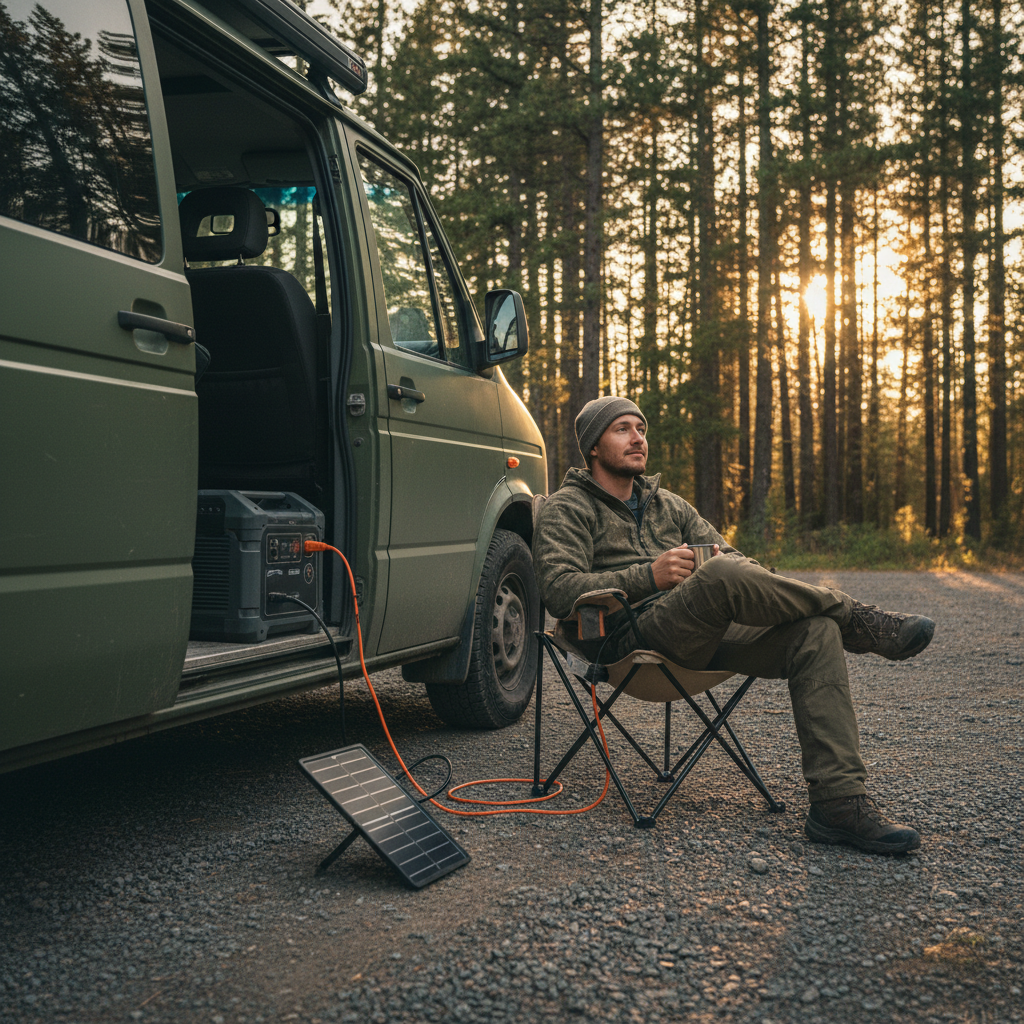
Boondocking renters (camping without hookups) need: a portable power station rated 300Wh or higher if you want to charge laptops, a 12V car-style adapter for devices rather than standard AC outlets, and a realistic plan for phone charging. Draining a rental van's starter battery because you ran the interior lights all night is an expensive mistake. Most rental agreements hold you liable for battery damage from owner misuse, and a jump-start in a remote campsite is not a fast fix.
Buyers who skip a dedicated power bank and plan to use the van's USB port exclusively often find themselves with a dead phone by Saturday afternoon. A 20,000 mAh power bank covers two full phone charges per person for a weekend, costs about $30, and fits in a jacket pocket. It's not glamorous. It's the right call.
What to Leave Behind
First-timers consistently overpack in three categories: clothing, kitchen gadgets, and "just in case" gear. The van punishes all three.
Leave home: a full-size hair dryer (no outlet capacity), multiple pairs of shoes (one pair of trail shoes, one pair of camp sandals, done), a travel router (campsite WiFi is not why you rented a van), and anything that requires assembly. The Instant Pot stays home. So does the portable espresso machine unless it's battery-operated and you've confirmed the battery lasts a weekend.
This article isn't a guide to extended van life or full-time nomadic living. It's specifically for a one- to three-night rental weekend, and the packing logic changes significantly if you're out for a week or longer. Different trip, different list.
The instinct to pack a backup for the backup is understandable for a first trip. Resist it. The discomfort of being slightly under-equipped for one weekend is recoverable. The discomfort of living in a cluttered van for two days is the thing that actually makes people not book a second rental.
The Full Weekend Packing List
Below is a practical reference for a two-person, two-night van rental weekend in the US. This assumes the van includes a basic kitchen kit and bedding; adjust if your rental doesn't. Quantities are per person unless noted.
| Category | Item | Notes |
|---|---|---|
| Sleep | Sleeping bag, 20°F rated | Even if bedding provided; backup layer |
| Sleep | Compressible camping pillow | Per person; don't skip this |
| Sleep | Packable down blanket | One per van; handles 30°F overnight swings |
| Kitchen | 10-inch nonstick or cast iron pan | If not in rental kit |
| Kitchen | Chef's knife in blade guard | Rental kits rarely have a sharp knife |
| Kitchen | AeroPress or Moka pot | No drip machines; power draw too high |
| Kitchen | 40-quart hard cooler (shared) | Pre-loaded with ice at departure |
| Power | 20,000 mAh power bank | Per person or one per two people |
| Power | 12V car adapter (shared) | For boondocking sites without shore power |
| Hygiene | Biodegradable soap | Required at most public campgrounds |
| Hygiene | Camp towel, quick-dry | Regular towels don't dry in a van |
| Safety | First aid kit (shared) | Rentals don't include this |
| Safety | Headlamp with fresh batteries | Per person; not optional |
| Camp | Small broom and dustpan (shared) | You will need this by night one |
| Camp | Doormat (shared) | Saves the floor; weighs nothing |
| Nav | Phone mount (shared) | Suction cup style fits most rental vans |
The items that look optional in this table (doormat, broom, blade-guard knife) are the ones that generate the most regret when left behind. The sleeping bag is the one that generates the most genuine discomfort if you skip it in cold conditions. Check the forecast for overnight lows, not just daytime highs, before you finalize the sleep category.
Before You Hand Back the Keys
If you're doing a peer-to-peer rental through Outdoorsy or RVshare, your review from the owner matters for future bookings. Leave the van cleaner than you found it. Empty the gray water tank if the van has one, and ask the owner in advance how to do this, because the procedure varies. Refill the propane tank to the level it was when you picked it up. And photograph the van's condition before you drive off at pickup and after you return it, every time, regardless of how friendly the interaction feels.
State park and national forest campfire rules in the US have tightened significantly over the past decade, particularly in the West. Check the specific campground's current fire regulations before you pack firewood or a fire ring. Bringing firewood from outside the region is restricted in many western states due to invasive pest concerns; buy local wood at or near the campsite instead.
Start the next booking with your packing list already refined. Note what you used, what you didn't touch, and what you wished you'd had. Three trips in, the list will fit on a single index card. That's the goal.