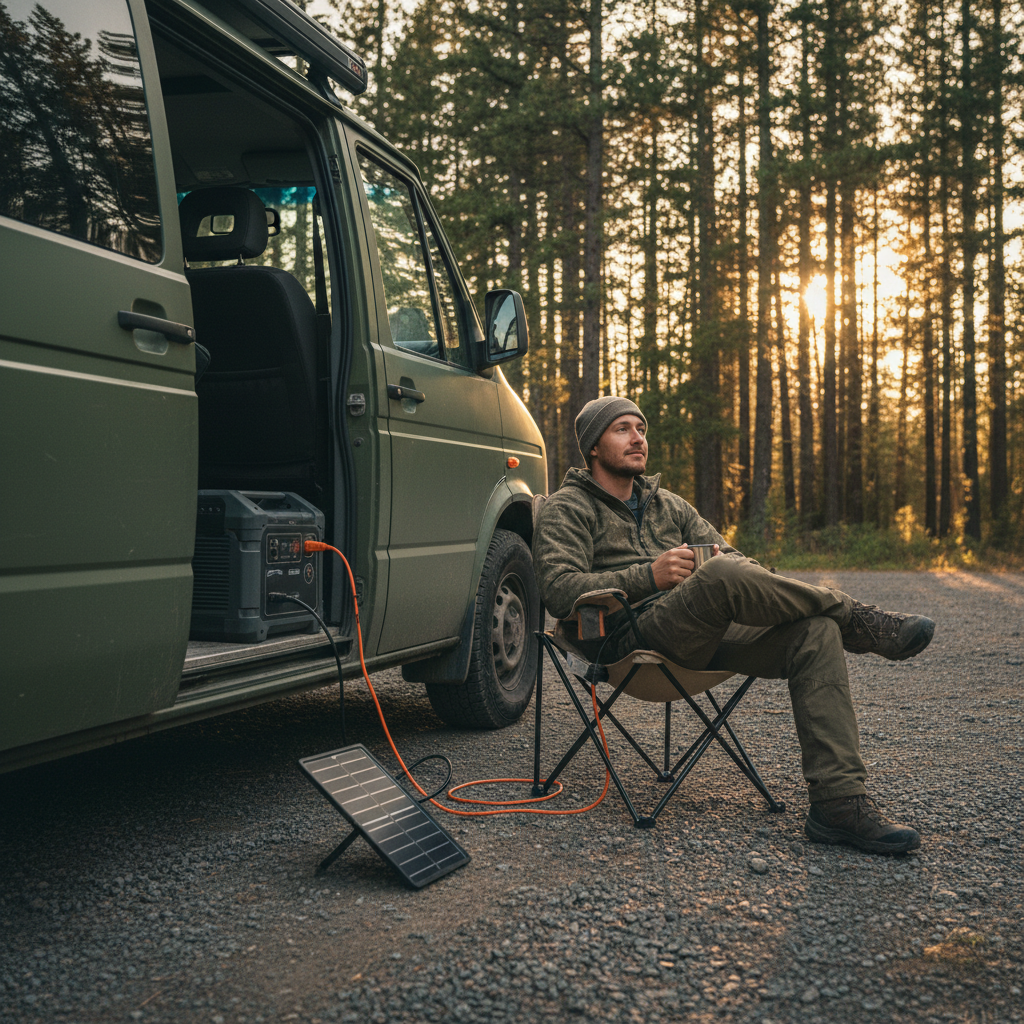
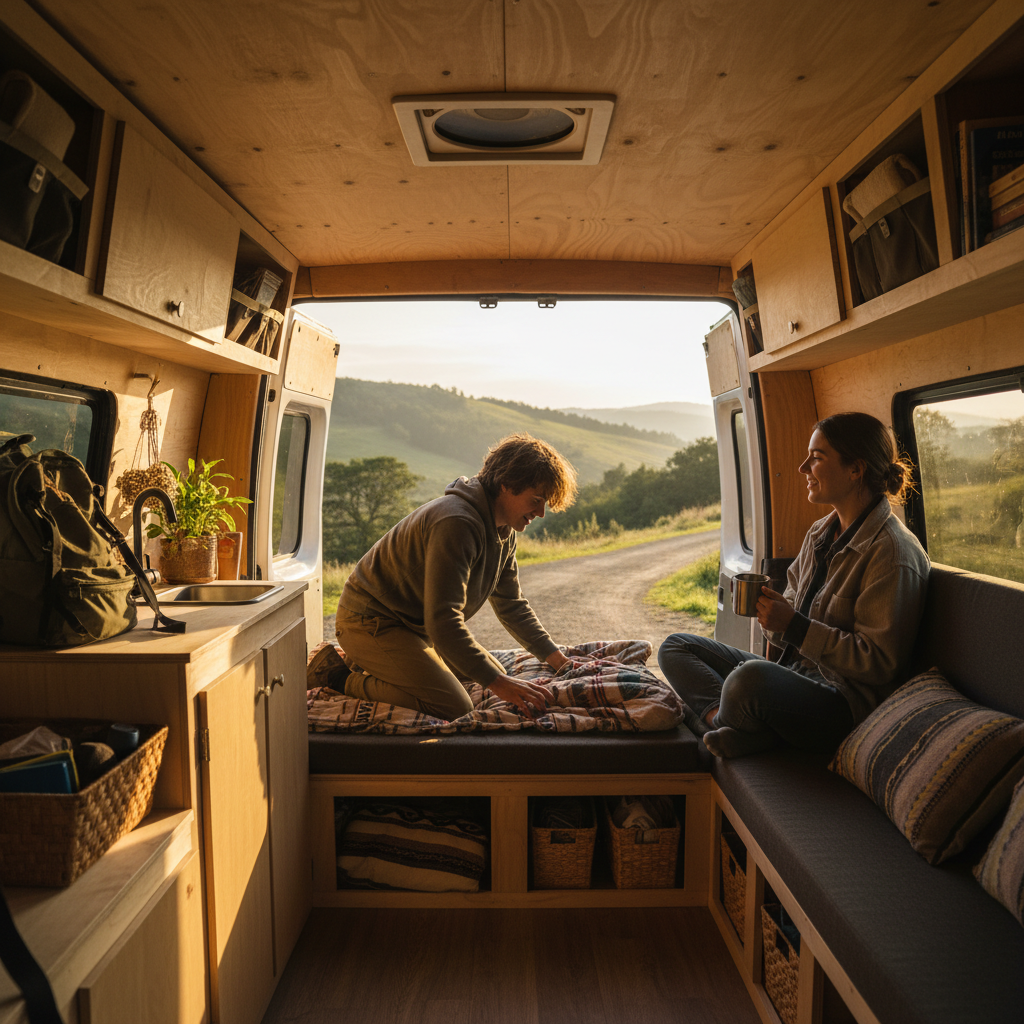
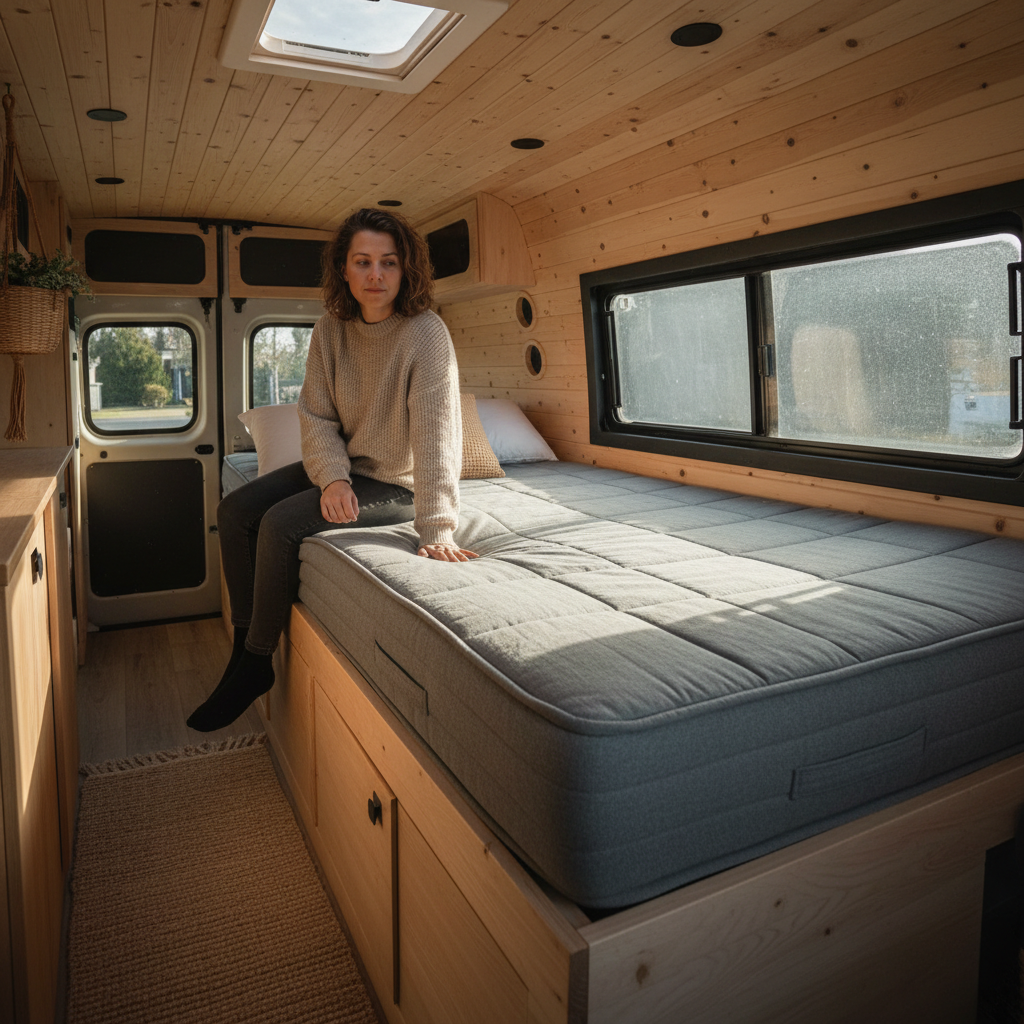
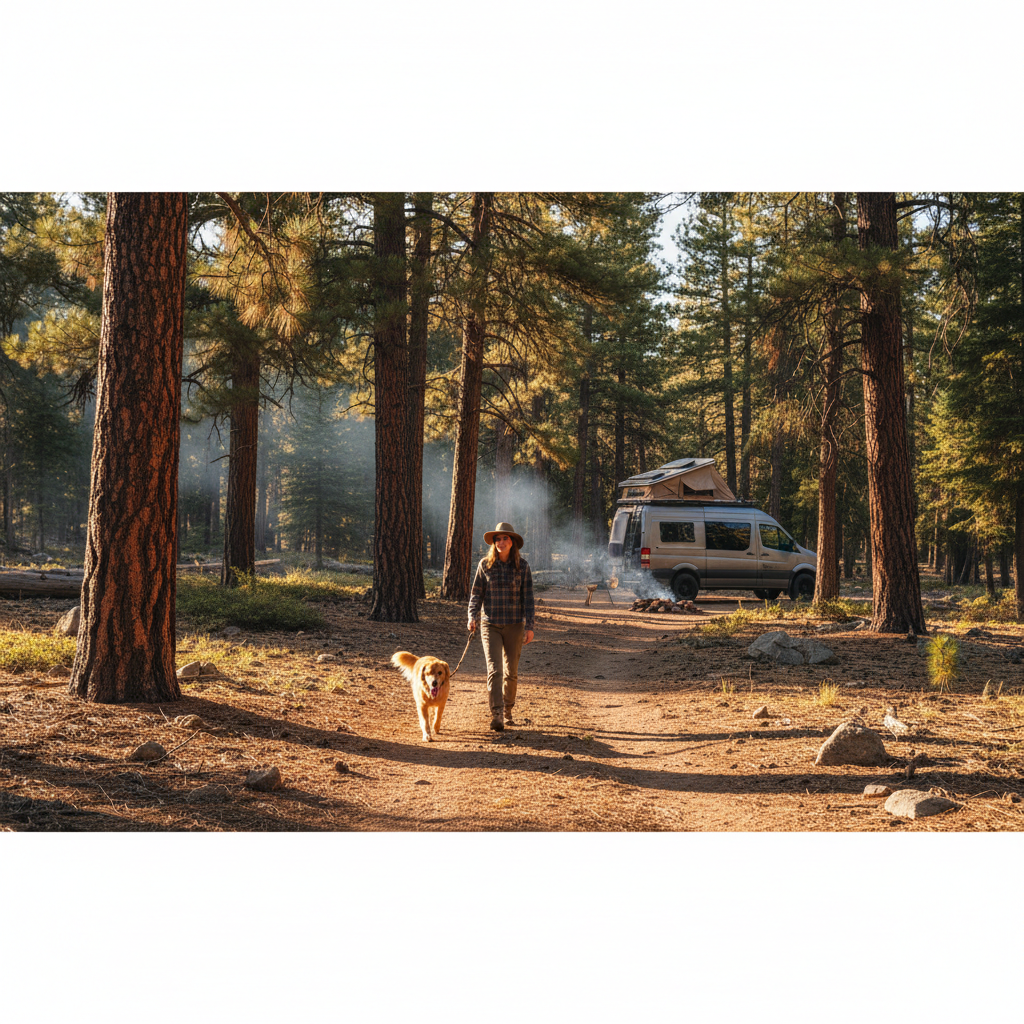

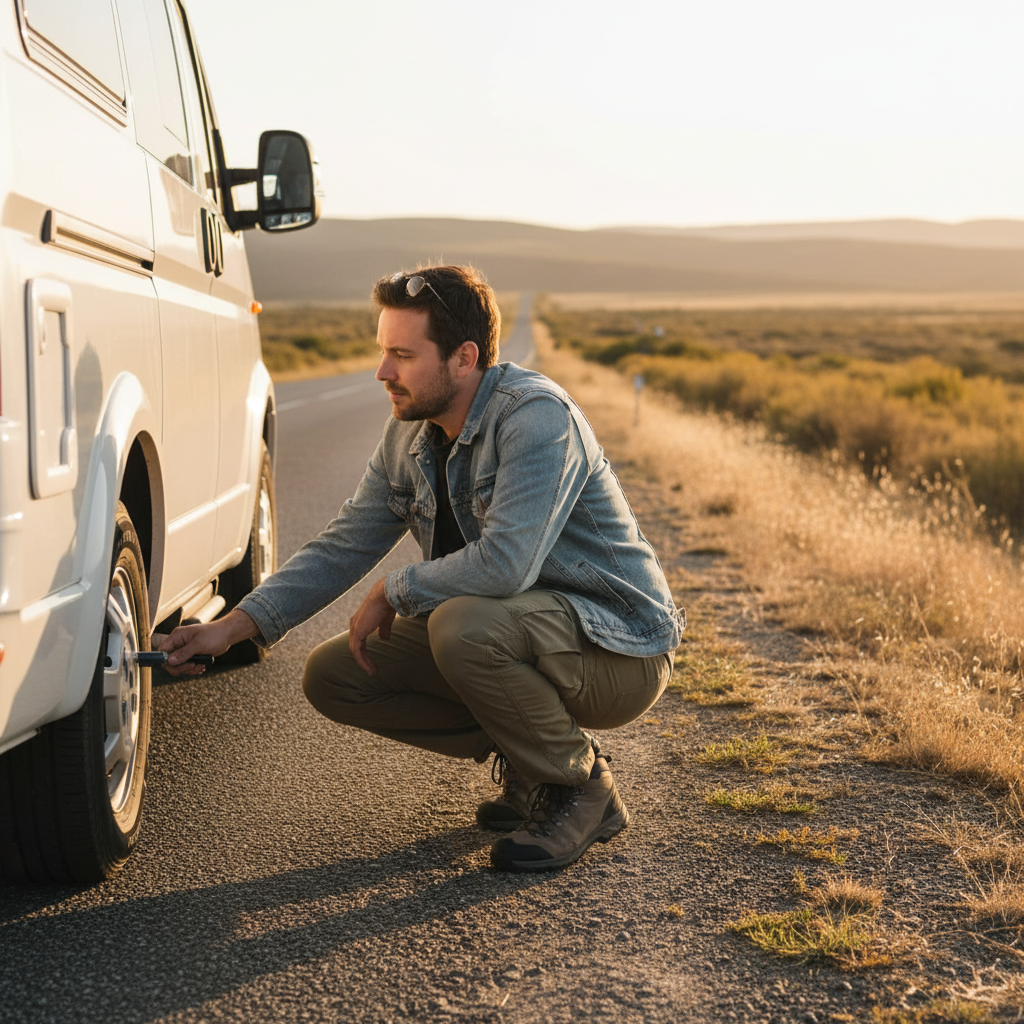
Rental companies in the US charge somewhere between $150 and $300 per night for a basic camper van, and that number makes borrowing a friend's rig look like an obvious win before you've asked a single question. But the comparison breaks down the moment you look past the daily rate.
This article is for people planning their first camper van trip, specifically those deciding between renting a purpose-built van and taking up an offer from a friend. It won't help you choose between van models, plan a route, or figure out whether van life is for you long-term. Those are different questions.
The variables that actually matter here aren't the ones most comparison guides bother to name: your friend's auto insurance policy language, the liability exposure that follows you home if something goes wrong, and whether the borrowed rig is actually set up for a first-timer. Get those wrong and the "free" trip becomes the expensive one.
Here's the tension nobody mentions clearly enough: the financial case for borrowing collapses under specific insurance and liability conditions that are completely invisible until you need them.
What You're Actually Comparing
Strip away the sticker price and you're comparing two very different risk structures. A rental comes with a defined liability framework. The rental company carries commercial auto insurance, offers a collision damage waiver (CDW) as an add-on, and has a written process for every bad outcome. You sign a contract, you know what you owe if the bumper gets dented, and you go home without dragging your friend into anything.
Borrowing works on trust, and trust doesn't pay for a crumpled rear quarter panel.
The key variable is what your friend's personal auto insurance actually covers when someone else drives their vehicle. Most standard personal auto policies in the US extend liability coverage to a permissive driver (someone with the owner's permission), but comprehensive and collision coverage, the parts that pay for physical damage to the vehicle itself, often do not extend the same way. Specific policy language varies by insurer and state. Before you take anyone's keys, that policy needs to be read, not summarized over text.
Or rather: it's not just about whether coverage exists. It's about whether the claim, if filed, would increase your friend's premiums or trigger a coverage review. That's a different kind of cost, and it falls on someone who did you a favor.
Rental cost over a five-night trip runs roughly $900 to $1,500 at standard rates, plus fuel, plus the CDW if you take it (typically $25 to $45 per day extra, putting full-covered rental cost closer to $1,050 to $1,725 for five nights). That puts it around $200 to $345 per night all-in. Borrowing costs nothing in daily fees, but potentially costs your friend a claims history event if something happens.
The Insurance and Liability Reality
This is where most first-timers get into trouble, and it's the part worth spending real time on.
Personal auto insurance in the US is written for personal use. A camper van converted from a cargo van may be classified differently than a standard passenger vehicle by the insurer, depending on how it was titled and insured. Your friend may carry it on a standard auto policy, a specialty RV policy, or even a business vehicle policy if they use it for work travel. Each of those has a different answer to the question "what happens if my friend borrows it and hits a guardrail?"
Specialty RV insurers like National General (now part of Allstate) and Progressive's RV division write policies that commonly restrict permissive-driver coverage more narrowly than standard auto policies do. That's a practical heuristic based on how these policies are typically structured, not a guarantee for any specific policy. Your friend needs to call their insurer and ask directly: "If I lend this vehicle to someone with my permission, are they covered under comprehensive and collision? What are the conditions?"
Your own auto insurance may provide some secondary coverage when you drive a non-owned vehicle, but again, the policy language controls. Non-owned auto coverage is a real provision in many personal auto policies, but it's secondary to the owner's coverage and typically covers liability, not physical damage to the borrowed vehicle.
So before you borrow: check your friend's policy, check your own policy, and have both answers in writing. If either conversation produces uncertainty or a "probably fine" answer, that's a signal to rent.
One more angle worth naming: if your friend's van is a converted cargo van rather than a factory-built camper, it may not be classified as an RV at all. That affects both insurance treatment and whether a rental CDW equivalent even exists as an option.
What the Rental Actually Buys You
A rental isn't just a van. It's a support structure built around first-timers who don't know what they don't know.
Reputable van rental companies, whether national outfits or the growing number of peer-to-peer platforms like Outdoorsy and RVshare, typically include roadside assistance, a vehicle briefing or walkthrough, and a defined damage process. You learn how the propane works before you're three hours from the nearest town. You have a number to call when the water pump stops responding at 10 PM.
That framing misses something, though. The value of a rental walkthrough isn't just convenience. It's that someone with experience teaches you the specific failure points of that specific vehicle before you're responsible for it. Borrowed rigs don't come with that. Your friend may hand you the keys and a brief explanation of which burner to avoid, and that's that.
Peer-to-peer rentals through platforms like Outdoorsy deserve a mention here because they sit between the two options. You're renting from a private owner (often someone very similar to your helpful friend), but the platform provides insurance, a damage framework, and some degree of vehicle vetting. For a first trip, that structure matters.
This is also where the "free" calculation gets genuinely complicated. Add fuel for a week-long trip (camper vans typically return 18 to 22 MPG on the highway, though converted cargo vans often run closer to 15 to 18 MPG), a campsite reservation average of $35 to $50 per night at a federal campground, and any gear your friend's van doesn't have, and the gap between renting and borrowing narrows faster than the daily rate suggests.
I'd start with a peer-to-peer platform for a first trip. You get the warmth of a private owner's setup without the liability exposure that comes from borrowing from someone in your actual social circle.
When Borrowing Actually Makes Sense
Borrowing isn't wrong. It's wrong under specific conditions, and right under others.
The case for borrowing holds when: your friend's policy explicitly covers permissive drivers for both liability and physical damage, you've confirmed your own non-owned auto coverage as a backstop, the van is a factory-built camper or properly titled RV (not a DIY cargo conversion with unclear insurance classification), and your friend is genuinely comfortable with the arrangement, not just being polite.
Check those four things. Not approximately. Actually check them.
It also helps if your friend has camped in the van recently and the mechanical condition is current. A borrowed rig that's been sitting since last summer, with a water system that wasn't winterized properly or a house battery that hasn't been tested, puts you in a position to diagnose problems you don't yet have the experience to solve. Rental companies have maintenance cycles and pre-rental inspections. A generous friend does not.
If you skip this due diligence and something goes wrong, the cost isn't just a repair bill. It's a friendship under stress, a friend dealing with an insurance situation they didn't anticipate, and possibly a liability question that takes months to sort out. That's the counterfactual the daily-rate comparison never accounts for.
The condition where borrowing clearly fails: your friend has any hesitation about the insurance situation, and you're proceeding anyway because the trip feels too good to complicate. Stop there. Rent.
The Side-by-Side
The table below puts the two options against the criteria that actually move the decision. Read it as a decision tool, not a verdict. Your specific situation may flip any single row.
| Criterion | Renting | Borrowing |
|---|---|---|
| Upfront cost (5 nights) | $1,050 - $1,725 with CDW | $0 in daily fees |
| Insurance clarity | Defined: CDW, liability via rental company's commercial policy | Variable: depends on friend's specific policy language |
| Liability exposure to friend | None | Potentially significant if damage occurs |
| Roadside support | Typically included | Depends on friend's AAA or roadside plan, if any |
| Vehicle condition assurance | Pre-rental inspection standard | Trust-based; no independent verification |
| First-timer setup support | Usually a walkthrough included | Friend-dependent; often minimal |
| Relationship risk | None | Real, if something goes wrong |
Two rows dominate this table for a first trip: insurance clarity and relationship risk. A cost advantage that comes with unclear insurance and real friendship exposure is a worse deal than it looks. Run your own numbers with the actual rental quotes you've received, not the midpoint average above.
Making the Call
If your friend's insurer confirms permissive-driver coverage in writing, the van is a factory-built camper in good mechanical condition, and your friend is genuinely unbothered by the arrangement, borrow it. The money saved is real and the risk is managed.
If any of those three conditions is uncertain, rent. The rental premium buys you a clean liability structure, a support system designed for first-timers, and the ability to hand back a damaged van without handing over a problem to someone who trusted you.
So: call your friend's insurer before you decide, not after you've already said yes.