












Van builders will tell you to solve your window situation before you insulate, and there's a reason for that. Once the walls are paneled and the bed platform is in, retrofitting a curtain system that actually works becomes a genuinely annoying project. Removable curtains for camper vans sit at the intersection of privacy, thermal performance, and how well your rig blends into a neighborhood at 11 PM, and getting that combination right matters more than most conversion guides admit.
The question isn't simply whether curtains are worth installing. It's whether removable curtains specifically outperform the alternatives given your sleeping habits, your climate, and whether you park in campgrounds, city streets, or both. A van that splits time between Bureau of Land Management desert and urban stealth camping has different requirements than one that never leaves state park hookups.
Here's the tension that most curtain guides sidestep entirely: removable curtains are the easiest solution to install and the easiest to get wrong. A curtain that bunches, gaps at the edges, or glows from interior light defeats its own purpose. The gap between a curtain system that works and one that just covers the glass is where van dwellers lose sleep, literally.
What Removable Curtains Actually Do (and Don't Do)
Removable curtains in a camper van serve three functions that often get collapsed into one: blocking light from outside, blocking light from inside, and providing a modest thermal buffer. Those are not the same thing, and a curtain that excels at one can fail at another.
Light blocking from outside matters when you're parked under a streetlight or in a campground with active neighbors. Light blocking from inside, called light discipline in stealth camping circles, matters far more. A curtain with a half-inch gap at the roofline will project a visible glow that announces occupancy to anyone walking past. This is the failure mode that cheap curtain setups hit almost immediately.
Or rather: it's not just the curtain material that determines light discipline. It's the attachment method. Tension rod systems, the most common DIY approach, create predictable gaps at the corners where the rod bows away from the window frame. That bow, typically anywhere from a quarter to three-quarters of an inch depending on rod length and tension, is enough to leak a visible line of light. Bungee cord and suction cup systems have similar edge problems. The attachment method is the actual variable, not the fabric.
Thermal performance is real but limited. A single-layer curtain over a van window adds some insulation, but uninsulated van glass is a significant heat sink in cold weather and a solar gain source in summer. Curtains slow that exchange; they don't stop it. If you're building for serious cold-weather use, curtains are a supplement to window insulation, not a replacement. Reflectix-backed curtains or curtains layered over a Thinsulate insert perform measurably better than fabric alone, though quantifying that precisely depends on your specific window configuration.
Removable Curtains vs. the Realistic Alternatives
The actual competition for removable curtains isn't doing nothing. It's magnetic window covers, custom-cut foam inserts, or fixed privacy panels built into the van walls. Each has a genuine use case, and pretending curtains win across the board is how you end up with a conversion you're retrofitting six months later.
Here's a comparison of the four main approaches across the criteria that actually matter for van life use:
| Privacy Solution | Light Discipline | Thermal Benefit | Removal Speed | Stealth (Exterior Look) | Approx. Cost |
|---|---|---|---|---|---|
| Removable fabric curtains | Moderate (gap-dependent) | Low to moderate | Seconds | Poor to moderate | $20 - $80 DIY |
| Magnetic window covers | High (edge seal) | Low | Seconds | Good (dark exterior) | $60 - $150 |
| Custom foam/Reflectix inserts | High (fitted) | High | 30 - 60 seconds | Good (if covered) | $30 - $80 DIY |
| Fixed privacy panels | Very high | Moderate to high | Not removable | Excellent | $150 - $400+ built |
The cost ranges above are practical heuristics based on common DIY van build communities and reflect typical US material costs, not manufacturer pricing. Your actual cost will vary by van model, window count, and materials chosen.
Magnetic window covers, sold by companies like Van Compass and several Etsy sellers who cut them to specific van models, solve the edge-gap problem that curtains don't. They attach flush to the metal window surround and leave a dark, matte exterior that reads as a factory privacy tint from the outside. The tradeoff is that they don't add style to the interior the way fabric does, and they're less pleasant to live with during daytime hours when you want diffused light rather than full blackout.
Custom foam inserts cut from polyisocyanurate board or layered Reflectix are the thermal champions of this category. They're also the most tedious to make and store. If you're a full-time van dweller spending winters in Colorado or the upper Midwest, the thermal argument for inserts over curtains is genuinely strong. If you're a weekend warrior in California, it's much less compelling.
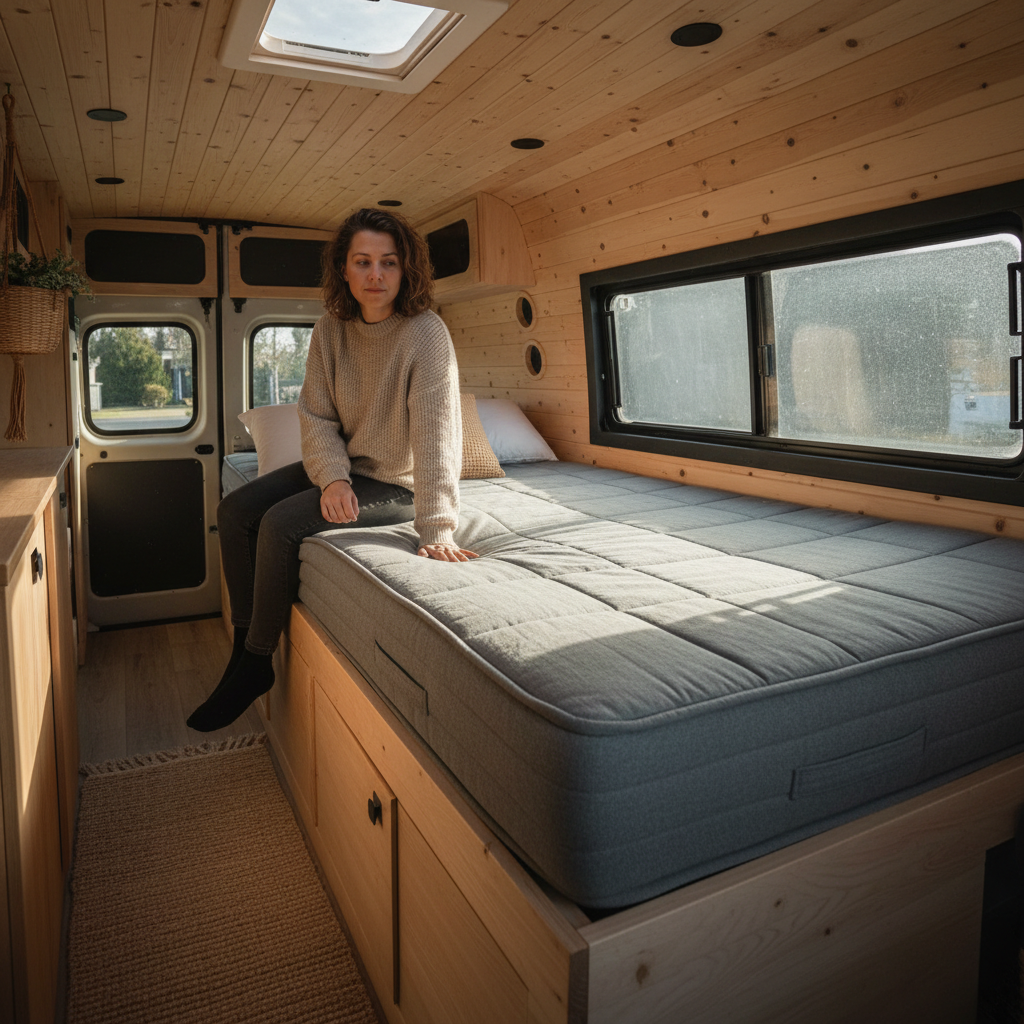
Removable curtains win specifically on daytime livability and aesthetic warmth. A well-made curtain in a complementary fabric makes a van feel like a space rather than a utility vehicle. That's not nothing. For vanlifers who spend significant time parked and working inside, the psychological effect of a finished interior is real. But that benefit applies to daytime use. For nighttime privacy and stealth, curtains are the weakest option unless you've solved the attachment gap problem.
The Attachment Methods That Actually Seal
If you're committed to curtains, the attachment method determines whether they work. This is where most DIY builds go wrong.
Tension rods are the most popular approach and the most likely to fail at light discipline. They're fast, damage-free, and easy to source at any hardware store. They also bow. A 24-inch tension rod at full tension still deflects at center, and that deflection creates the light gap described earlier. For daytime diffusion they're fine. For nighttime blackout, they're not reliable without a secondary seal.
Velcro mounting is more effective for edge sealing. Industrial-strength hook-and-loop tape (3M Command makes adhesive-backed versions that remove cleanly) bonded to the window frame creates a flat-mount curtain that seals the perimeter. The curtain needs a stiff header, typically a length of 3/4-inch dowel or thin aluminum bar sewn into a rod pocket, to keep it taut. Done correctly, this system approaches the light discipline of magnetic covers. Done sloppily, the Velcro peels from the van's window surround finish within a few months.
Snap fasteners bonded to the van ceiling liner are common in more finished conversions. They allow curtains to be removed completely in seconds and rehung without alignment effort. The upfront installation is more involved, requiring a hole punch and snap setter tool, but the long-term performance is excellent. I'd start with this approach for anyone planning a full-time build rather than a weekend conversion.
Whatever method you use: check the edges with a flashlight at night before committing. Stand outside your van after dark with the interior light on and look at every edge of the curtain. The gaps you find in that test are the gaps that will give you away in a parking lot.
When Removable Curtains Are the Wrong Choice
Removable curtains are a poor primary privacy solution for full-time stealth campers who park in urban residential streets regularly. The external visual of fabric bunched inside windows is a giveaway that someone is sleeping in the vehicle, particularly on cargo van side windows where there's no factory glazing context. Magnetic covers and foam inserts both look more like factory-tinted glass from the outside.
They're also the wrong choice if your van has large rear barn door windows or panoramic side glass. Curtaining large glass areas without a rigid header system results in fabric that sags, pulls away at the center, and moves visibly from outside air pressure changes. A van with Transit-style 40/60 rear windows is a candidate for custom inserts or magnetic covers, not tension rod curtains.
Cold-weather van life is the other hard exclusion. If you're regularly sleeping in temperatures below 20°F, fabric curtains over uninsulated glass will not keep you comfortable. The glass itself becomes a radiant cold surface that curtains don't meaningfully interrupt. Window insulation, whether that's custom foam inserts, honeycomb shades rated for thermal performance, or fixed insulated panels, is the appropriate solution. Curtains in that context are decorative.
Buyers skip the climate question until they're cold at 2 AM in a Utah desert in November. Don't.
Making the Call: Who Should Install Removable Curtains
Removable curtains are genuinely worth it for a specific van dweller profile: part-time or weekend users, people who park primarily at campgrounds and established recreation areas rather than urban streets, and builders who prioritize interior aesthetics alongside function. For that group, a well-executed curtain system using Velcro or snap fasteners, lined fabric, and a rigid header delivers real value at a cost that dedicated privacy products can't match.
If you're a full-time van dweller who stealth camps in cities more than three nights a week, the light discipline limitations of most curtain systems make them a secondary element at best. Lead with magnetic covers or foam inserts for nighttime function, and add curtains as a daytime layer if aesthetics matter to you. The two systems aren't mutually exclusive.
The reframe worth sitting with: removable curtains are a privacy solution that works best when privacy is a secondary concern. When privacy is your primary overnight requirement, a dedicated cover system outperforms them on every functional metric that matters after dark.
Check three things before you buy fabric: how often you stealth camp in residential areas, your lowest expected overnight temperature, and whether your windows have a flat enough surround for a reliable Velcro or snap mount. Those answers will tell you whether curtains are your primary system or a daytime supplement.
What Happens If You Skip a Purpose-Built Solution
Van dwellers who install tension rod curtains and never address the edge-gap problem reliably report one of two outcomes: either they stop parking in urban areas because the light leak makes them uncomfortable, or they get knocks on the van door at odd hours from curious or concerned strangers. Neither outcome is dramatic, but both erode the van life experience faster than most other build mistakes.
The longer-term cost is the retrofit. A conversion built around curtain rods that later needs magnetic covers or snap-mounted inserts requires removing the rod hardware, filling or painting any anchor points, and sourcing or making new covers to fit your specific windows. Transit, Sprinter, and ProMaster all have different window surround geometry, and covers that fit one don't fit others. Budget roughly $100 to $200 and a full weekend for a competent retrofit, more if your window count is high or your surround finish is painted rather than bare metal.
And if you do nothing at all because the curtain question feels like a detail? You'll solve it eventually. Just at 2 AM in a parking lot under a streetlight, with a flashlight, a roll of black fabric, and less patience than you'd have at home.