
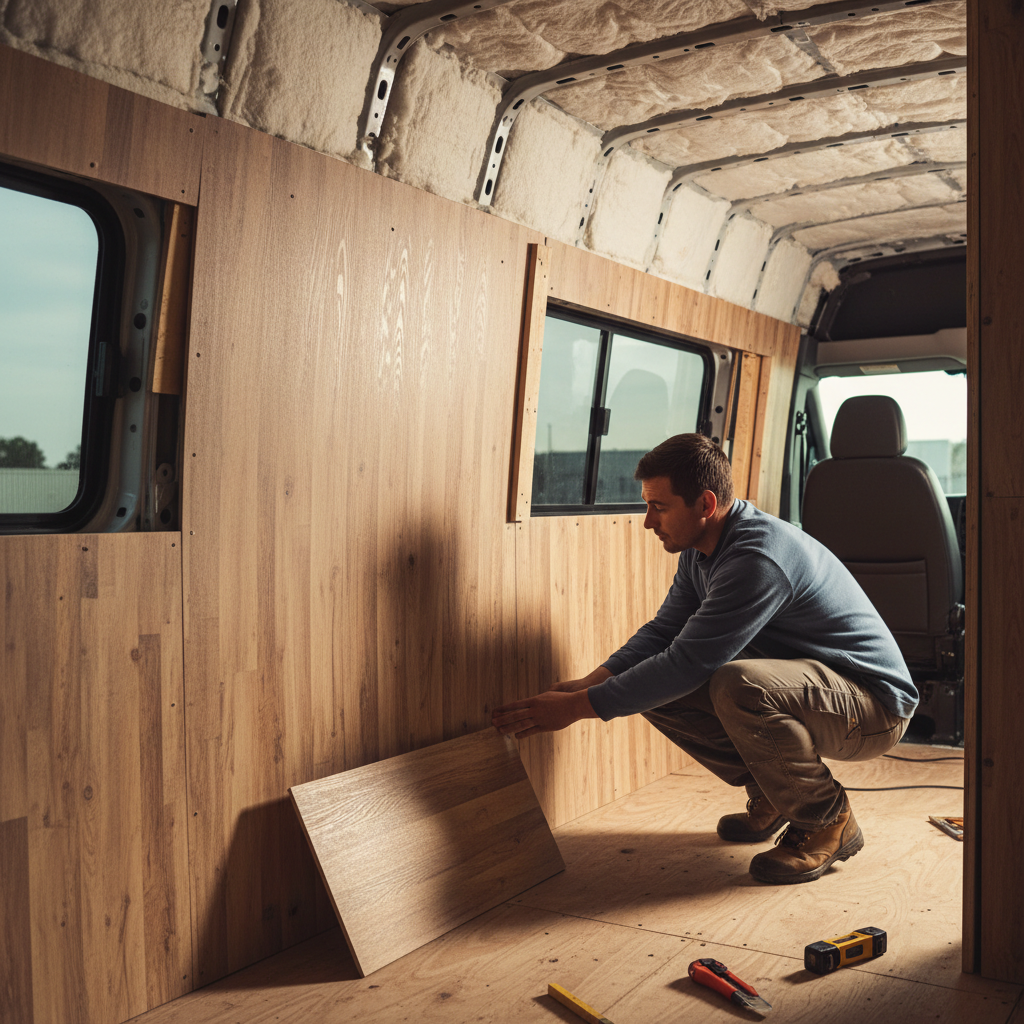
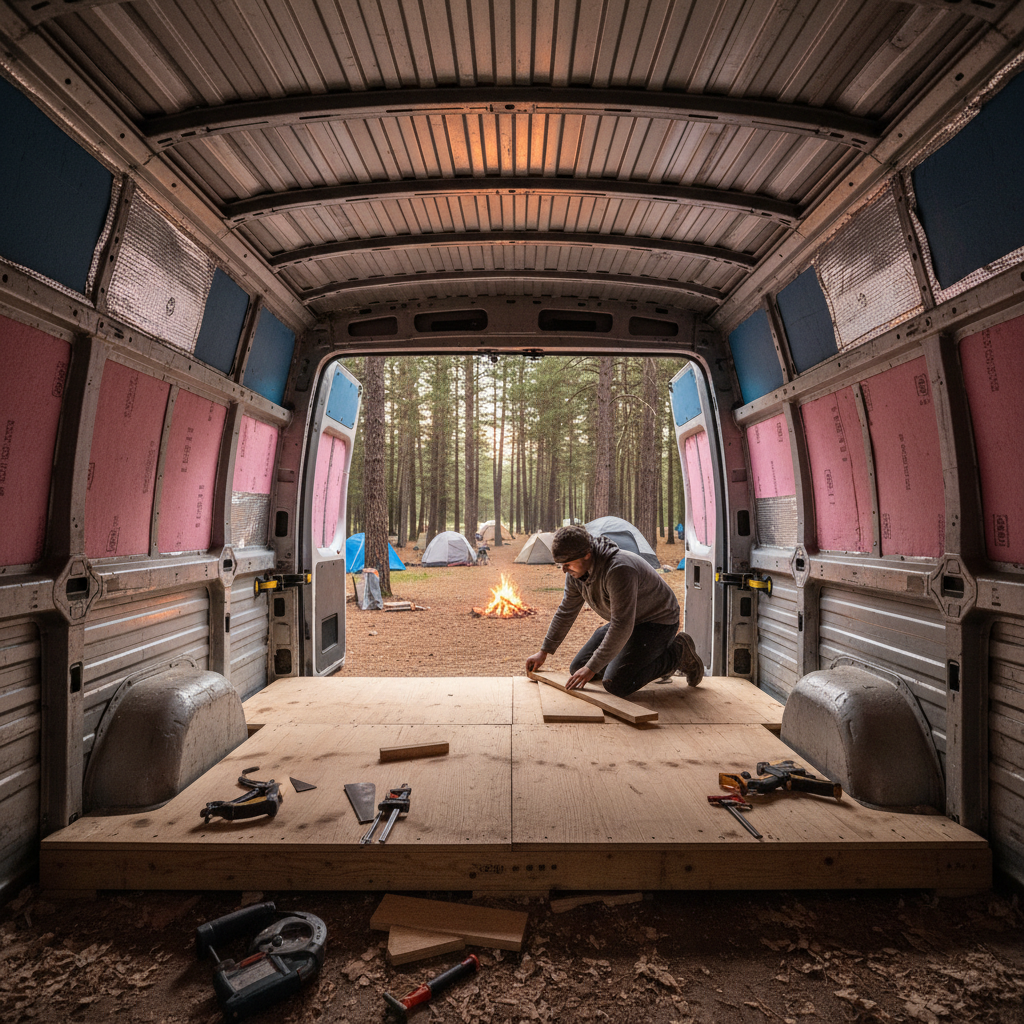


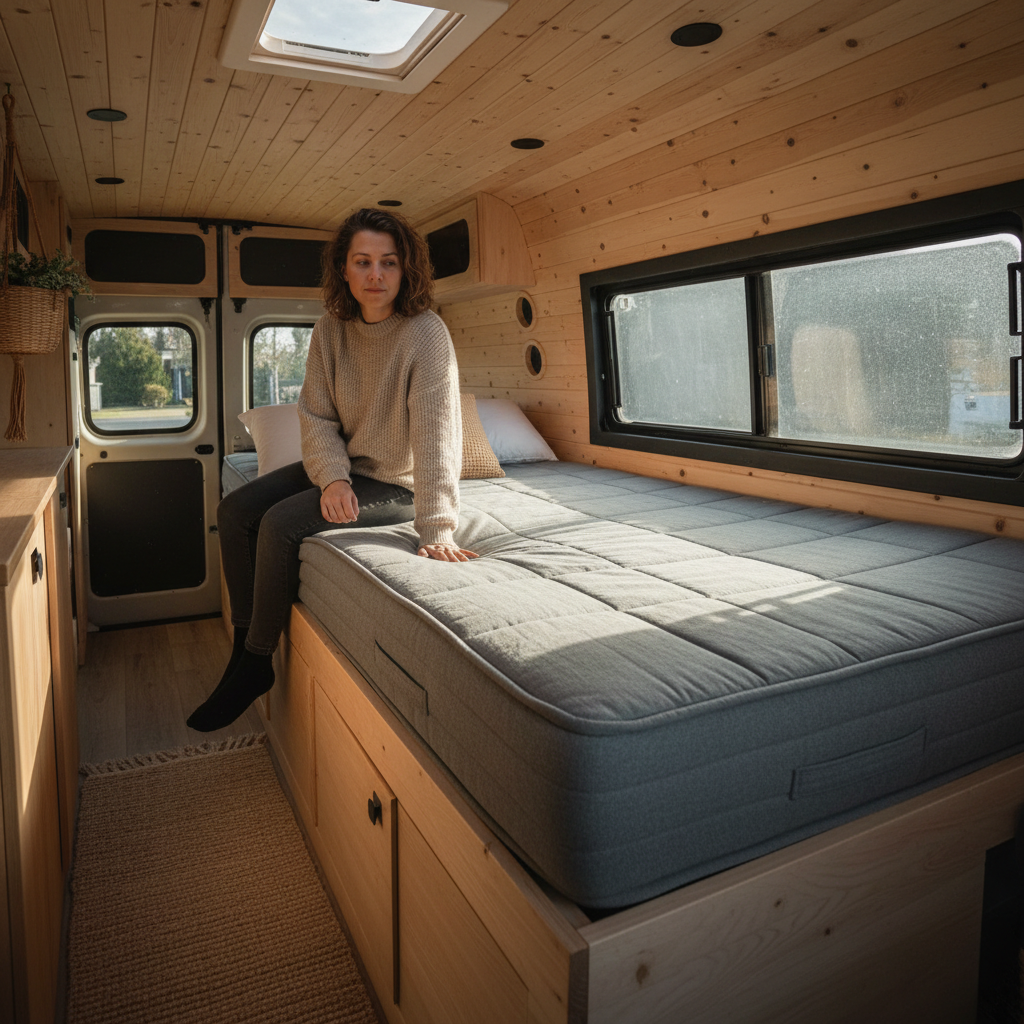










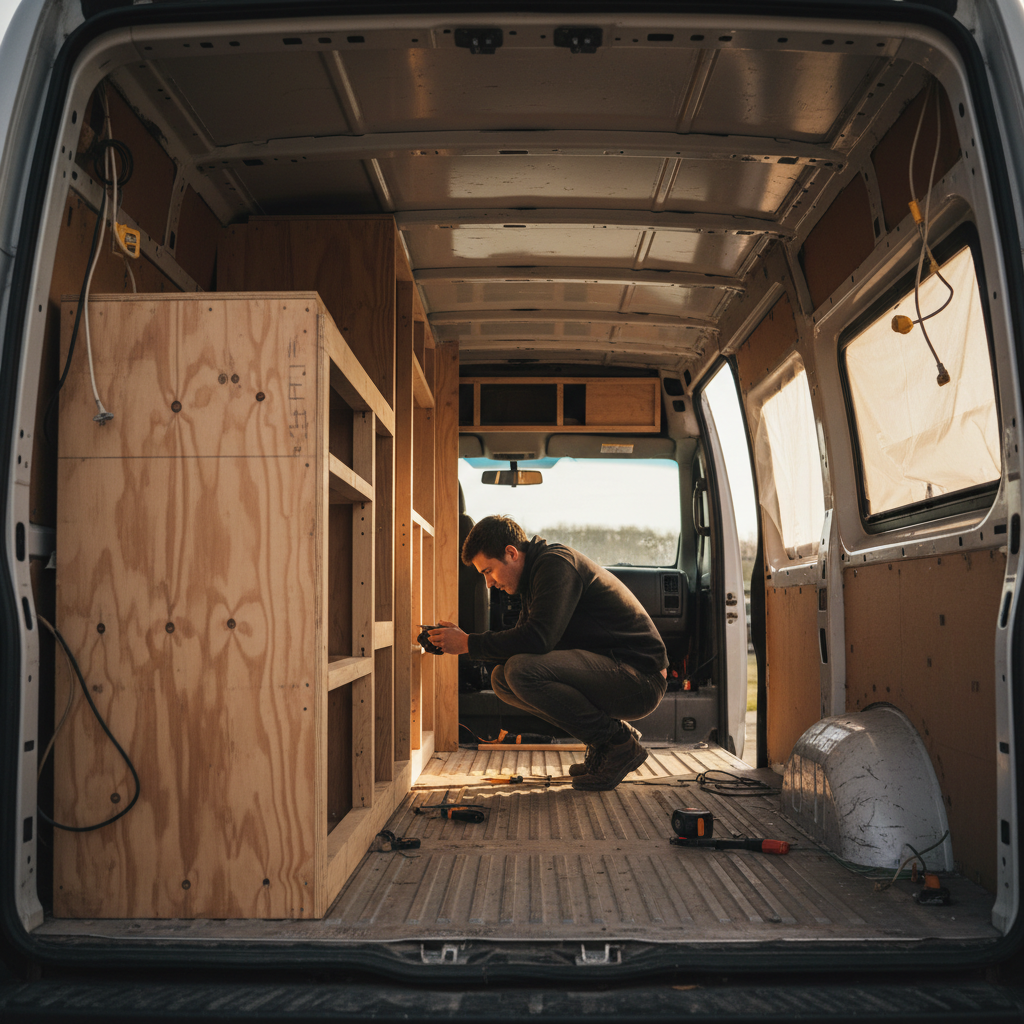
Van builders will tell you to nail the bed placement before you touch anything else, and there's a reason for that. Every other system, from your kitchen to your electrical panel, flows from where you sleep. A van conversion layout that works beautifully for one person can feel suffocating the moment a second person moves in full-time, and most guides skip the specific measurements that explain why.
The core tension in flexible van layout design is this: a solo build optimizes for storage and workspace, while a partner build demands aisle access and shared vertical space that directly competes with those same priorities. You can resolve both, but only if you treat the dual-use requirement as a structural constraint from day one, not a retrofit you'll figure out later.
This article covers cargo vans in the 136-inch to 170-inch extended wheelbase range, because that's where the tradeoffs get real and the decisions actually branch. If you're working with a Volkswagen Westfalia or a Class B RV with a fixed factory interior, these decisions have already been made for you.
The Measurements That Actually Decide Your Layout
A 24-inch aisle is the practical minimum for one person to move comfortably through a van. But two people needing to pass each other, get dressed simultaneously, or access opposite sides of the kitchen at the same time need at least 30 inches. That 6-inch difference sounds trivial. In a Ford Transit 148 extended, where the interior width measures roughly 70 inches at the floor, it means the difference between a 46-inch platform bed and a 40-inch one. A 40-inch bed sleeps one adult comfortably. A 46-inch bed fits two adults who know each other well.
Or rather: the aisle-width problem isn't really about the aisle. It's about what you're willing to give up on the bed to get it. A longitudinal (head-to-toe) bed running along one wall gives you full aisle access on the other side regardless of partner status, but it caps bed width at whatever the van's interior minus your storage wall allows. In a Transit 148 extended, a wall-mounted platform with 6-inch storage underneath yields a sleeping surface around 38 to 40 inches wide: fine solo, tight with a partner. A transverse (side-to-side) bed spanning the full van width solves the partner sleeping problem immediately, but it blocks rear-door access and forces your kitchen forward, which compresses the living area in shorter wheelbase vans.
The Mercedes-Benz Sprinter 170 extended wheelbase offers about 74 inches of interior floor width, which changes the math. A 34-inch storage wall plus a 32-inch aisle leaves a 38-inch bed, still solo-optimal. But a 28-inch storage wall plus a 30-inch aisle yields a 46-inch sleeping surface. Tight storage, workable partnership.
Bed orientation is a genuine decision gate, not a style choice. Get this wrong and no amount of clever cabinetry fixes it downstream.
Zone-Based Design: The Only Framework That Scales
A zone-based layout divides the van into three functional bands: a sleep-and-privacy zone in the rear third, a cook-and-work zone in the middle third, and a gear-and-transition zone at the cargo doors. This structure holds for both solo and partner configurations. What changes is how you allocate width within each zone.
For solo builds, the sleep zone can include a full storage wall, a pull-out desk surface, and overhead cabinets without exceeding the space budget. For partner builds, the overhead cabinets in the sleep zone need to be shallower (6 inches rather than 10) or eliminated on one side to avoid the closed-in feeling that drives most couples apart by week two. (And it does happen by week two, not week six. The adjustment period is shorter than people expect.)
The cook zone is where solo versus partner diverges most sharply in function. Solo van life typically requires one burner, a compact sink, and 30 to 40 liters of refrigeration. Add a partner and you're realistically looking at two burners, 50 to 60 liters of refrigeration, and a prep surface that both people can use without choreographing their movements. A 12-volt compressor fridge like the BougeRV or ARB series in the 47-liter range sits neatly under a counter and scales to partner use; a 30-liter version doesn't.
I'd start every partner build with the cook zone rather than the bed, because that's where daily friction accumulates fastest. You can survive a slightly narrow bed. You can't survive fighting over the only prep surface at 7 AM.
Modular vs. Fixed Builds: When Flexibility Has a Real Cost
The van build community tends to push modular furniture as the solution to solo-versus-partner flexibility. Slide-out bed extensions, fold-down tables, removable storage cubes. The pitch is appealing: one van that transforms between configurations. The reality is less tidy.
Modular systems add mechanical complexity that fails on rough roads. Slide tracks bind with temperature swings between desert days and mountain nights. Fold-down tables wobble under laptop use, which matters if remote work is funding the trip. And every modular component adds weight, typically 15 to 25 pounds per mechanism, that comes directly out of your payload capacity.
That said, two modular elements genuinely earn their place in a dual-use build. A garage-style storage system under a fixed platform bed, accessible through the rear doors, lets you pack out gear without disturbing the sleeping area. And a flip-up desk surface mounted to the driver-side wall adds a dedicated workspace for solo stretches without consuming permanent square footage. These are worth the mechanical investment. A full modular bed system that converts from single to double is usually not, because the conversion takes 10 to 15 minutes and disrupts every cabinet above it.
Fixed builds with thoughtful zoning outperform modular builds on a 12-month timeline in almost every documented van life account. But fixed means committed: once your cabinet walls are bolted through the floor and into the ribs, changing the layout costs real money and real time. Build the partner configuration from the start if there's any chance you'll share the space within 18 months.
When the Flexible Layout Recommendation Breaks Down
The zone-based, dual-configured layout described here works well for couples who share a similar daily rhythm: both wake at the same time, both work remotely or neither does, and neither requires significant private space during the day. Remove any one of those conditions and the recommendation weakens considerably.
If one partner works night shifts remotely and the other keeps a normal schedule, a single sleeping zone fails both people. The night worker needs blackout privacy and minimal noise disruption; the day person needs kitchen and workspace access without waking their partner. No single-zone layout solves this. You'd need a van large enough for a curtained-off sleeping alcove that is physically separated from the main living area, which in practice means a 170-inch extended wheelbase Sprinter at minimum, and even then it's a compromise.
Similarly, if one person is 6 feet 4 inches or taller, a transverse bed that fits a 6-foot body won't work. Longitudinal becomes mandatory, which resets all the width calculations above. Tall partners in shorter vans sometimes end up with a diagonal bed arrangement, sleeping corner to corner across the rear section. It works for sleep. It creates an unusable dead zone in one rear corner that costs you meaningful storage.
Van builds for couples with genuinely divergent schedules, or with a significant height differential above 6 feet 2 inches, should consult purpose-built conversion specialists rather than treating this as a straightforward DIY project. The standard layout logic stops applying.
Putting the Layout Together: A Decision Path
Start with three numbers: your van's interior floor width, your wheelbase (which determines usable floor length after the wheel well intrusion), and the taller partner's height if applicable. These aren't starting points for inspiration. They're constraints that determine which layouts are physically possible before you look at a single mood board.
Check sq footage, wheel well position, and door-swing clearance first. Interior floor width minus a 30-inch aisle tells you your maximum platform bed width for a longitudinal build. Interior floor length minus 24 inches for the garage zone and 36 inches for the cook zone tells you how much sleeping platform you actually have. Run those numbers before you fall in love with any specific design you've seen on a build blog.
Buyers skip the wheel well calculation until they've already committed to a bed platform height, and then discover the wheel wells intrude 4 to 6 inches into the platform from below, creating a step in the sleeping surface that requires either framing around or a raised section. Neither is catastrophic, but both require planning that changes your storage geometry underneath.
If the numbers support it, build for the partner configuration even if you're starting solo. The marginal cost of an extra 6 inches of bed width and a two-burner stove at build time is small. The cost of retrofitting when your situation changes is not.