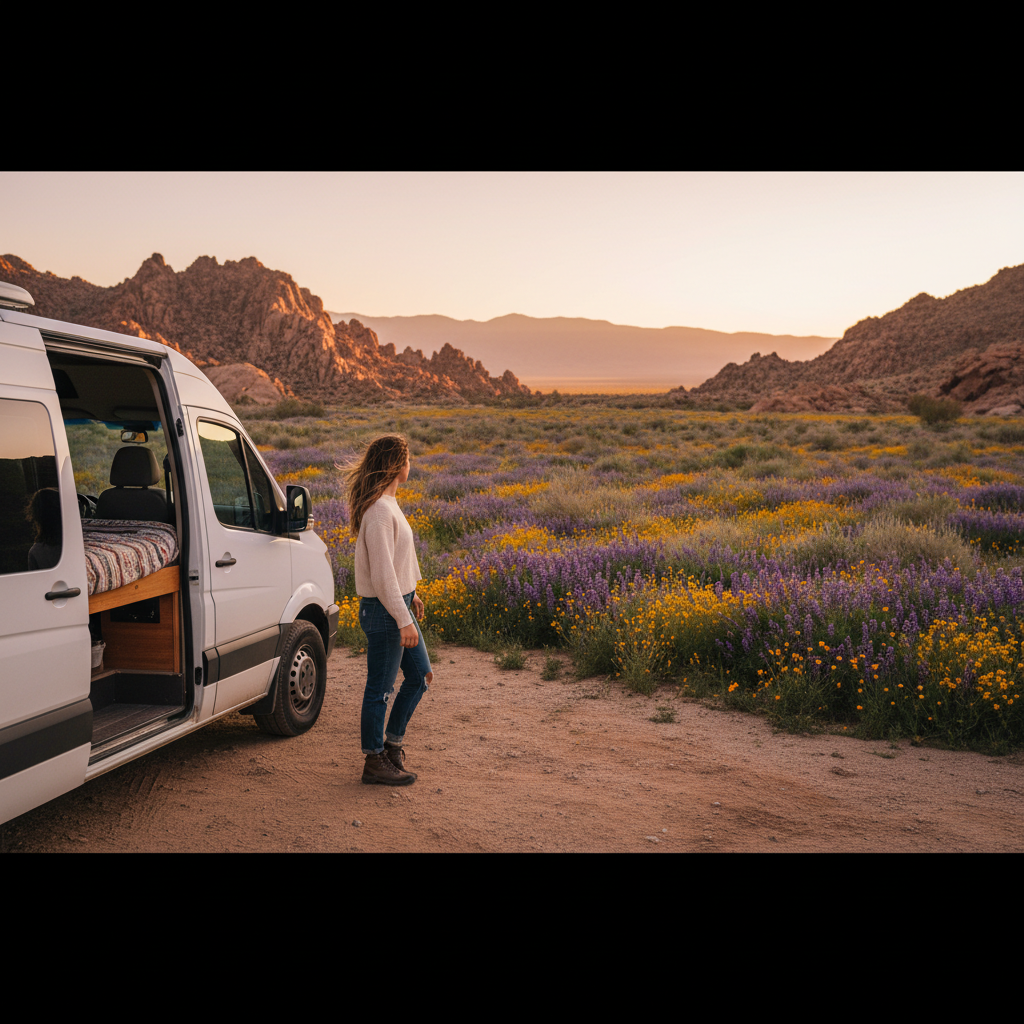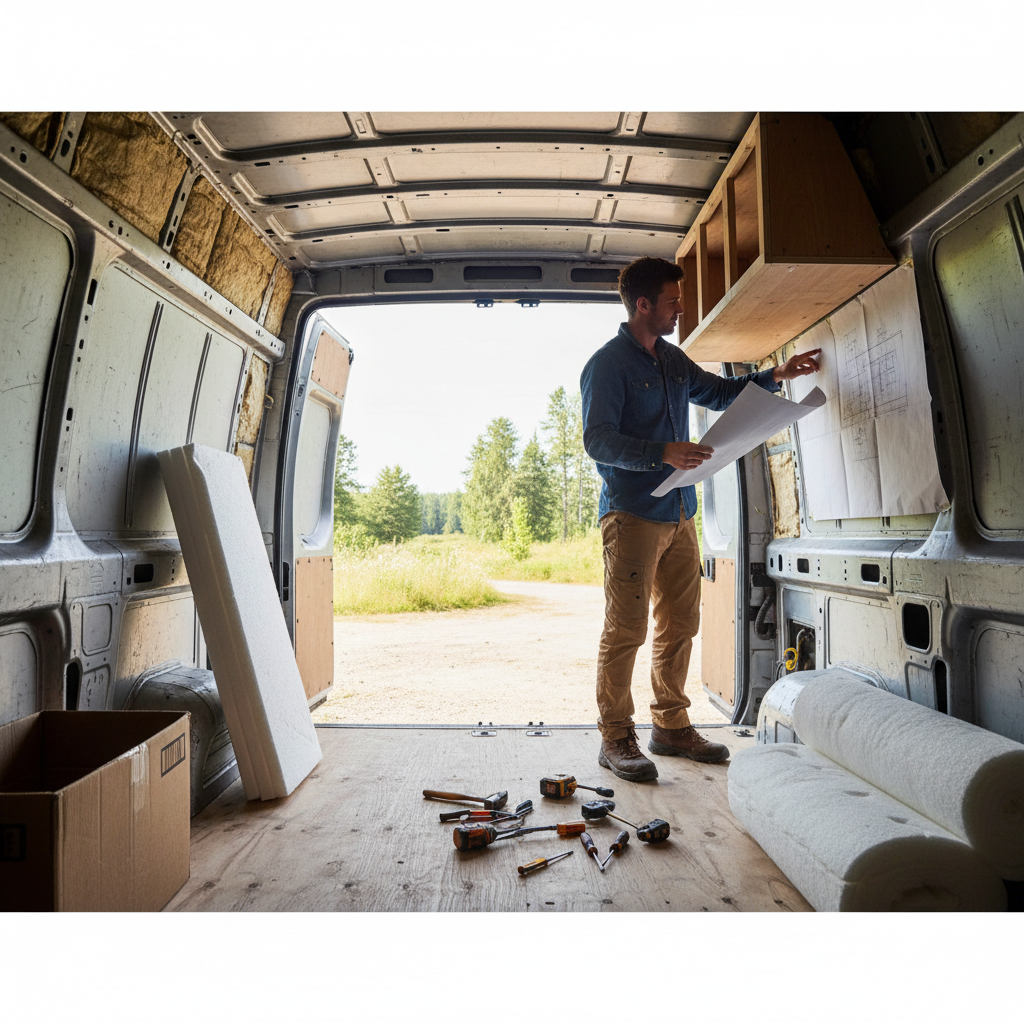
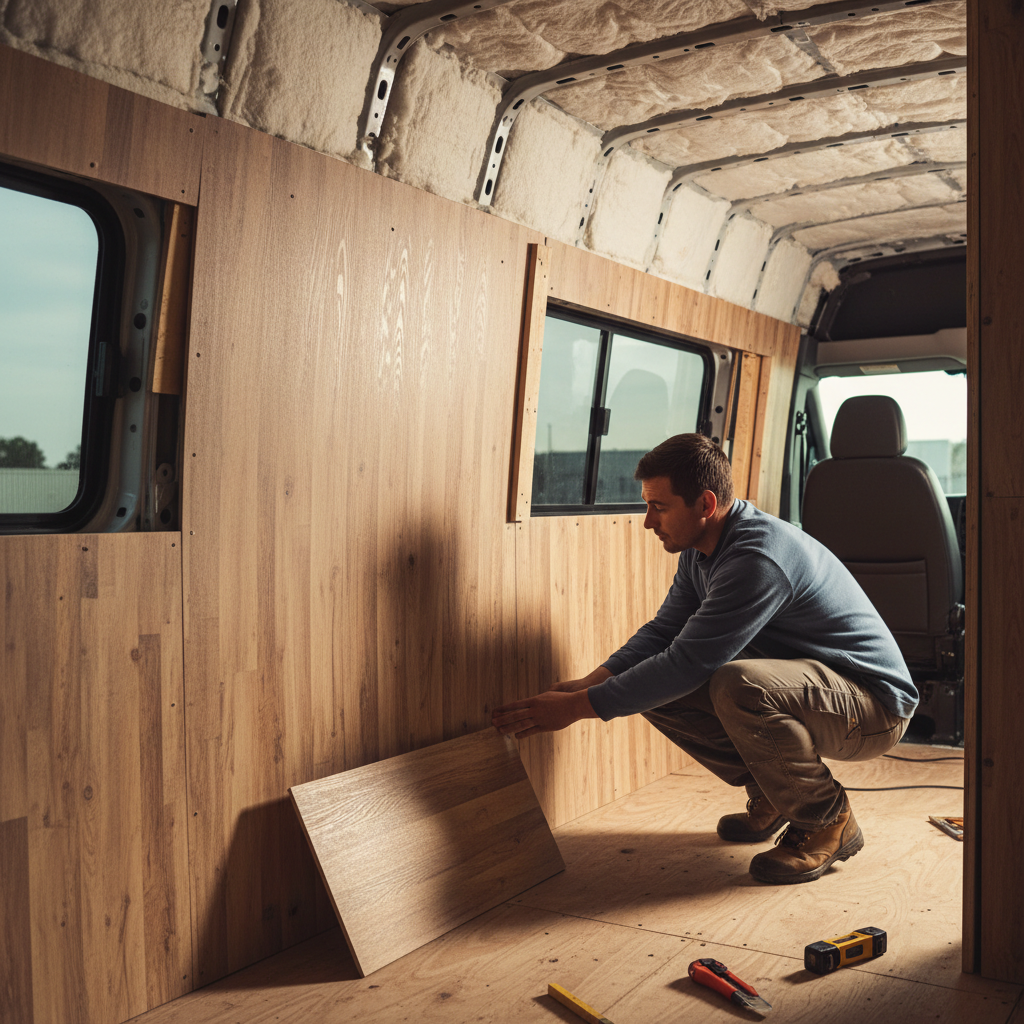
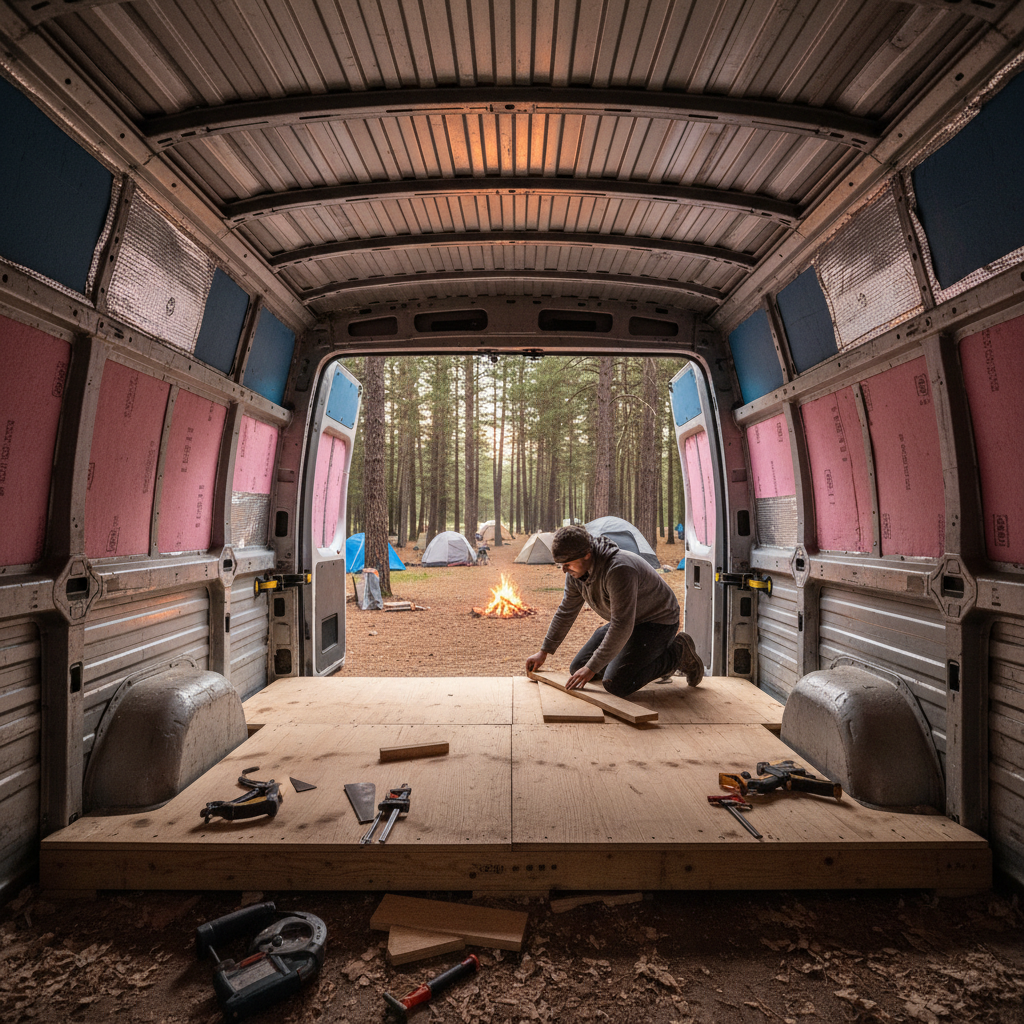
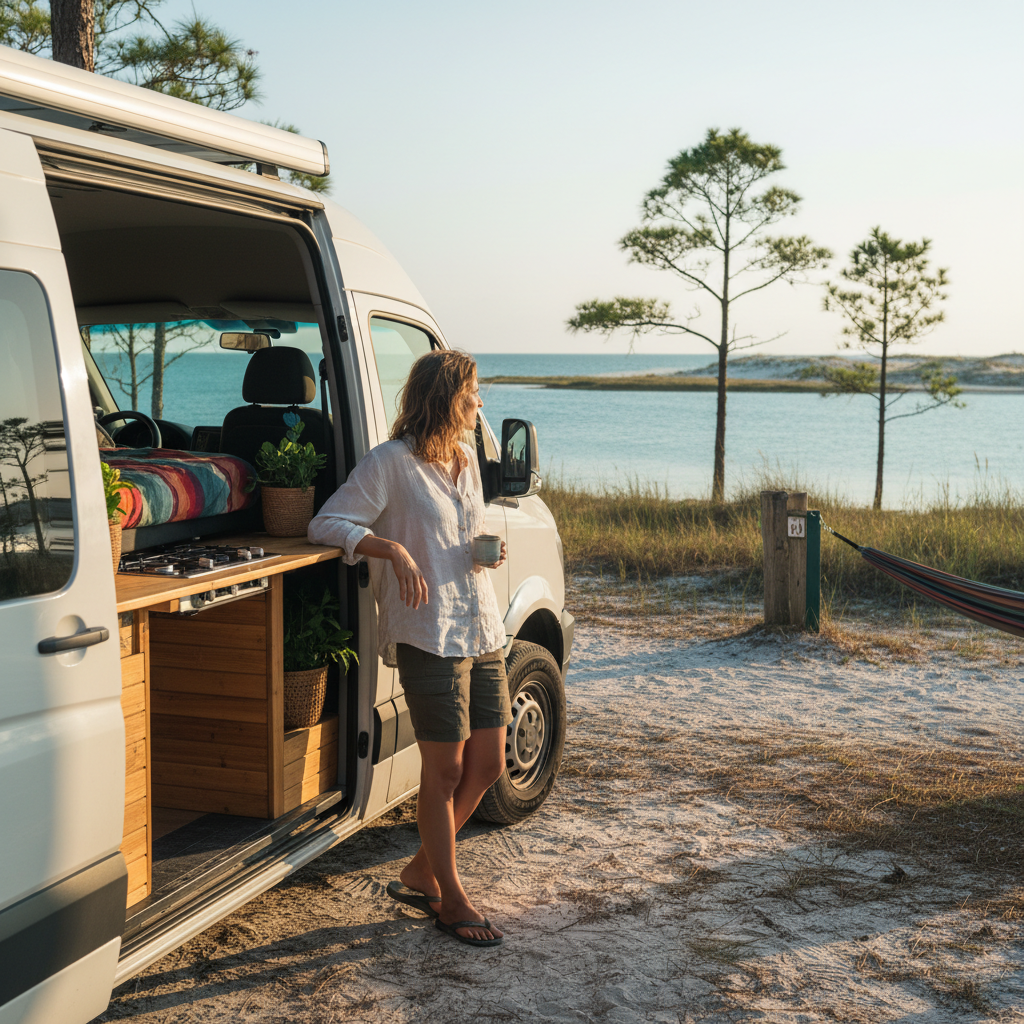
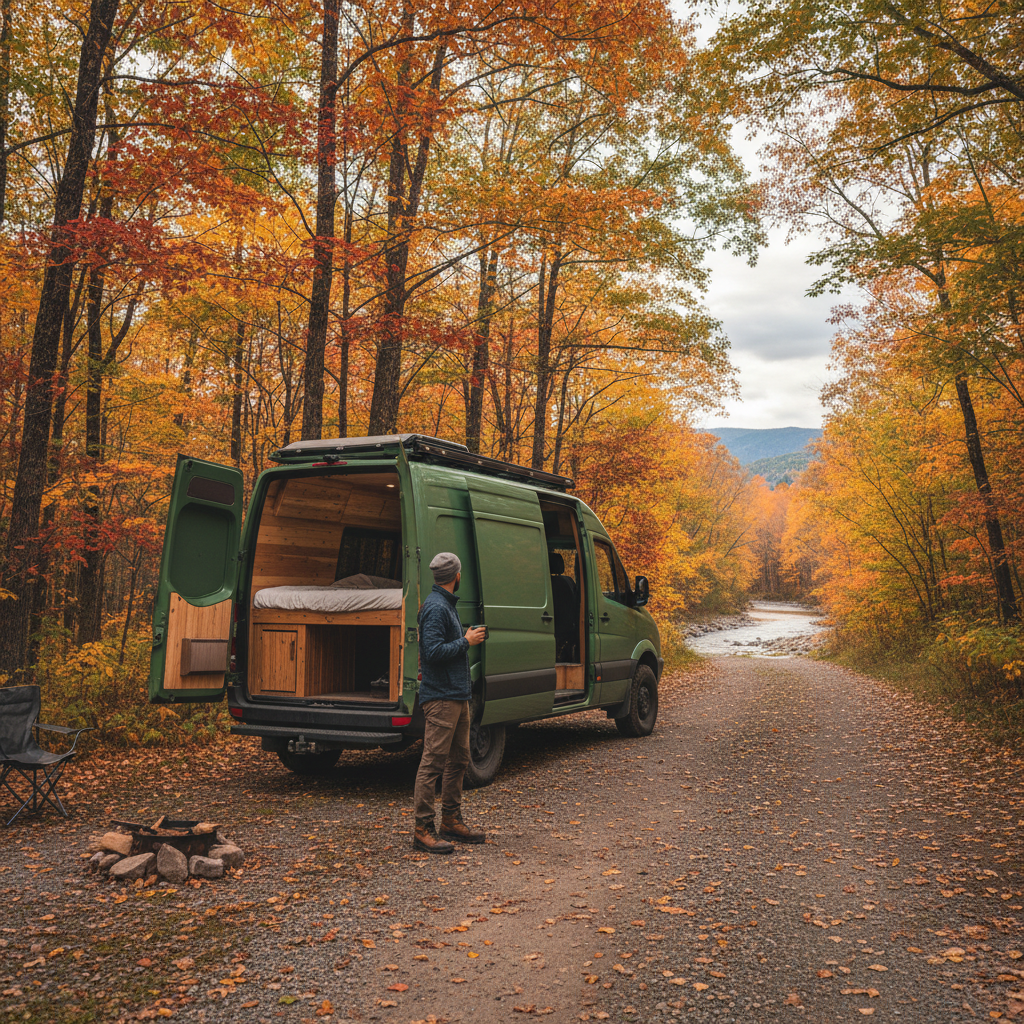
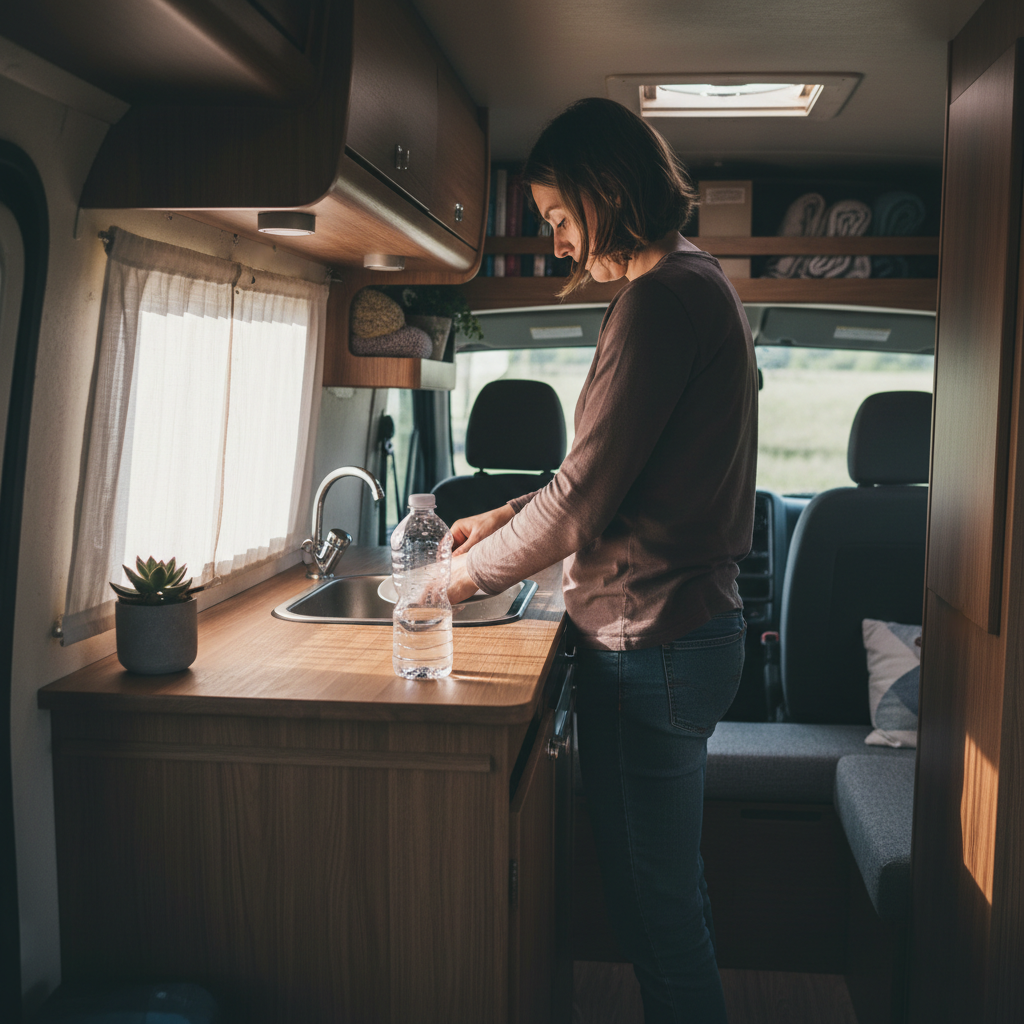
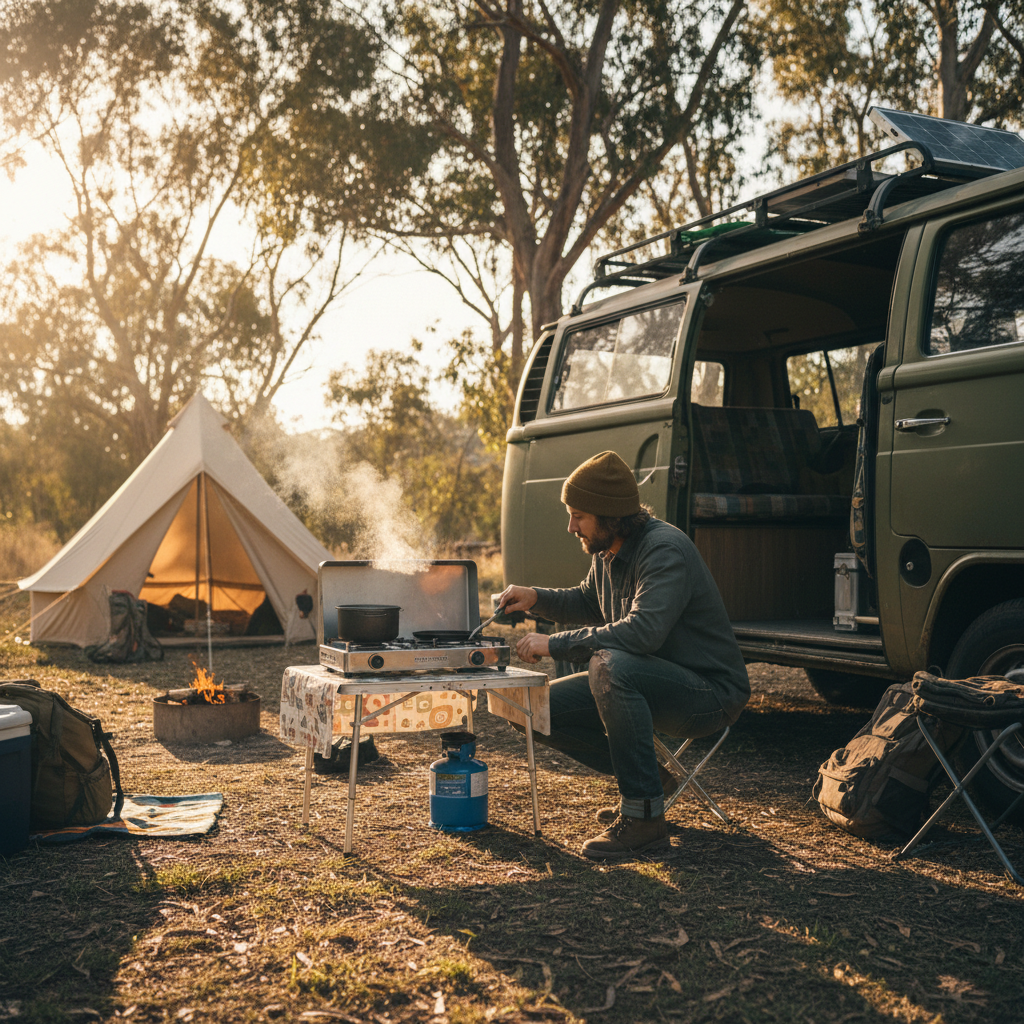

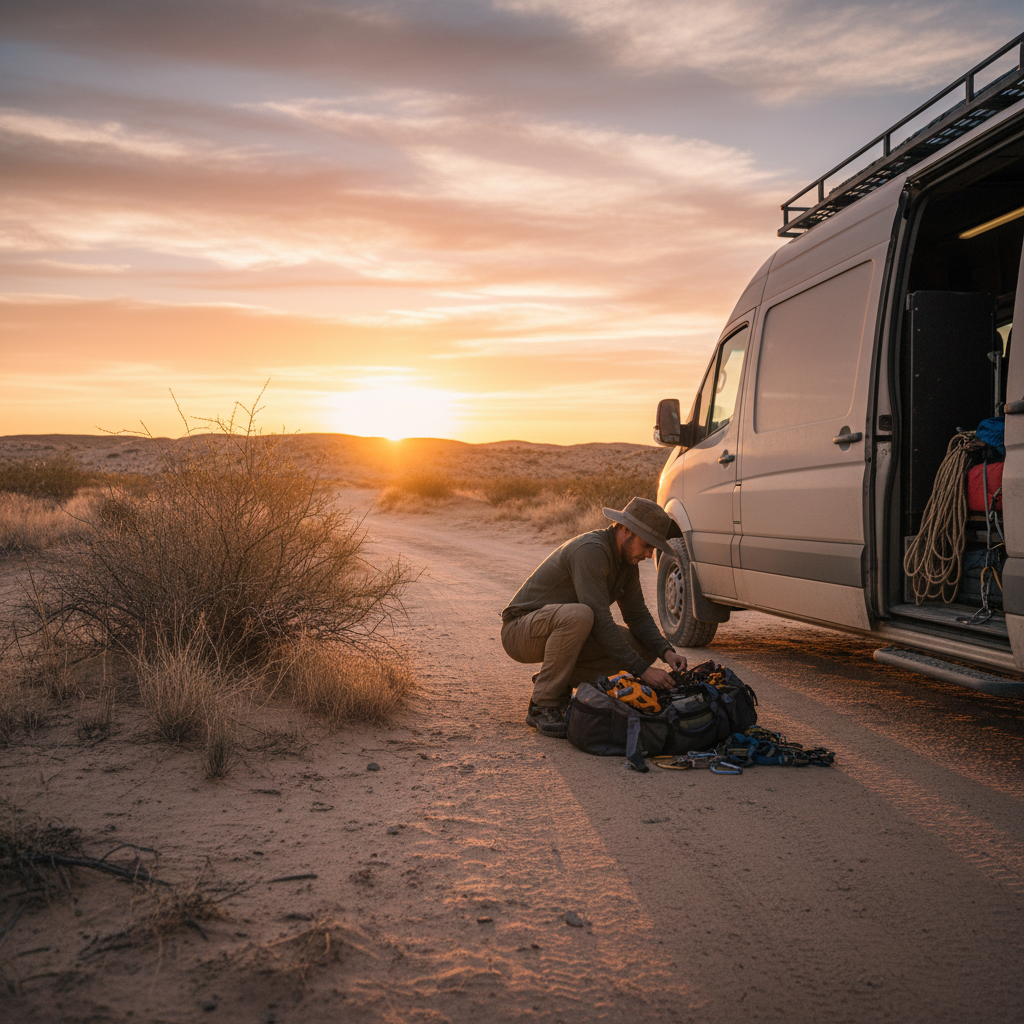
Experienced van campers will tell you to check your overnight lows before you pick a site, and there's a reason that comes first. The desert vs forest van camping decision gets framed as a vibe choice, a scenery preference, but for a first-time van camper it's actually a thermal management problem. Get the environment wrong for your current sleep setup and you won't just be uncomfortable, you'll be driving home at 2 AM.
Both environments can work beautifully for a first weekend out. What separates a good trip from a rough one isn't the postcard view, it's whether your van can handle the temperature swings and whether you've accounted for a few variables most campers discover the hard way. Your insulation situation, your water storage, and the season you're going all push the math in different directions.
This guide isn't for van-lifers building out a full-time rig or experienced overlanders scouting technical terrain. It's for someone planning a first or second van camping weekend in the US and trying to make a concrete decision between two very different environments.
Here's the tension worth sitting with before you choose: the desert's biggest advantage is also its biggest trap. Open dispersed camping on Bureau of Land Management land gives you freedom and solitude that's genuinely hard to find in a developed forest campground, but that same remoteness means cell coverage disappears, water resupply can be 40-plus miles away, and a mechanical issue becomes a real problem fast. The forest feels more forgiving until fire season locks down half the sites and a surprise afternoon thunderstorm drops the temperature 25 degrees in an hour.
The Two Environments, Honestly Compared
Comparison guides for these two environments tend to list terrain types and then say it depends on your preferences. That's not useful. Let's be direct about what each environment actually demands from a beginner van setup.
| Factor | Desert | Forest |
|---|---|---|
| Overnight temperature swing | Often 30-50°F between day and night | Typically 15-25°F swing, more moderate |
| Water availability | Very limited; plan to carry all you need | More campground sources, but not guaranteed |
| Cell/emergency coverage | Sparse to none in dispersed areas | Better near developed sites; spotty dispersed |
| Fire restrictions | Often year-round restrictions in dry zones | Seasonal; can close without much notice |
| Dispersed camping (free BLM/NF) | Widely available via BLM land | Available on National Forest land with limits |
| Wildlife overnight concerns | Rattlesnakes, scorpions near ground level | Bears in many regions; food storage required |
| Van heating demand | High at night; low heat during day | Moderate; more consistent temperatures |
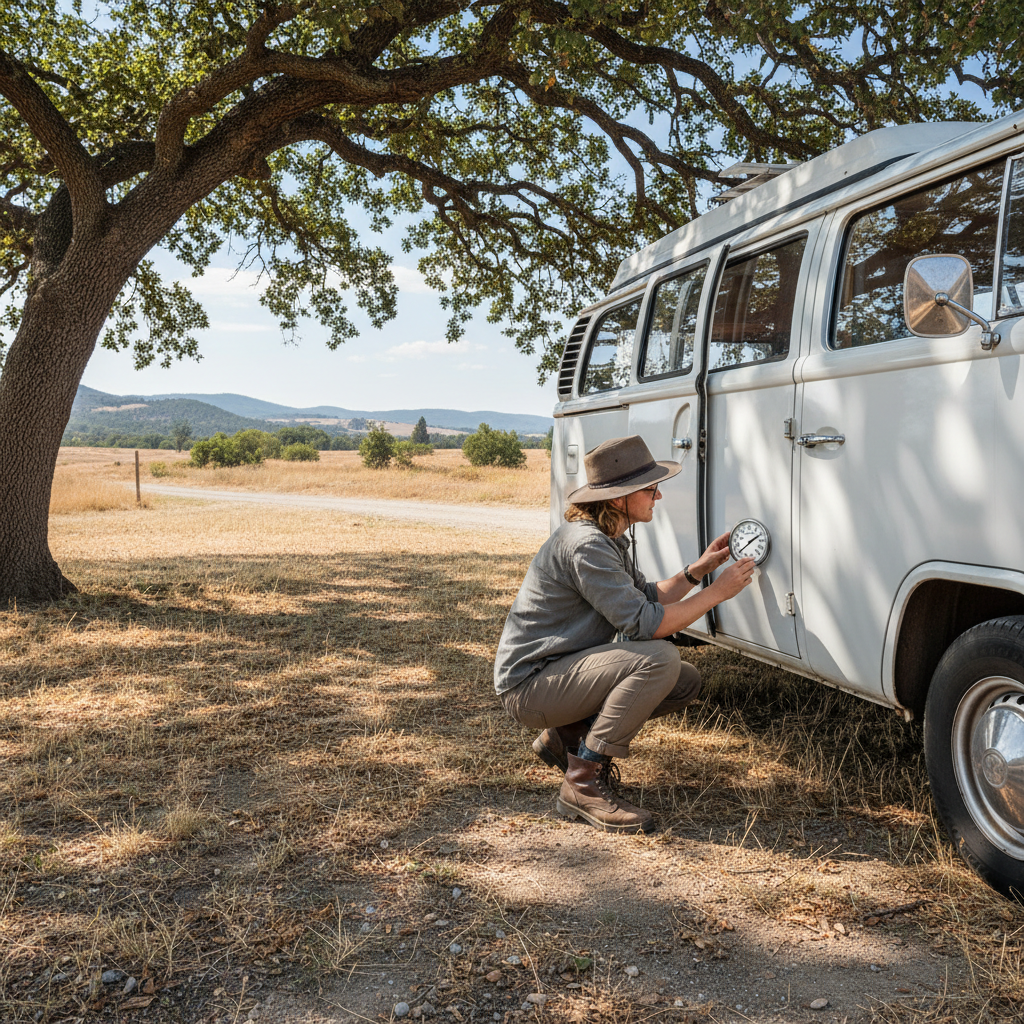
The temperature swing row is the one that matters most for a first-timer. A desert site in the American Southwest can hit 85°F at midday and drop to 38°F by 3 AM. That isn't a comfort question; it's a gear question. If your van has no insulation and you're sleeping in a basic sleeping bag rated to 45°F, the desert in spring or fall will expose that gap fast. The forest's more moderate swings give an under-equipped setup more margin for error.
That said, forest camping in summer across the Pacific Northwest or the Sierra Nevada brings its own pressure: bear country means all food, toiletries, and anything scented must be stored properly. In designated wilderness areas and many National Forest campgrounds, a bear canister or approved hard-sided container isn't a suggestion. Check the specific ranger district's rules before you go, because requirements vary by location and season.
What Your Van Actually Needs to Handle Each Environment
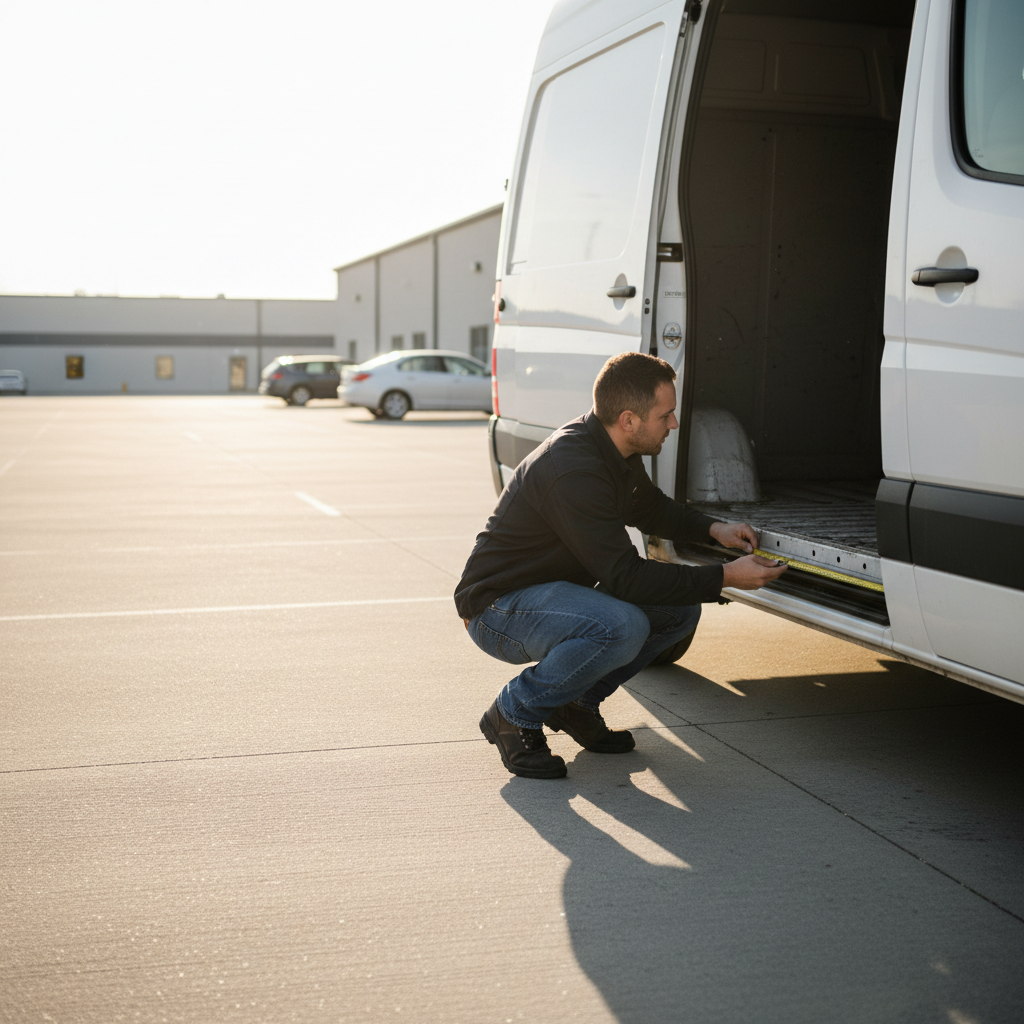
The single biggest mistake first-time van campers make is choosing a location based on photos and booking a site before auditing their rig. Not your gear preferences. Your actual van, right now.
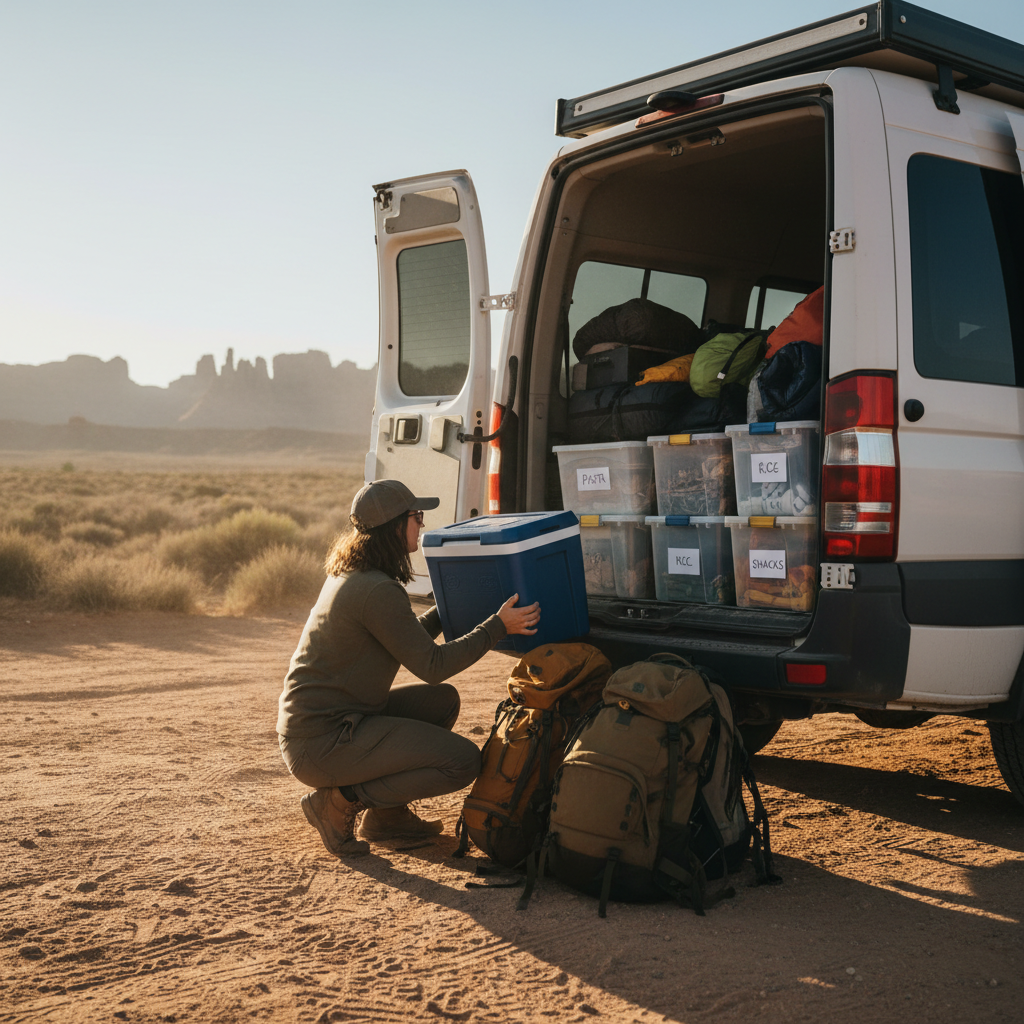
For desert weekends, the non-negotiable is water capacity. A common guideline for van camping is roughly one gallon of water per person per day for drinking and basic cooking, more if you're doing any cooking that requires rinsing. In the desert Southwest, where the nearest potable water source might be the town you left two hours ago, carrying a three-day supply for two people means 6+ gallons minimum, not counting vehicle washing or hygiene beyond basics. A 7-gallon aquatainer strapped down in the cargo area covers that without requiring any plumbing build-out, which matters when you're new and your van isn't finished yet.
Or rather: water capacity alone isn't the real constraint. The real constraint is knowing where your next resupply is before you leave pavement. Bureau of Land Management's website and the app called Avenza Maps (which works offline) let you download maps of BLM land and mark known water sources, trailheads with facilities, and the boundaries of your dispersed camping zone. Download those before you have cell service, not after.
For forest weekends, the critical check is fire regulations. The US Forest Service posts current fire restrictions by ranger district at fs.usda.gov, and those restrictions can change within 24 hours during high-fire conditions. In some districts, a Stage 2 restriction bans all campfires, charcoal, and gas stoves with open flames outside designated rings. If your meal plan depends on a camp stove and the restriction went up the day before you arrived, you're eating cold food or driving to a gas station. Check the restriction level for your specific ranger district, not just the national forest name, the day before departure.
Insulation is a factor in both environments but hits differently. A van with zero wall insulation in the desert will become a solar oven by 10 AM. Parking in shade solves most of that problem for a weekend, but shade in open desert is scarce. Reflectix window covers cut radiant heat gain significantly and cost under $30 for a set. In the forest, the insulation concern flips: damp overnight air in coastal or high-altitude forests makes an uninsulated van feel colder than the thermometer suggests. A moisture-wicking sleeping bag liner costs less than a ruined trip.
The Honest Case for Each Environment as Your First Trip
The forest wins on forgiveness. If something goes wrong with your setup, a developed National Forest campground (think fee-based sites at places like Deschutes or Inyo National Forest) puts you near other campers, sometimes near a host, and often within an hour of a town. You can test your sleep system, figure out your condensation problem, and learn how your van actually ventilates at night without the stakes being too high. That framing misses something, though: developed campgrounds in popular forests book out weeks in advance during summer, especially in Colorado, California, and the Pacific Northwest. Arriving without a reservation on a Friday in July at a forest campground is not a strategy.
The desert wins on availability and solitude. BLM dispersed camping, particularly in areas like the Sonoran Desert in Arizona or the Great Basin in Nevada, requires no reservation and no fee for stays under 14 days in most areas. You drive in, find a flat spot 200 feet from the road (a common guideline, not a universal rule; verify with the local BLM field office), and you're camping. The silence and the stars at a remote desert site are genuinely unlike anything a developed campground offers. I'd start with a desert trip over a forest trip for first-timers specifically because the dispersed BLM option removes the reservation bottleneck and forces useful self-sufficiency habits early.
But the desert is unforgiving if you skip the preparation. If you ignore the overnight low, run short on water, or camp in an area with zero cell coverage without telling someone your location and expected return, you've turned a recreational weekend into a situation. Leaving a trip plan with a contact at home isn't overcomplicating it. It's the one habit that costs nothing and matters the most.
Check sq footage of shade availability, overnight low forecasts, and water resupply distance before committing to any desert site.
When the Desert Recommendation Weakens
Everything above favors the desert for many first-timers, with caveats. There are specific conditions where that recommendation reverses and the forest becomes the clearly better choice.
If you're camping in June through August anywhere in the low-elevation Southwest (below roughly 3,500 feet), the desert flips from manageable to punishing. Daytime temperatures in the Sonoran and Mojave regularly exceed 105°F during peak summer. An uninsulated van in direct sun can reach interior temperatures well above ambient air temperature, which at 110°F outdoor heat is genuinely dangerous. Heat exhaustion and heat stroke are medical emergencies, not discomforts. The National Weather Service issues Excessive Heat Warnings when temperatures are expected to reach dangerous thresholds, and those warnings apply to people living in vehicles as much as anyone. If your first van camping weekend falls in July and your target is low-elevation desert, go to the forest instead, or go to higher desert elevation (above 5,000 feet) where summer nights stay cool.
Similarly, if you're traveling solo with no mechanical backup plan and limited van driving experience, starting in a remote dispersed desert site adds risk that isn't worth the freedom premium. A flat tire on a sandy two-track road three miles from pavement is a solvable problem with AAA Plus (which covers off-road recovery up to a certain distance; verify your coverage tier before the trip) or a portable air compressor and plug kit. Without either, it becomes a multi-hour ordeal. The forest's developed campgrounds keep you closer to help while you build confidence in your rig.
One more exclusion: if your van has no ventilation beyond cracking windows, a forest trip in a humid region will leave you waking up to condensation dripping from the ceiling. That's unpleasant on night one and, over repeated trips without addressing it, contributes to mold. A roof vent fan, the Maxxair or Fan-Tastic models being the two most common in the van build community, solves this almost entirely. Without one, the dry desert air is genuinely easier to sleep in.
A Practical First-Weekend Framework
Pick your environment using these four questions in order, not simultaneously.
First: What's the overnight low at your target site for the dates you're going? Look up the specific forecast for the nearest weather station, not a regional average. If it's below 40°F and your sleep system isn't rated for that, either bring a warmer bag or pick a different location. This is the only question that functions as a hard gate.
Second: Can you carry enough water to cover your stay without resupply? If your target is dispersed desert camping and you can't confirm a water source within a reasonable driving distance, calculate your carry capacity honestly. Two people, two nights, drinking and cooking: a minimum of 8-10 gallons is a reasonable working figure, not a guarantee. If your current containers can't hold that, either add capacity before you go or choose a forest site with a water spigot.
Third: Have you checked fire restrictions for the specific ranger district or BLM field office? Not the region, the specific unit. Do this the day before, not the week before.
Fourth: Does someone know where you're going and when you expect to return? This applies to both environments. It takes four minutes to text a contact your coordinates and your expected return time. If you're camping dispersed in either desert or forest, those four minutes are not optional.
Answer those four in order and your first van camping weekend will probably go fine. Skip the first one and the season, your sleep system, and the environment will decide the outcome for you.
Making the Call
If you're heading out between September and May, your sleep system is rated below 35°F, and you can carry 8-10 gallons of water: the desert, specifically BLM dispersed land in the Southwest, gives you a better first experience than a reserved forest campground. The freedom is real, the sky is genuinely extraordinary, and the self-sufficiency habits you build carry forward into every trip after.
If it's summer, you're going solo with a bare-bones rig, or the overnight low at your desert target is outside your sleep system's range: book a developed National Forest campground, test your setup, and save the dispersed desert trip for fall. The forest won't punish an under-equipped first-timer the way a midsummer desert will. (It also won't disappear into a reservation blackout if you plan two weeks out for a shoulder-season weekday trip.)
The campers who come home frustrated from their first van weekend almost always made the location decision before they audited their gear. Do it the other way around. Know your sleep system's floor, know your water capacity, check the fire restrictions and overnight lows. Then pick your environment. The view from either one will be worth it.