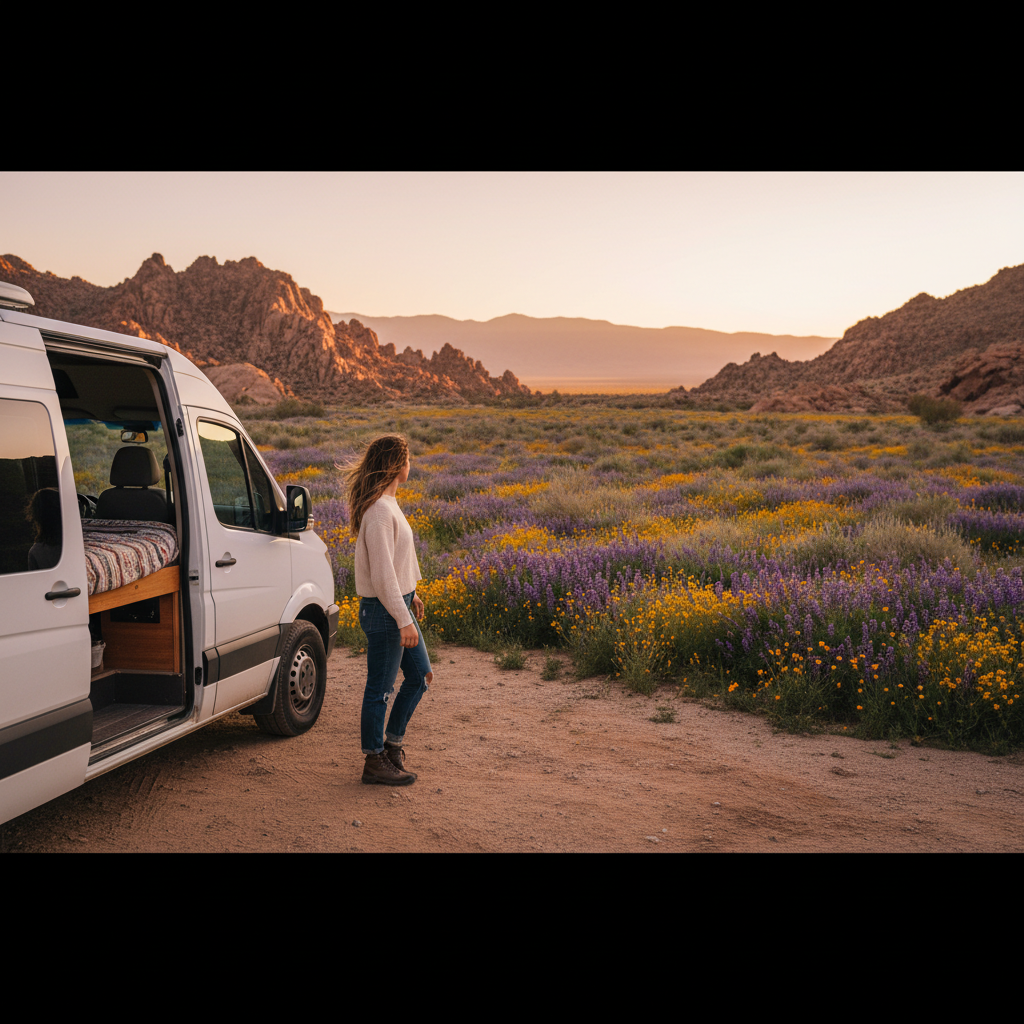
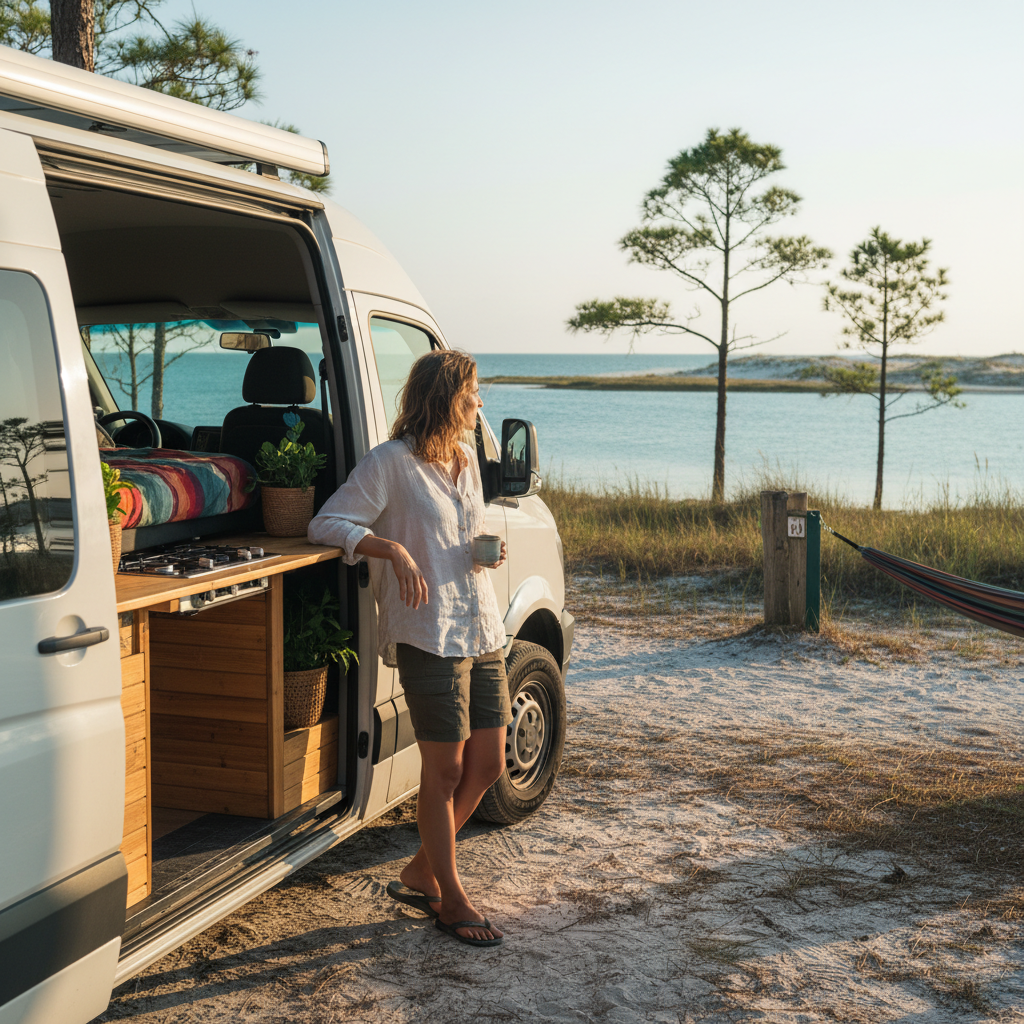
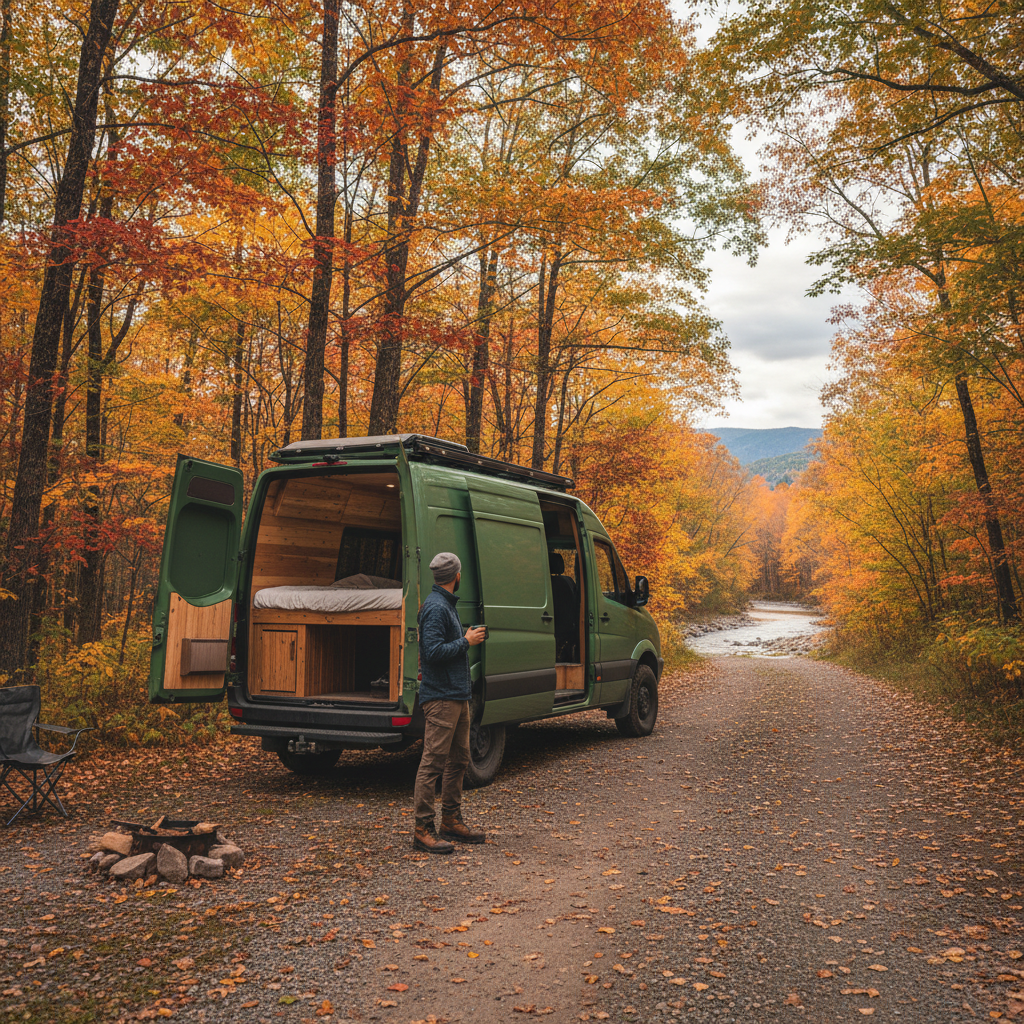
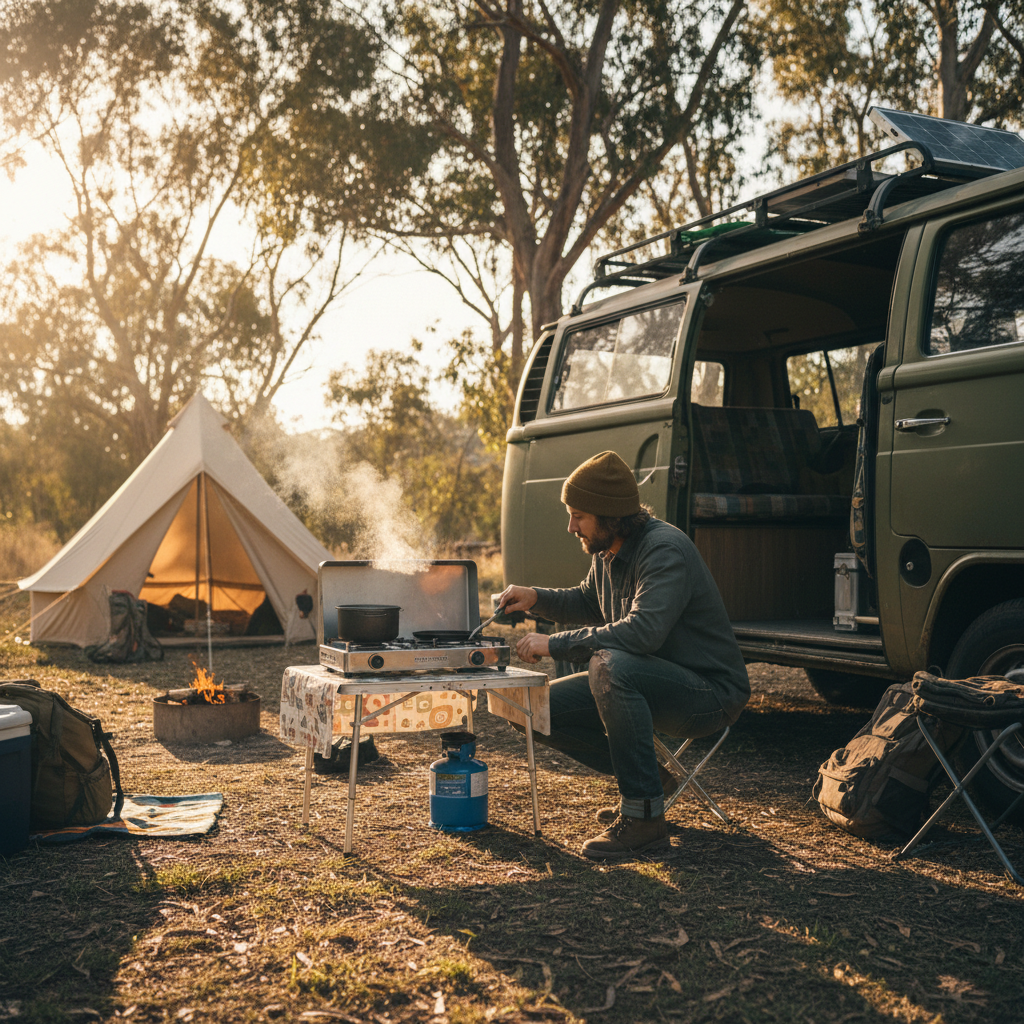
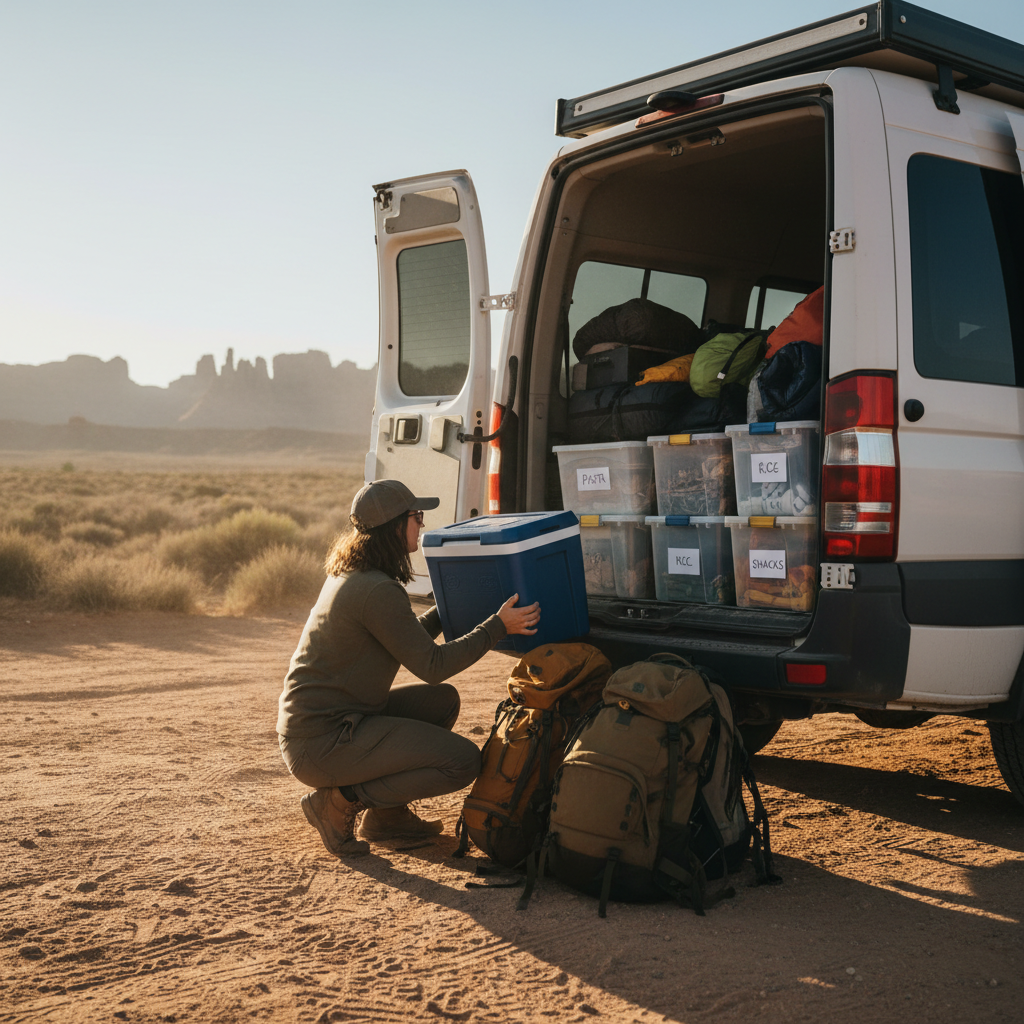

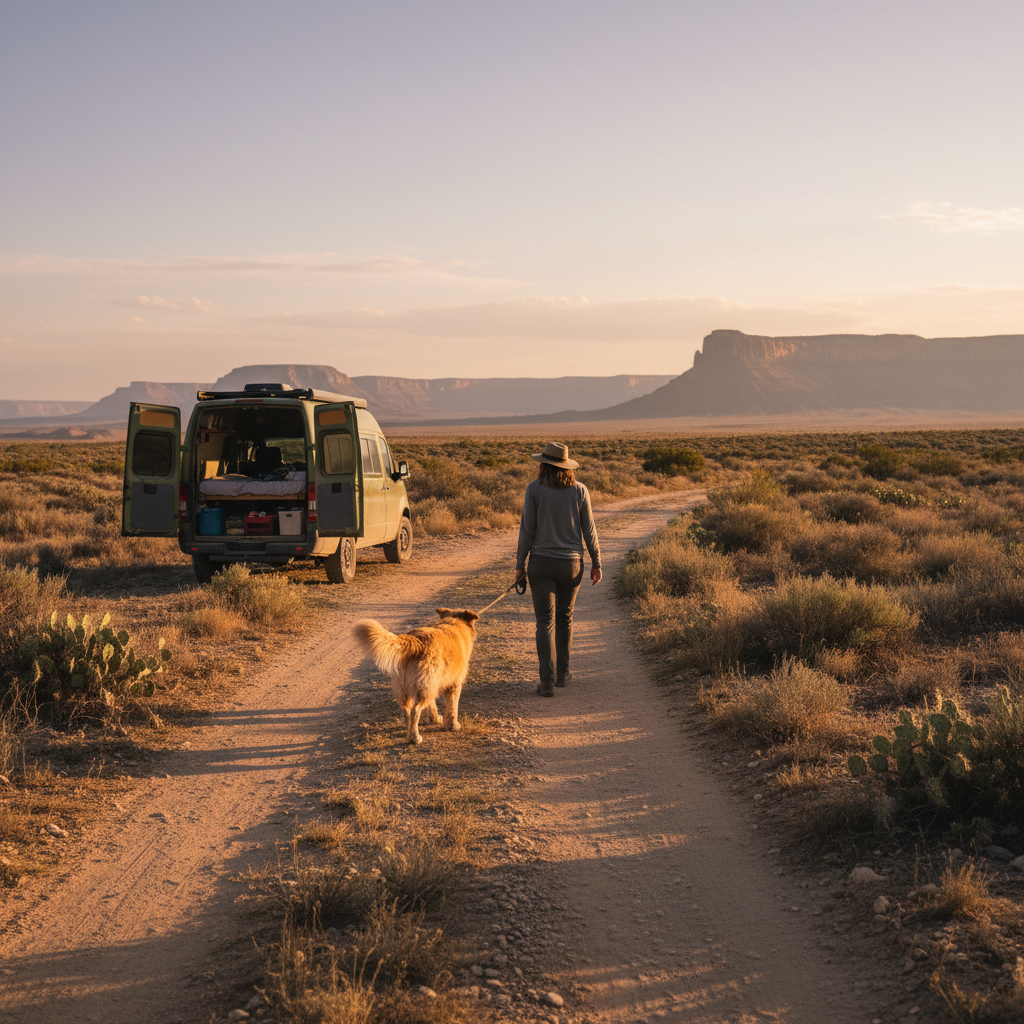
Campsite booking platforms will tell you a site is pet-friendly, and technically that's true. What they won't tell you is that the pet policy applies to leashed dogs in a specific loop, that your van can't fit the narrow access road, or that the quiet hours start at 9 PM in a site surrounded by other dogs who haven't read the rules. Finding overnight spots that actually work for a van and a dog is a different problem from finding a campsite that accepts pets.
The search comes down to three variables that most booking tools don't filter simultaneously: surface access (your van needs to get there and park flat), land-use rules (leash requirements and breed restrictions vary by agency and site), and ambient conditions (noise, heat, foot traffic, other animals). Any one of those three can make a site unusable for a dog-van setup even if it's listed as pet-friendly.
Here's the tension worth sitting with before you open a single app: the sites with the most dog-friendly policies are often the most remote, while the sites easiest to access often have the most restrictive rules. That gap doesn't resolve neatly, and it shapes every decision in this guide.
Understand Who Sets the Rules Before You Book
The single most useful shift in thinking about overnight spots is recognizing that "pet-friendly" is not one policy. It's a category that includes everything from "dogs welcome, no leash required" on Bureau of Land Management dispersed sites to "dogs must be leashed at all times and may not be left unattended in vehicles" at fee-based Forest Service campgrounds. The managing agency determines the baseline, and then individual site operators can add restrictions on top of that.
Four agencies manage the majority of public land where self-contained van camping is realistic in the US: the Bureau of Land Management (BLM), the US Forest Service (USFS), the National Park Service (NPS), and state park systems. BLM land is the most permissive by default. Dogs are generally allowed, leash rules are often absent on dispersed sites (though always check the specific field office order), and there are no site fees for most dispersed camping within the 14-day stay limit. Forest Service rules vary by ranger district, but dogs are broadly permitted with a 6-foot leash in developed campgrounds. National Parks are the most restrictive: dogs are typically confined to paved areas, parking lots, and campgrounds, and cannot be taken on most trails. State parks sit somewhere in between and differ meaningfully by state.
That framing misses something. The leash rule isn't just a compliance issue for your dog. It's a proxy for how the site is managed overall. A BLM dispersed site with no posted leash rule is also a site with no camp host, no trash service, and no cell signal, which means if your dog gets a foxtail in its paw at midnight, you're solving that yourself. Know what you're trading.
For van campers specifically, the NPS restriction on dogs in backcountry and on trails is a genuine limitation worth naming. If your dog needs real exercise and not just a campground loop, most National Park campgrounds are a poor fit regardless of what the pet policy says.
Apps and Databases That Actually Filter for Van and Dog Together
The honest answer is that no single app does this perfectly. But a few are significantly better than the default booking platforms for van-dog combinations.
The Dyrt is probably the most useful starting point. It lets you filter by pet-friendly status and by campsite type (including dispersed/free camping), and the community review system means you can read reports from other van campers about actual road conditions and site size. iOverlander skews toward overlanding and dispersed use, with user-submitted GPS waypoints that often include notes on dog-friendliness and surface type. Neither is perfect, but running both gives you better coverage than using either alone.
For BLM and Forest Service dispersed camping specifically, the BLM's own GeoPDF maps (available through the onX Backcountry app or directly from field office websites) show land boundaries and road classifications. This matters because a road marked as a 4WD route on a BLM map is a road your Sprinter or Transit won't navigate without damage. The GeoPDF approach takes more effort than an app filter, but it's more reliable for route planning.
Campendium and Freecampsites.net both have pet-friendly filters, and both rely on user-submitted content. The gap in those databases is recency: a site posted in 2019 may have had its access road washed out, or a new seasonal closure added. I'd start with The Dyrt for discovery and verify anything promising against a recent USFS or BLM field office update before committing to a multi-hour drive.
Harvest Hosts deserves a mention for the van-dog use case specifically. Membership gives you access to overnight parking at wineries, farms, breweries, and similar private properties. Hosts self-identify as pet-friendly, and the stays are at private businesses rather than public land, so there's usually someone on site. That human presence matters when you have a dog, especially at night. Harvest Hosts doesn't replace dispersed camping, but it fills the gap when you want a clean, predictable stop with hookups nearby.
How to Evaluate a Site for a Van-Dog Setup Before You Arrive
Drive-bys and satellite review are non-negotiable for van campers with dogs. A site that looks open on a map can be a pull-through with a 20-foot clearance limit, a gravel lot with no shade in 95-degree weather, or a campground that borders a busy trailhead with constant foot traffic that will keep a reactive dog on edge all night.
Before you leave cell range, check four things: road surface and clearance (Google Earth's satellite layer shows most access roads; look for single-lane tracks with no turnouts), shade availability (critical for dogs in summer, and van thermal management depends on it too), proximity to water (dogs need more water than they'll tell you, and a dry camp in summer heat is a harder ask for a dog than for you), and posted leash requirements specific to that site, not just the general agency policy.
Or rather: checking leash rules for the agency isn't enough. A BLM field office may have a supplemental rule for a specific recreation area that requires leashes, even though BLM land is generally permissive. The specific field office management plan is the authoritative document, not the agency-level summary. Field office management plans are available on the relevant BLM state office website, though they're not always easy to navigate.
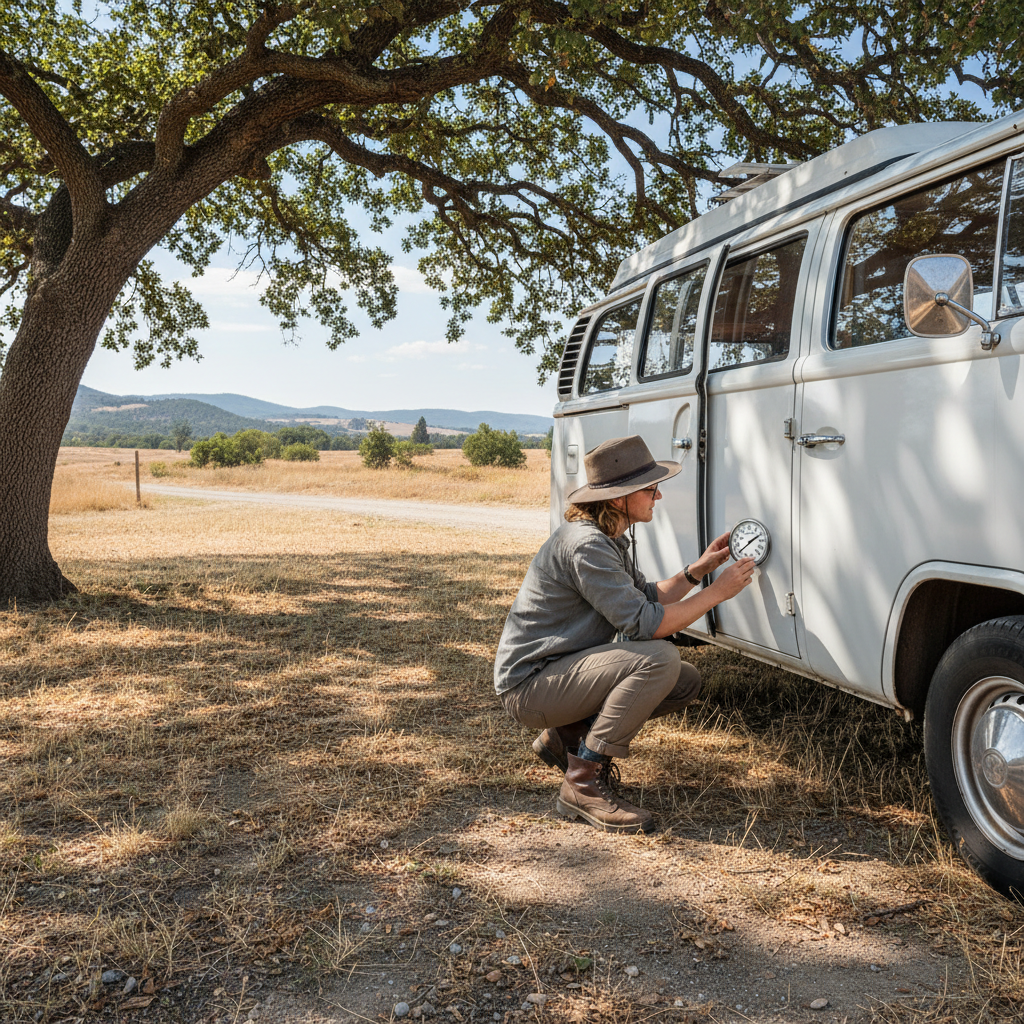
Summer temperature planning is a YMYL-adjacent consideration for dogs that most van camping guides skip. Dogs cannot thermoregulate in a closed vehicle the way humans can. A van parked in direct sun at 85°F ambient temperature can reach interior temperatures of 120°F or higher within an hour, according to the American Veterinary Medical Association. If your overnight spot requires leaving the van locked and your dog inside during any part of the day, you need ventilation that works without the engine running. That means a quality roof fan (Maxxair and Fan-Tastic are the two brands that van build communities consistently rely on) plus reflective window covers, not just cracked windows. This isn't optional equipment for dog-van camping in summer; it's a safety requirement.
Ignore the heat management question and you're not just risking a bad night. You're risking your dog's life. That's the blunt version of what the data says.
BLM Dispersed Camping: The Real Conditions for Dogs
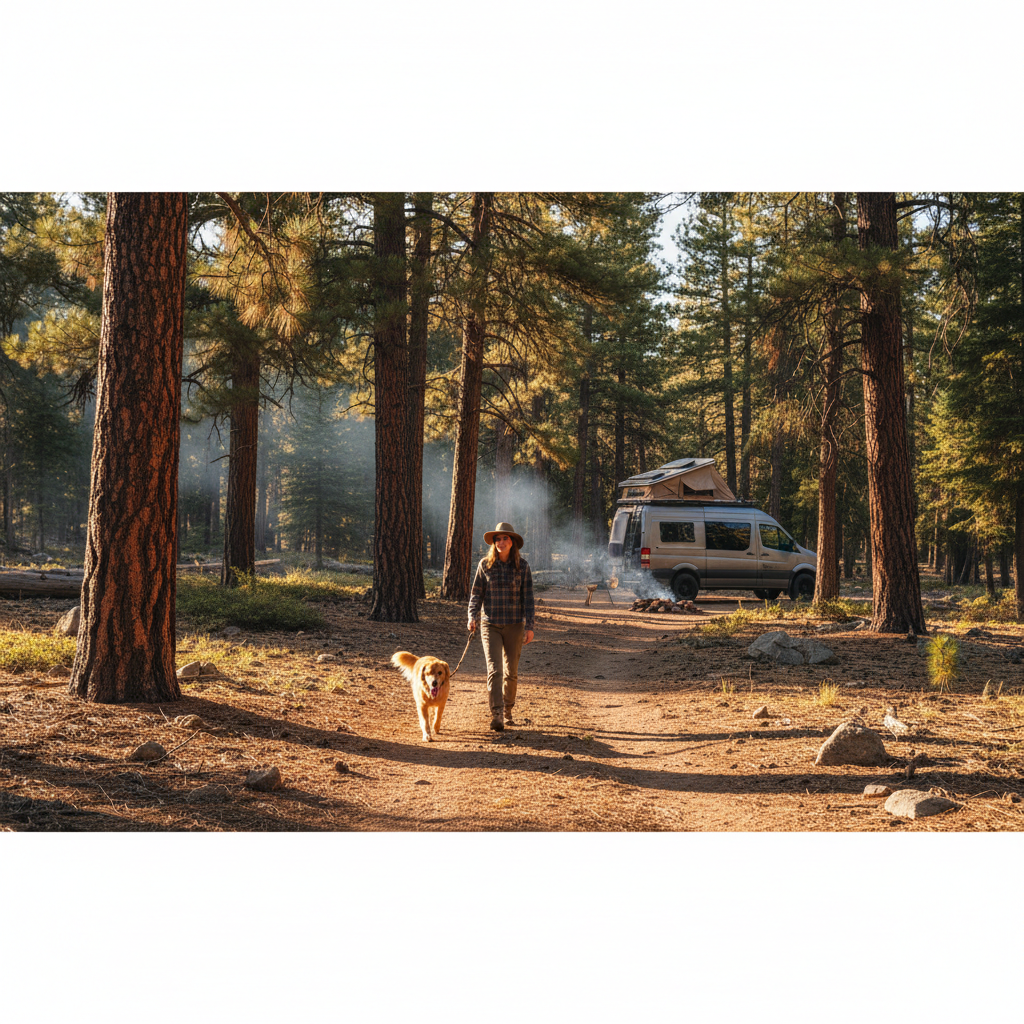
BLM dispersed camping is the closest thing to an unconstrained overnight option for van campers with dogs. No reservations, no site fees in most cases, dogs generally permitted, and you can typically pull off at any legal dispersed camping area within the 14-day limit. But the fine print matters.
The 14-day limit is real and enforced in high-use areas. Popular BLM corridors near towns like Moab, Utah, or Quartzsite, Arizona, see active enforcement. Staying beyond 14 days in one location (typically defined as within a 25-mile radius, though the exact boundary varies by field office order) can result in a citation. The stay limit is site-specific, not agency-wide. Check the specific area's order, not the general BLM policy page.
Wildlife interaction is the most underacknowledged risk for dogs on BLM land. Dispersed camping in the desert Southwest puts dogs near rattlesnakes, cactus, and in some areas, active coyote territories. Dogs that range off-leash on dispersed sites in these zones face real hazard, and rattlesnake avoidance training (offered by trainers in Arizona, Nevada, New Mexico, and California) is something BLM-heavy van campers with dogs should seriously consider. It's not a requirement. But dog owners who've had a vet bill from a rattlesnake envenomation in a rural area with a two-hour drive to the nearest emergency clinic tend to feel differently about it afterward.
Water is the other constraint. Dispersed BLM camping is dry camping by definition. A 60-pound dog in summer heat needs roughly one ounce of water per pound of body weight per day as a starting point, though exercise and heat increase that significantly. On a hot day in the desert, you're looking at carrying meaningfully more than that. The common mistake is sizing water carry for the human occupants and treating the dog's needs as minor. They aren't.
The alternative most van-dog campers default to when BLM dispersed sites feel too uncertain is Forest Service developed campgrounds. The tradeoffs: more consistent road access, usually better shade, site fees typically in the $20-$35 range per night (as of 2024, on Recreation.gov), and leash requirements in developed areas. For a dog that handles campground noise and proximity to other campers well, it's a reasonable trade. For a reactive dog, the denser setup often makes things worse.
When the Main Approach Doesn't Work: Conditions That Change the Recommendation
Dispersed BLM camping with a dog is the right default for a lot of van campers. It's not the right default for all of them.
If your dog is reactive to other dogs or to unfamiliar sounds at night, dispersed camping in high-use areas (even on BLM land) can be more stressful than a developed campground with predictable site spacing. A reactive dog that barks through the night is a problem for you, for your neighbors, and for the dog. Choosing a site for its permissive leash policy but ignoring that it sits near a popular trailhead with constant morning traffic is a setup failure, not a dog failure.
Senior dogs and dogs with mobility limitations also change the calculus. A site that requires a quarter-mile walk across rough terrain to reach a suitable parking spot isn't accessible for a dog with hip dysplasia, even if the land-use rules are perfect. Drive-in access to a flat, cleared spot matters more for those dogs than dispersal policy.
And if you're traveling in summer through the interior Southwest, the "free dispersed camping" logic can break down entirely. Sites with no shade, no water nearby, and no cell signal are workable in mild weather. In July in Arizona, they require a level of heat management infrastructure in your van that not all builds have. A KOA with power hookups and shade trees is not a failure condition. For some dogs, in some weather, it's the right call. This guide covers dispersed and free camping because that's what most van-dog campers are optimizing for, but it won't tell you that's always the answer.
Building a Reliable Pre-Trip Checklist for Dog-Friendly Overnight Spots
The most reliable van-dog campers aren't necessarily the ones with the most research skills. They're the ones who run the same verification process every trip so that decisions under fatigue (when you've been driving since noon and need to stop) don't rely on memory.
A practical pre-departure check for any new site: confirm managing agency and specific area pet rules (not agency-wide rules), verify road surface against recent trip reports (not just satellite), confirm shade availability or plan for van thermal management, check water sources within reasonable range, and note the nearest emergency vet clinic to your destination. That last item sounds excessive until it isn't.
For trip planning across multiple nights, I'd start with a mixed strategy: anchor nights at Harvest Hosts or Forest Service campgrounds for predictability, fill the flexible nights with BLM dispersed camping where the route allows. This isn't the cheapest approach, but it reduces the risk of arriving at a site that doesn't work for your specific dog after a long drive day.
The van community's best resource for dog-specific site intel is still direct: ask in van life forums (r/vandwellers on Reddit is active and searchable) for reports from other dog owners about specific corridors. The texture of that information, real notes about whether a site has loose gravel that tears up paws or whether a particular BLM area has had recent coyote activity, doesn't show up in any app. That gap is real, and crowdsourcing it from people who were there last month is more reliable than anything a booking platform offers.
Skip the verification process once, and you'll likely be fine. Skip it regularly, and eventually you'll pull into a site at 9 PM with a tired dog, no cell signal, and no backup plan. That's the consequence of treating site selection as a booking problem rather than a route planning problem.
Putting It Together
If your dog handles car travel well and you have basic van thermal management in place, start with BLM dispersed camping as your primary overnight strategy and use The Dyrt plus GeoPDF maps to identify specific sites. Verify road access and leash requirements against the specific field office management plan, not the agency summary. Build water carry around your dog's weight and the expected temperature, not around what's convenient to pack.
If your dog is reactive, senior, or has specific physical limitations, weight developed campgrounds more heavily and choose sites based on spacing and ambient noise rather than just pet-policy permissiveness.
And if you're heading into the desert Southwest in summer, treat van thermal management as a non-negotiable infrastructure item before you leave, not something to figure out when it's already hot. A quality roof fan and reflective covers are the minimum. Your dog can't tell you when it's too hot until it's too late.