


Rangers at busy parks will tell you to check the permit calendar before you book anything else, and there is a reason that comes first. A weekend van trip to a national park sounds freewheeling by definition, but the parks that draw the most visitors, Zion, Glacier, Arches, Yosemite, run on systems that can stop you at the gate regardless of how early you arrived. The phrase "no reservations needed" gets thrown around in van-life content, and it is rarely the full story.
What actually separates a smooth trip from a frustrating one is understanding which parks use timed-entry permits, which campgrounds genuinely operate first-come-first-served, and how those two systems interact on the same weekend. Get that wrong and you might drive six hours to find a permit lottery already closed or a campground host telling you the last spot filled at 7 AM.
This is not a guide for people who want to book everything three months out. If you are comfortable with a structured itinerary and a reserved site waiting for you, this article is not for you. What follows is for van travelers who want genuine flexibility while still arriving somewhere legal to sleep.
The Permit Layer Most Van Travelers Miss
First-come-first-served camping and timed-entry permits are two separate systems, and conflating them is the most common planning mistake. A park can require a timed-entry permit to drive inside at all, independent of whether your campsite is reserved or walk-up. Zion National Park used timed-entry windows in recent seasons, meaning even arriving at 5 AM without a permit meant waiting outside the gate. The National Park Service posts current entry requirements at recreation.gov, and that page changes seasonally.
The practical upshot: always check the specific park's alerts page, not a general van-life blog, before you commit to a departure date. Park-specific pages on nps.gov carry the authoritative, current permit status. A blog post from eight months ago may describe a pilot program that has since expanded or been discontinued.
Or rather: it is not just about whether a permit exists. It is about the permit release schedule. Many timed-entry permits for high-traffic parks release two weeks in advance, with a smaller batch released the morning of entry, typically at 8 AM Eastern. If you are targeting that same-day batch, you are competing with everyone else who planned the same thing. The odds are real but not guaranteed, and banking a weekend trip on them is a higher-stakes gamble than most guides acknowledge.
Parks without timed-entry systems, including many in the less-visited National Park units like Congaree in South Carolina, Great Sand Dunes in Colorado, or Guadalupe Mountains in Texas, offer a genuinely walk-up experience. Those three parks also tend to have first-come-first-served sites that stay available on weekend mornings if you arrive by 9 AM, though that window narrows significantly in peak summer months. Building your unplanned trip around parks in this tier is not a compromise. For a van, they often deliver more of what you came for.
Reading First-Come-First-Served Campgrounds Accurately
Not all first-come-first-served designations are equal. Some campgrounds labeled walk-up have 200 sites and genuinely stay available through mid-morning. Others have 12 sites and fill Thursday night for the weekend. The NPS campground page for each park lists site counts, and Recreation.gov shows real-time availability for campgrounds that use its system even for walk-up sites, because rangers often post when a campground is full.
A practical approach that experienced van travelers use: check the campground's availability on Recreation.gov the night before, not as a reservation but as a census. If every adjacent reserved campground in the same park shows full for your target date, the walk-up sites will likely mirror that pressure. Conversely, if reserved sites still show openings two days out, walk-up competition will be lighter.
Arrival timing is where this becomes concrete. For high-traffic parks, arriving Friday afternoon for a weekend stay is the worst possible window. Sites fill Thursday evening or by 9 AM Friday. Saturday morning arrivals for a one-night stay can work if you are targeting campgrounds with higher site counts, because Saturday departures free up spots. Sunday is often the easiest entry day of a summer weekend for the same reason.
Vehicle size matters more than most planning guides mention. Many national park campgrounds have hard length limits, commonly 21 feet or 27 feet for certain loops, which affect slide-out van builds or camper vans towing anything. Check the campground detail page on nps.gov for length restrictions before routing there. Pulling in to find your rig does not fit a loop with available sites is a genuinely deflating experience.
Building a Trip That Does Not Depend on Any Single Park
The reframe that changes how you plan this: a national park van trip without reservation stress is not about finding parks that are easy to enter. It is about building a route where two or three viable options exist for each overnight, so no single gate failure strands you.
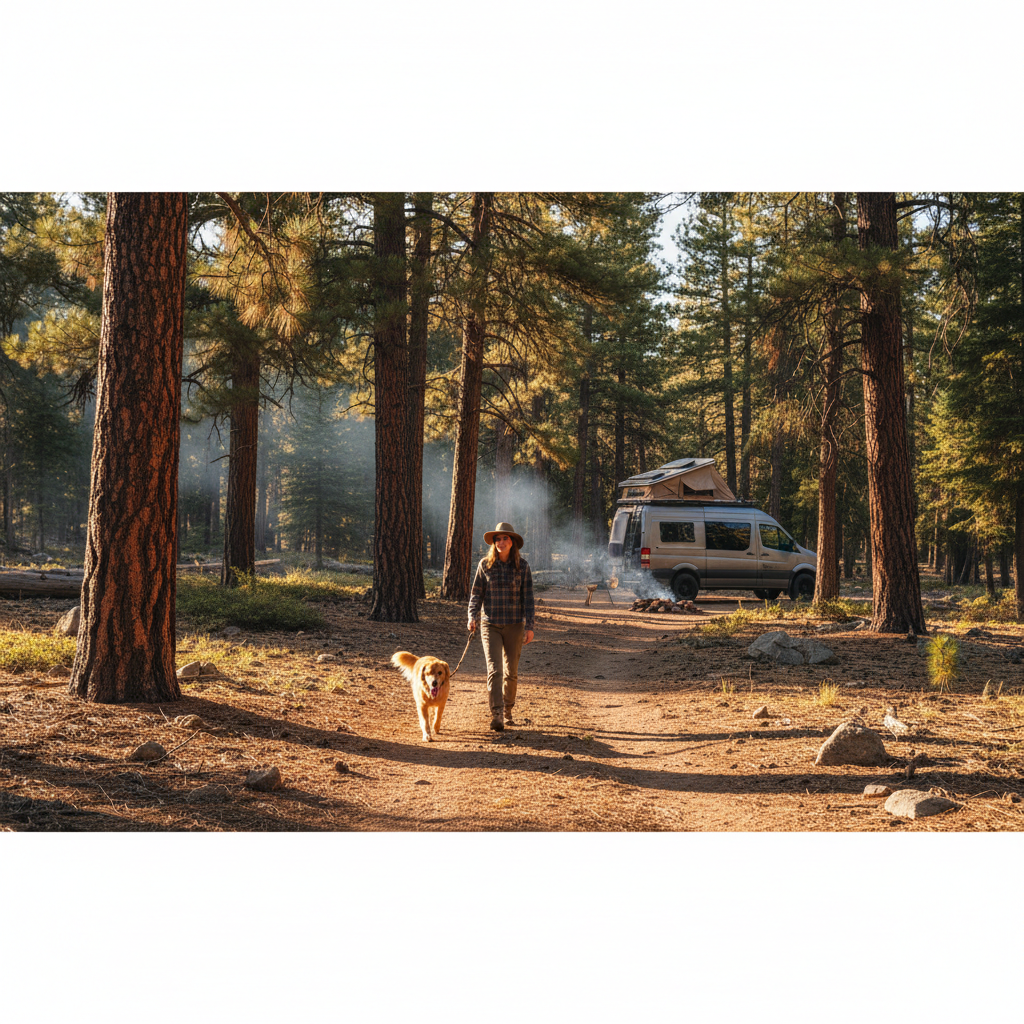
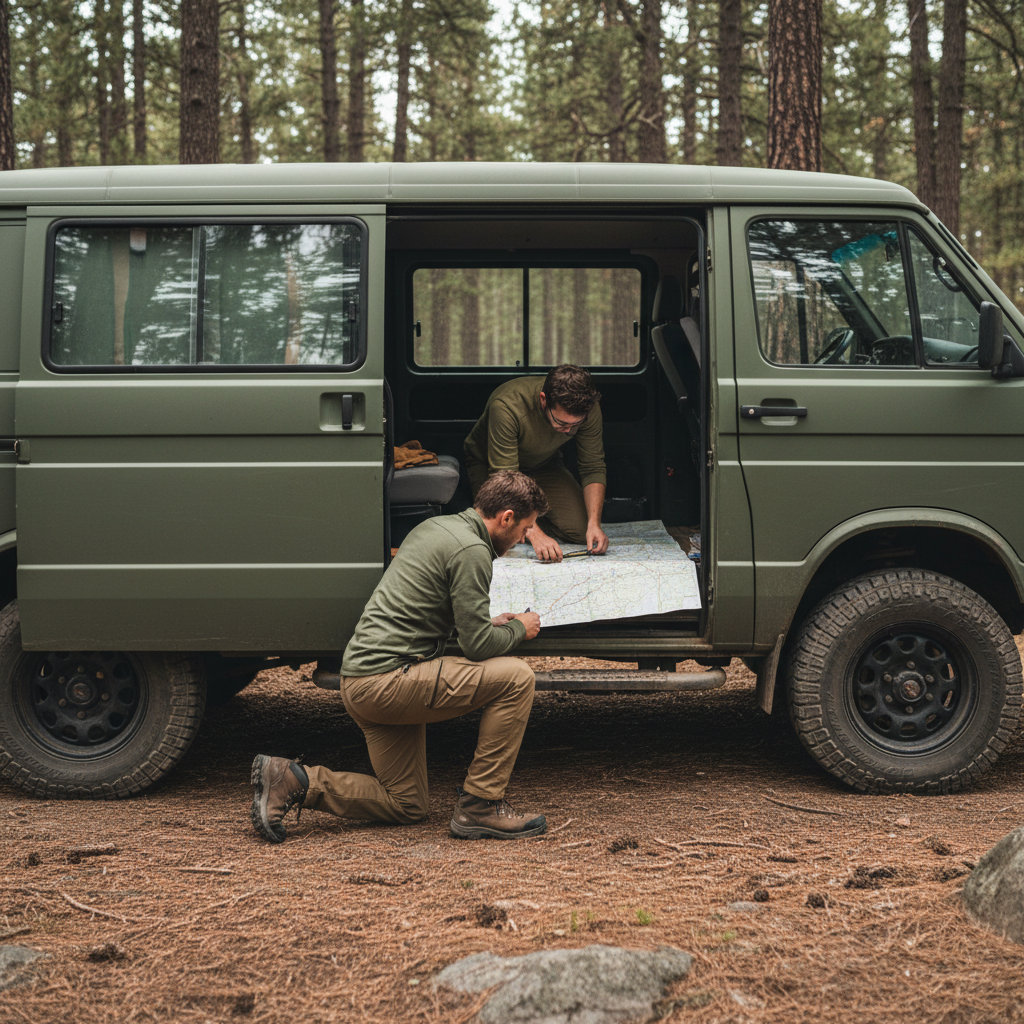
In practice, this means pairing a target park with a National Forest or BLM (Bureau of Land Management) dispersed camping option within 30 to 60 miles. Dispersed camping on National Forest land adjacent to major parks is legal, free, and requires no permit in most cases, though the 14-day stay limit and fire restriction rules apply and vary by district. The USDA Forest Service hosts district-level maps showing dispersed camping zones, and the free app Gaia GPS overlays that land ownership data so you can identify fallback spots before you leave home.
A concrete example of this redundancy approach: if your target is Rocky Mountain National Park, which uses a timed-entry permit system for the Bear Lake Corridor, your fallback can be Roosevelt National Forest immediately adjacent to the park's eastern boundary. Sites there require no permit, have no fee, and the scenery difference is negligible for a van parked among pines. If you land your Rocky Mountain permit, great. If you do not, you sleep under the same stars eight miles away.
What happens if you ignore this redundancy entirely? You spend a night in a Walmart parking lot in Estes Park, which is legal but not why you came. More seriously, van travelers who plan single-park itineraries with no fallback sometimes push into legal gray areas, pulling onto road shoulders or using day-use areas after dark, which carries real citation risk in high-enforcement park corridors. The fallback is not a backup plan. It is the plan.
I would start route-building in National Forest land first, identify the dispersed zones, then layer the national park options on top. That inversion makes the whole trip feel less brittle.
What to Know About Specific Park Systems Before You Go
Parks with timed-entry systems in recent seasons have included Yosemite, Zion, Glacier, Rocky Mountain, and Acadia, though the specific requirements, dates, and permit types change year to year. The NPS alerts page for each park is the only reliable source for current-season rules. Do not use last year's trip report as your planning document.
Yosemite Valley in particular runs a day-use reservation system during peak periods that covers entry by personal vehicle, separate from camping reservations. An unreserved van camping trip to Yosemite Valley in July is essentially impossible without the day-use permit. The rest of Yosemite, including Tuolumne Meadows and Hetch Hetchy, has historically been more accessible, though Tuolumne has also seen permit pilots. The park is large enough that a van trip targeting less-visited zones outside the Valley can still deliver the granite and forest experience without the permit competition.
Acadia National Park on the Maine coast uses a vehicle reservation system for the Park Loop Road at peak times. The good news for van travelers: the island's carriage roads and campgrounds outside the Loop Road corridor remain more accessible. Blackwoods Campground and Seawall Campground both have first-come-first-served allocations alongside reserved sites, and Bar Island dispersed options near Ellsworth offer BLM-adjacent fallback. (Maine's land ownership pattern does complicate this somewhat compared to western states, where federal land is more contiguous.)
Great Smoky Mountains National Park remains one of the genuinely no-permit-required drive-through parks in terms of entry, though Elkmont and other popular campgrounds fill quickly. Its backcountry requires a permit, but for van travelers sleeping at front-country sites, Smokies is among the most accessible high-traffic parks in the eastern US.
The Gear and Logistics Checklist for a Low-Stress Arrival
Arriving at a walk-up campground without the right documents or setup creates its own friction. A few things worth having confirmed before you leave: a current America the Beautiful Annual Pass ($80 as of the current fee schedule, covering entrance to all NPS fee sites), cell service or downloaded offline maps for your target areas, and the Recreation.gov app with your account already active so you can grab a same-day permit release without fumbling at the gate.
Water and power self-sufficiency matter more for no-reservation trips than for planned ones. When you are bouncing between a park and a dispersed camping fallback, you cannot count on hookups or potable water at every stop. A tank capacity that gets you through 48 hours, along with a water filter rated for surface sources like the Sawyer Squeeze or a gravity filter, removes one more dependency on infrastructure. This is practical heuristic territory, not a hard spec: your exact needs depend on build and travel party size.
- Confirm current permit status on nps.gov the day before departure, not a week before
- Download offline maps for target park and nearest National Forest district
- Have the America the Beautiful Pass accessible, not buried in the glove box
- Know your rig's length and confirm campground loop limits before routing
Cell service in and around most national parks is unreliable enough that downloading the offline NPS app data and your Gaia GPS route before you leave a city is not optional. It is the difference between navigating confidently and guessing at dirt road junctions after dark.
When This Approach Does Not Work
The walk-up, fallback-heavy strategy described here weakens significantly in two conditions. The first is holiday weekends, specifically Memorial Day, Fourth of July, and Labor Day. During those windows, first-come-first-served sites at popular parks fill one to two days in advance, dispersed zones adjacent to major parks see sharply higher use, and the same-day permit batch for timed-entry parks becomes extremely competitive. For those three weekends specifically, a no-reservation approach to high-traffic parks is not flexible planning. It is wishful thinking.
The second condition where this fails: traveling with a large group or a rig over 25 feet. Walk-up sites with length flexibility are rarer, and the window to secure them is tighter. Group dynamics also reduce the arrival-time flexibility that makes walk-up camping viable. If you are coordinating two vehicles or a van plus a second camper, the logistics of a simultaneous early arrival at a single campground add real complexity. For those travelers, reserving at least a fallback site in advance is the more honest recommendation, even if the spirit of the trip is unplanned.
How to Actually Start Planning This Trip
If you want a national park van weekend without the reservation treadmill, choose your target region first, then identify every NPS unit and National Forest district within a three-hour drive of each other. You are building a zone, not a single destination. The NPS Find a Park tool at nps.gov lets you filter by state and park type, which makes this faster than it sounds.
Run the timed-entry check on every park in your zone. Parks without current timed-entry requirements get elevated to primary targets. Parks with timed-entry become secondary options only if you are willing to attempt the same-day permit release. Note the specific permit release time for each, because some parks use 8 AM Eastern regardless of local time zone, which matters if you are in the Mountain West.
Set your arrival day for Saturday rather than Friday if your schedule allows. Saturday arrivals at walk-up campgrounds benefit from Friday-night departures freeing up sites, and the weekend competition is slightly thinner for that day-transition window. Arrive by 9 AM at the latest for parks with competitive walk-up sites. That is not a suggestion. Camps that were full at 7 AM on a summer Friday may still have open sites at 9 AM on a Saturday.
Book nothing. Confirm everything. Check nps.gov the morning you leave.