





Experienced campers and van-dwellers will tell you to check the terrain buffer before anything else, and there's a reason for that. Highway noise doesn't just fade with distance the way most people expect. It bounces off ridgelines, funnels down river valleys, and carries further on cold, still nights than it does at midday. A spot that looks serene on a map can sit in an acoustic bowl that collects sound from an interstate a mile away.
Finding a genuinely quiet overnight location in the US comes down to three things: topographic isolation, surface-type between you and the road, and the time of night you arrive. The last one catches people off guard. A site that feels fine at 7 PM can turn into a truck-corridor experience by 2 AM when ambient noise drops and heavy freight picks up.
What makes this harder than it should be is that most campsite-finding resources rate "noise" as a single binary field, if they mention it at all. The real tension is between what a map can tell you and what the site will actually sound like at 3 AM on a Tuesday in October. That gap is where most bad nights originate, and nothing in a listing description will close it for you.
Why Distance Alone Doesn't Solve the Problem
The standard advice is to get at least a mile from the highway. That's not wrong, but it leaves out the mechanism that actually matters.
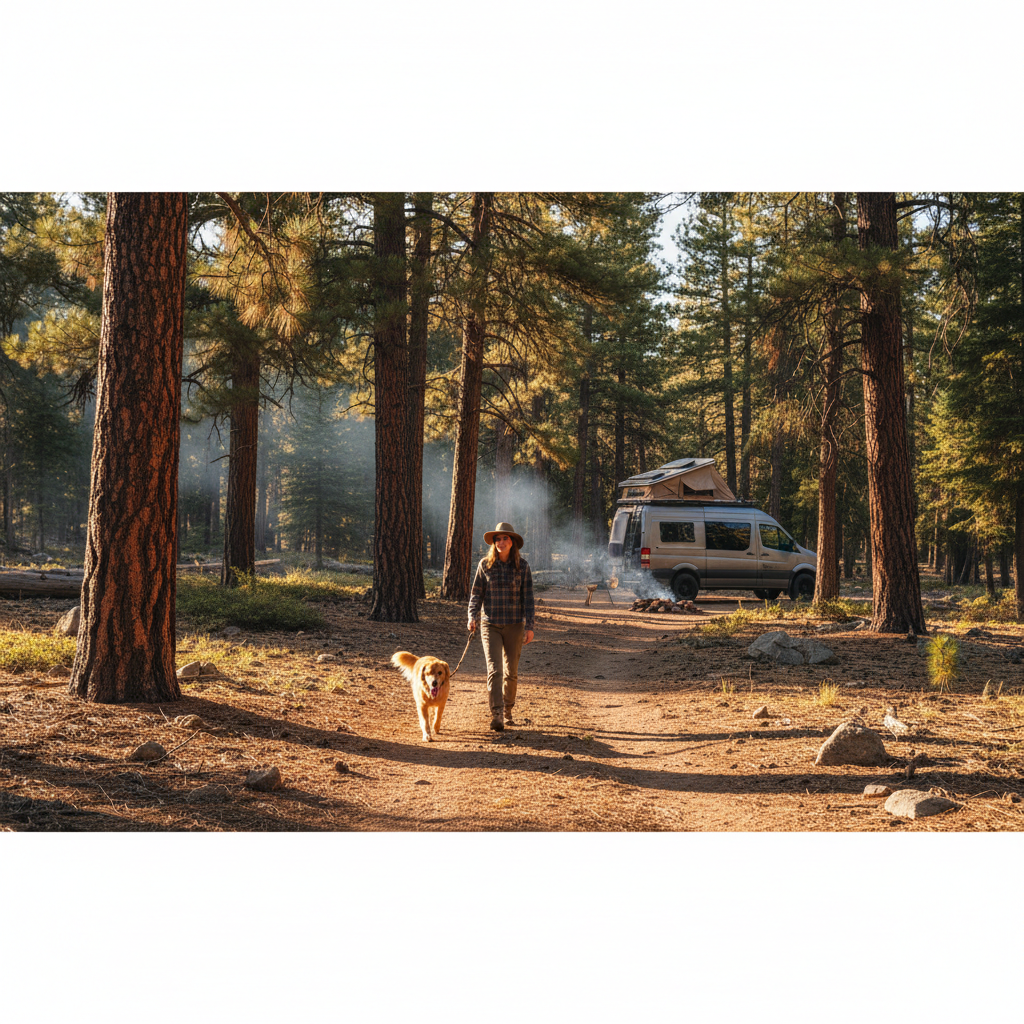
Sound travels as pressure waves, and those waves weaken when they have to pass through or diffract around dense material. A half-mile of heavy forest between you and a freeway can outperform two miles of open flat desert, because the trees absorb and scatter energy rather than letting it propagate cleanly. According to the Federal Highway Administration's noise compatibility guidance, a well-vegetated buffer of mature trees can reduce roadway noise by roughly 5 decibels per 100 feet of depth, though results vary significantly by tree species and canopy density. That's a meaningful reduction, not a complete solution.
The more decisive variable is elevation relative to the sound source. Getting above the road by 200 feet or more puts you outside the primary propagation cone of tire and engine noise. Sound from a highway radiates outward at roughly grade level; it climbs terrain poorly. This is why a campsite 0.4 miles away on a hillside above the road often sleeps quieter than one 1.5 miles away in the valley below it. Or rather: the question isn't how far you are, it's whether a ridge or a mass of terrain sits between you and the noise source.
Cold-air drainage makes this worse. On clear, calm nights, dense cold air settles into valleys and low-lying flats, and sound travels farther through dense air. Experienced dispersed campers learn to avoid valley floors on calm, clear nights for exactly this reason. It's one of those things that isn't obvious until you've slept badly in a spot that looked perfect on paper.
Reading the Map Before You Drive Out
You can eliminate most bad sites before leaving your driveway. Here's what to actually check.
Pull up a USGS topo layer (Caltopo or Gaia GPS both carry it) and look at the contour lines between your candidate site and the nearest highway. What you want is a ridge crest, a hillside slope, or a significant elevation gain sitting between you and the road. A flat or bowl-shaped terrain profile is a red flag. If the contours are parallel to the highway and you're on the far side of a rise, that's a good sign. If the terrain slopes toward the road, the sound will follow.
Then check the surface type. Forest cover on a topo isn't always obvious, but USFS land classification maps and satellite imagery on Google Maps or CalTopo's aerial layer will show you canopy density. Open scrub and grassland transmit noise more freely than mature mixed forest. This matters most within the first half-mile from the highway.
The apps that do this best aren't the ones marketed as noise-finders. Freecampsites.net carries user-submitted noise ratings, and comments on iOverlander often mention traffic sound specifically. But the most reliable tool is still the satellite view combined with a topo layer: look for topographic relief between you and the pavement, and canopy cover as a secondary buffer. Run both checks before any site makes your shortlist.
One thing most checklists skip: check which direction the highway runs relative to prevailing wind. Downwind positions amplify road noise, particularly diesel exhaust from semi traffic. The National Weather Service's point forecast tool (forecast.weather.gov) gives overnight wind direction for any location. If your candidate site sits downwind of a major truck route on a calm night, add half a mile to your mental buffer requirement.
Terrain Patterns That Consistently Deliver Quiet
Not all public land is equal for acoustic isolation. These patterns come up repeatedly on long-distance routes.
On Bureau of Land Management (BLM) land in the West, canyon sites perform well when you're camping on the canyon floor and the highway runs at the rim above. The canyon walls act as a barrier, and the depth of the cut matters. A 300-foot canyon wall between you and an interstate is about as good a noise barrier as exists in the natural world. The BLM's recreation site locator (blm.gov) lists dispersed-use areas; filter for roadless or backcountry designations, then apply the topo check.
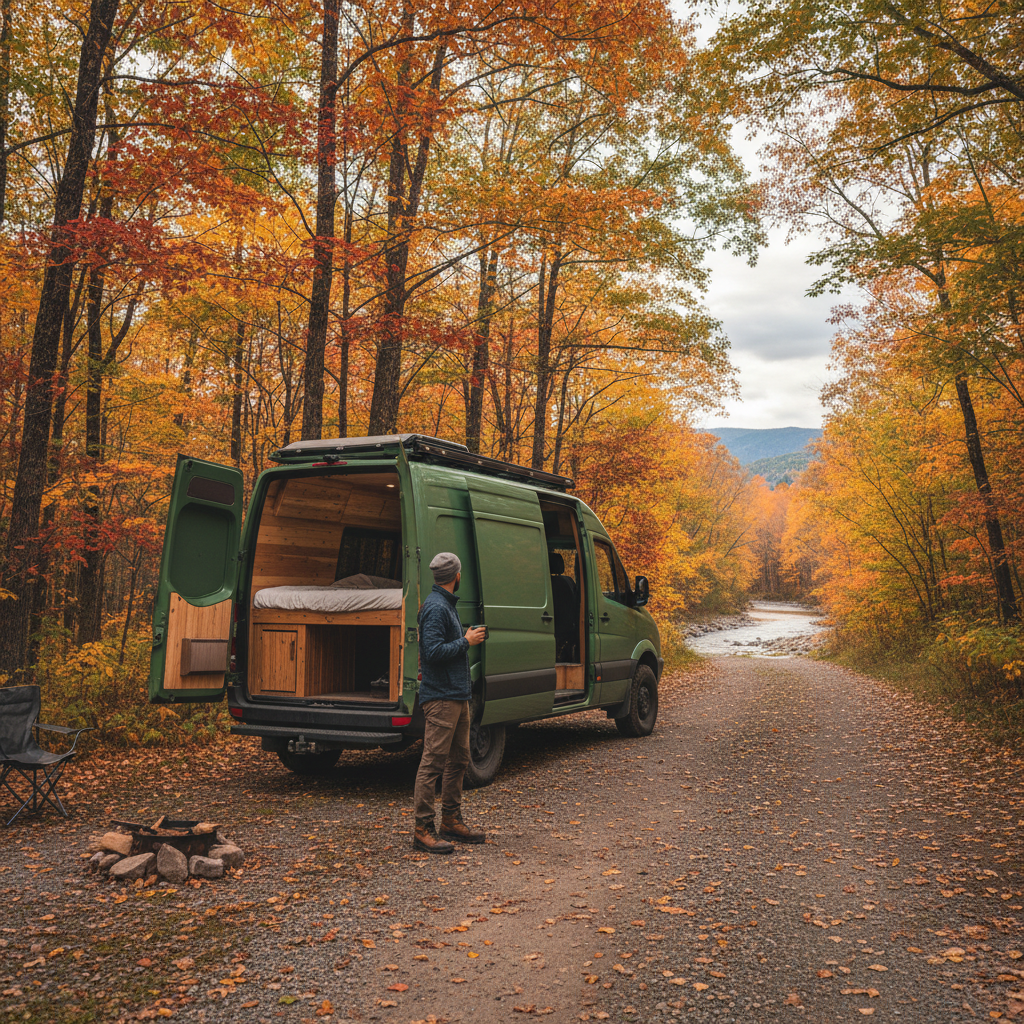
In the East, where dispersed camping is less available, National Forest campgrounds in hollows on the far side of ridges from major routes consistently outperform campgrounds sited near forest-road access points. The Appalachian range is particularly effective at acoustic isolation because of the ridge-and-valley structure, provided you're camping in the valley with a ridge between you and the interstate corridor (I-81 running down the Valley of Virginia is a good example of what to avoid for valley-floor sites).
State forests and wildlife management areas (WMAs) vary by state, but many allow dispersed camping with a free permit or no permit at all. They're underused relative to National Forest land and often sit farther from highway infrastructure by design, since they weren't developed for recreational access. This is the alternative most travelers overlook until they've done a few trips.
That framing misses something. The goal isn't to find a quiet spot as if quiet is a fixed property of a location. It's to understand the acoustic geometry of the site relative to where you'll be sleeping, so you can predict nighttime conditions from daytime information.
What Happens If You Skip the Check
Bad sleep isn't just uncomfortable. Research published in journals covering environmental health consistently links chronic nighttime noise exposure above roughly 45 decibels to measurable sleep fragmentation, even when the sleeper doesn't fully wake. For overnight travelers, this compounds across consecutive nights. A week of marginal sleep accumulates a cognitive and physical debt that affects driving safety directly.
But the more immediate problem is this: once you've set up camp at night and the noise is worse than expected, your options are limited. Breaking down camp at midnight and relocating is dangerous on unfamiliar roads. Staying put and sleeping poorly is the likelier outcome. The cost of skipping the site check isn't inconvenience; it's arriving at your next destination impaired.
There's also a less obvious cost for van-dwellers and car campers who rely on overnight parking rather than established campgrounds. Urban and suburban overnight parking near highway on-ramps is the worst acoustic environment available, but it's the default fallback when no site research has been done. Truck stops adjacent to interstates are loud continuously, not just during peak hours. Rest areas on major routes can be tolerable, but the noise floor rarely drops below 60 dB on high-traffic corridors. (That figure is a practical observation from road-noise monitoring data, not a single verified measurement, and your experience will vary by location and time of year.)
A Practical Pre-Trip Checklist
Before committing to any overnight site, run these checks, in this order: verify topographic relief between site and highway, confirm canopy or terrain buffer depth, check user-submitted noise comments on Freecampsites.net or iOverlander, and look up overnight wind direction for the area. Four checks, five minutes, done.
I'd start with the topo check because it's the one that eliminates the most candidates fastest. A flat site in open terrain adjacent to an interstate has no path to being quiet regardless of what the listing says. The canopy check is second because it either confirms or weakens what the topo showed you. User reviews are useful but sparse; treat them as confirmation, not primary evidence. Wind direction is the check most people never make, and it's the one that explains why a site that was fine last July sounds terrible in November.
For anyone spending multiple consecutive nights on the road: keep a running note of sites that were quieter than expected and sites that were worse. After three or four trips, your personal map of acoustic reliability by region and terrain type becomes more useful than any app. The BLM's wide open Western plateaus look quiet on satellite but can be acoustically terrible. Dense Eastern hardwood hollows look cluttered but often sleep beautifully.
- Topo relief check: Caltopo or Gaia GPS with USGS layer
- Canopy depth: satellite imagery, aerial layer
- User noise comments: Freecampsites.net, iOverlander
- Wind direction: forecast.weather.gov point forecast
This isn't about finding a perfect site every time. It's about making a five-minute informed judgment instead of a five-second guess that costs you eight hours of sleep.
When Quiet Sites Aren't an Option
This article is aimed at travelers who have geographic flexibility. If you're locked into a fixed region or traveling a narrow corridor with limited public land, these strategies have real limits. Urban van-dwellers with no viable dispersed camping option need a different toolkit entirely, including white-noise solutions and window insulation rather than site selection. That's a separate problem.
Similarly, the dispersed camping approach on BLM and National Forest land requires a vehicle that can handle unmaintained roads. If you're in a low-clearance vehicle or towing something heavy, many of the quietest sites simply aren't accessible. The canyon-floor BLM sites in particular often require a mile or more of rough two-track. Know your rig's limits before committing to a site that requires them.
And on busy holiday weekends, even the best-sited dispersed camping areas fill with other travelers whose generators and noise patterns you can't predict. The acoustic isolation that works on a quiet Tuesday in October doesn't hold when you have neighbors 50 feet away running a portable generator. Plan accordingly.
The Night Before You Arrive
Arrive at your site before dark, if you can manage it. The single biggest mistake in overnight site selection isn't skipping the research; it's doing the research and then arriving blind at 10 PM anyway and pitching camp wherever the road ends. You need five minutes of walking the site in daylight to confirm that the ridge you saw on the map is actually between you and the highway, not offset by a few hundred yards.
Walk toward the highway direction and listen. During daytime hours, if you can hear traffic clearly at the site, you'll hear it all night. If the sound drops noticeably when you move uphill or behind a terrain feature, that's your sleeping position. Sound doesn't lie in real-time the way maps can.
If you're arriving after dark, do a quick audio check before fully committing. Turn off your engine, close the doors, and stand outside for 90 seconds. Night-adapted ears pick up traffic noise that the engine masked. If it's louder than you expected, you still have the option to move to a fallback site before you've unpacked everything. Keep a short list of two or three candidates per night segment. The backup site you identified at home is worth having.