







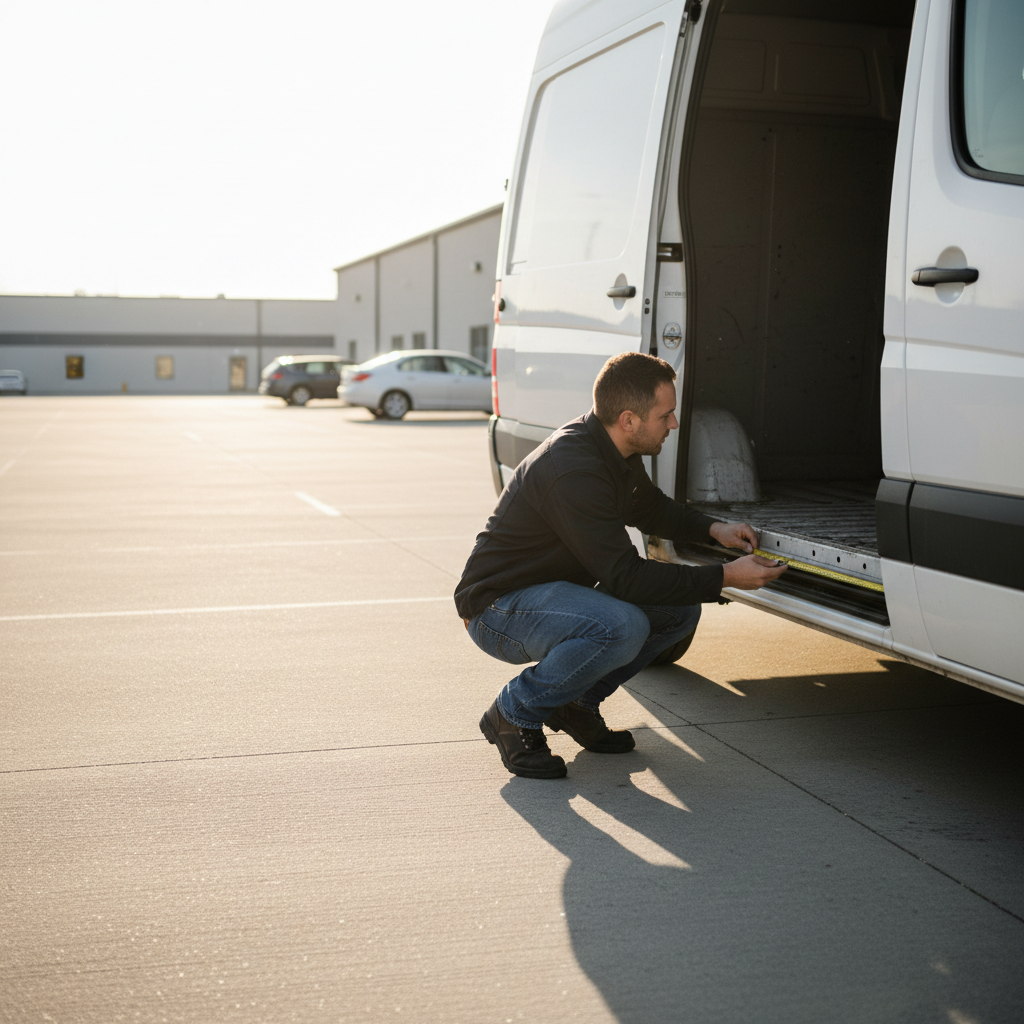



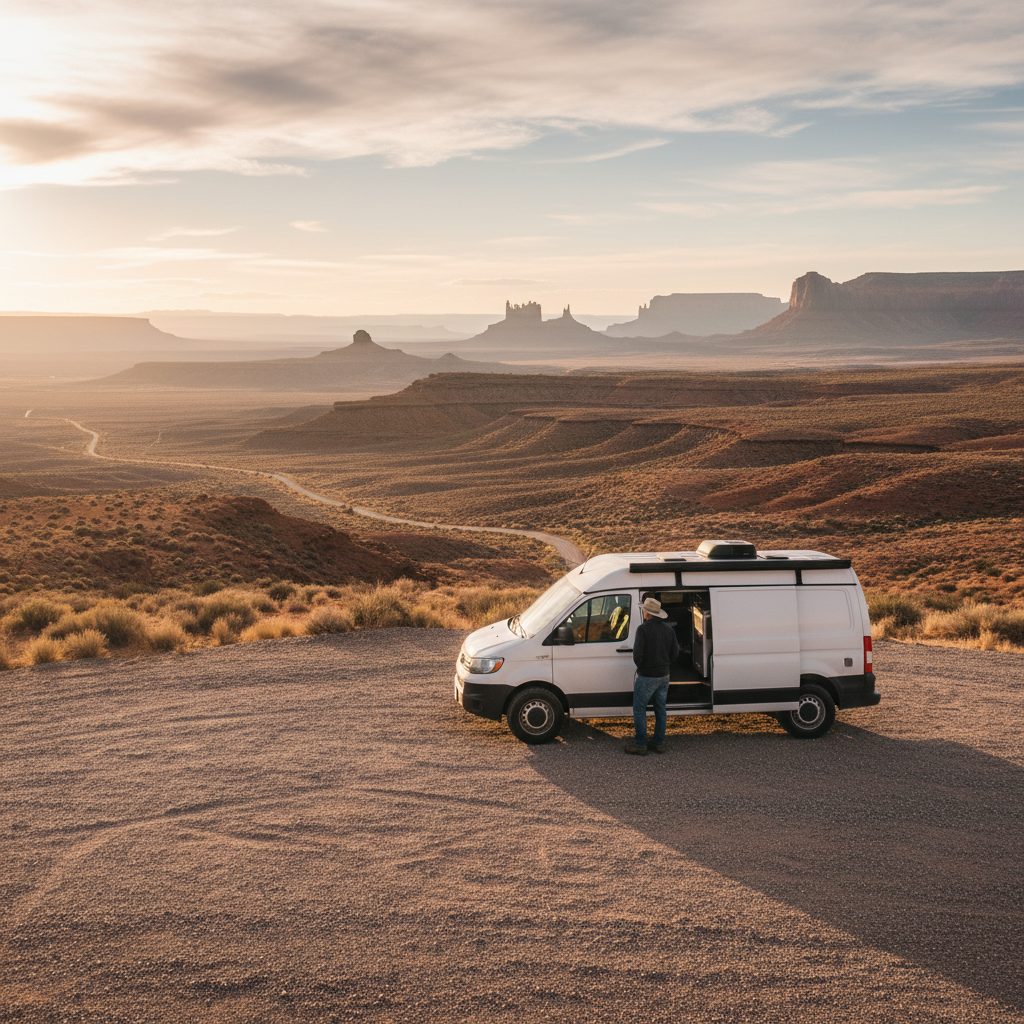
Rental companies will tell you almost any camper van is easy to drive before they hand you the keys, and there's a commercial reason for that. The honest version is more useful: beginner-friendly camper vans exist on a spectrum, and where a van falls on that spectrum depends on three things most buyers don't think about until they're already committed: overall vehicle length, chassis type, and whether the van requires a special license class in their state.
Length and chassis type matter because parking in national park campgrounds, city streets, and older RV parks rewards vehicles under 22 feet far more than anything approaching full-size. A first-time van driver who buys a 24-foot unit and parks nightly in pull-through sites is fine. That same driver trying to back into a 30-amp site at a busy state park in August is a different situation.
The tension worth sitting with before you buy: the vans that feel most approachable to drive are often not the ones that sleep two adults comfortably, and the ones with genuinely livable layouts tend to be longer than their marketing photos suggest. Figuring out which side of that trade-off matters more to you is the actual first decision.
What Makes a Camper Van Actually Beginner-Friendly
"Beginner-friendly" gets applied to almost every van on the market, which means it has stopped carrying much information. The more useful frame: a van is beginner-friendly to the degree that a driver with no RV experience can operate it safely, park it without anxiety, and manage its systems without a technician nearby. Those three conditions point to specific, measurable features.
On the driving side, overall length under 22 feet and a turning radius close to a full-size pickup are the practical thresholds. Vans built on the Ford Transit, Mercedes Sprinter, or Ram ProMaster chassis all fall into this range when configured as camper conversions, and none of them require a commercial driver's license in any US state at standard GVW ratings. That matters because a few larger Class B+ units (essentially Sprinter-length vans with slide-outs or extended rooflines) can push GVWR above 10,000 pounds, which triggers special licensing requirements in some states. Check your state DMV's current thresholds before signing anything.
On the systems side, beginners consistently struggle with two things: shore power hookups and fresh/gray water management. Vans with self-contained electrical (lithium battery bank plus solar, no mandatory shore power) and simple freshwater tanks under 15 gallons remove both friction points immediately. A van that demands shore power nightly puts you at the mercy of campground availability every single day.
Or rather: it's not just that self-contained vans are more convenient. They fundamentally change where you can sleep. A van running a 200Ah lithium bank with a 200-watt roof panel can park on BLM land, national forest dispersed sites, and Walmart parking lots without any hookup. That access is the real beginner advantage, because it means you can avoid the high-skill backing maneuvers of crowded RV parks while you're still learning.
The Vans Worth Considering (and One Worth Skipping)
There is no single best van for every beginner, but the field narrows quickly once you apply the criteria above. The comparison below focuses on production camper vans and factory-backed conversions you can actually buy or finance in the US, not one-off custom builds whose quality varies wildly.
Before the table: what you're comparing is not just price or features. You're comparing the cost of the vehicle against how much driving confidence it demands from you on day one.
| Van / Model | Length | Chassis | Self-Contained? | Approx. Price Range (New) | Best For |
|---|---|---|---|---|---|
| Winnebago Solis (Sprinter-based) | 19 - 22 ft | Mercedes Sprinter | Yes (lithium optional) | $120,000 - $145,000 | Solo or couple, occasional boondocking |
| Airstream Interstate 19 | 19 ft | Mercedes Sprinter | Yes | $145,000 - $165,000 | Couple prioritizing build quality and resale |
| Thor Motor Coach Tellaro | 19 ft | Ford Transit | Yes (solar standard) | $95,000 - $115,000 | Budget-conscious beginners wanting factory warranty |
| Coachmen Beyond | 22 ft | Ford Transit | Partial (shore power preferred) | $110,000 - $130,000 | Couples who plan to use campgrounds with hookups |
| Storyteller Overland MODE | 19 - 21 ft | Mercedes Sprinter | Yes (lithium standard) | $130,000 - $155,000 | Beginners who want off-road capability built in |
A few things the table doesn't capture. The Coachmen Beyond's partial self-containment is a real limitation if you want flexibility early on. It's not a bad van, but beginners who buy it expecting to boondock frequently will hit a wall faster than they expect. The Storyteller MODE earns its price premium if you're planning to camp outside established campgrounds; its all-wheel-drive option and elevated clearance genuinely open up roads that would strand a Transit-based van.
One van I'd skip for a true beginner: anything built on the Ram ProMaster chassis with a high-roof conversion pushing past 21 feet. The ProMaster's front-wheel-drive layout handles differently than rear-wheel-drive Sprinters or Transit vans, and the longer wheelbase versions have a turning radius that catches new drivers off guard in tight campground loops. ProMaster fans will disagree, and they're not wrong that the chassis has real strengths, but for someone still building confidence behind the wheel, it adds a variable that doesn't need to be there.
The License and Registration Reality Most Buyers Skip
Every state in the US allows you to drive a Class B camper van on a standard Class D driver's license, provided the vehicle's GVWR stays under the state's threshold for commercial licensing. In most states, that threshold is 26,001 pounds, which no production camper van comes close to. But a smaller threshold matters more to you: some states require a non-commercial Class B or Class A license for recreational vehicles above 26 feet or above a lower GVWR ceiling set by the state legislature. California, for instance, has specific provisions under the California Vehicle Code that affect how large RVs are classified for licensing and registration purposes. A 19-foot Sprinter-based van does not trigger any of these. A 28-foot Class C motorhome does. This is why staying under 22 feet isn't just a parking preference; it's a legal simplicity decision.
Registration and insurance carry their own wrinkles. Camper vans are classified as recreational vehicles for registration in most states, which affects the registration fee structure and, more importantly, how your insurer categorizes the vehicle. Standard auto policies typically exclude RV use. You'll need a dedicated RV insurance policy, and rates vary significantly based on whether the van is your primary residence (full-timing), a seasonal vehicle, or an occasional-use unit. Good Sam, National General (now part of Allstate), and Progressive all offer RV-specific policies with roadside assistance packages that include tow coverage for larger vehicles, which a standard auto roadside plan often won't cover.
If you skip dedicated RV insurance and rely on your existing auto policy, you're likely uninsured the moment the van is used for overnight stays. That's not a fringe scenario; it's the default outcome for buyers who don't call their insurer before the purchase closes.
When a Beginner-Friendly Van Is the Wrong Answer
This article is about camper vans. It is not about truck campers, teardrop trailers, pop-up campers, or Class C motorhomes, all of which are legitimate options with different trade-off profiles. If you're deciding between van camping and trailer camping specifically, the calculus changes: a well-configured trailer on a pickup you already own can cost significantly less than any new factory camper van, and you can detach the trailer and drive freely. Vans don't give you that.
The beginner-van recommendation weakens under two specific conditions. First, if you're traveling with more than two adults or with children regularly, almost every van in this price range will feel cramped within the first week. Van interiors are honest spaces. A 6-foot-2 adult who can't stand fully upright in the sleeping area will notice that every morning. Second, if your primary camping goal is extended stays in one location rather than moving frequently, the van's limited storage and gray water capacity become genuine problems. A 15-gallon gray tank fills up in roughly three days of regular cooking and washing. If you're stationary for a week, you're making multiple dump station runs, which eliminates a lot of the simplicity advantage.
Buyers who need to sleep four, plan to stay put for weeks at a time, or want to tow a vehicle should look at Class C motorhomes or fifth-wheel setups instead. That's a different article for a different situation.
Getting from the Lot to the Road Without Expensive Mistakes
The most common mistake new van buyers make isn't choosing the wrong van. It's buying the right van and then trying to learn everything in the first weekend by going somewhere ambitious. I'd start with two or three nights at a campground with hookups you don't need, within 60 miles of home. That distance means if something breaks or you forget something critical, you're not stranded somewhere remote.
Before your first trip, learn these four things in sequence: how to connect and disconnect shore power without risking an arc, how to fill the fresh water tank and where the drain valve is, how to check and adjust tire pressure (van roofline conversions add significant weight, and tire pressure matters more than it did in your passenger car), and how to operate the propane system safely, including the shutoff. Check GVWR, propane capacity, tire rating first.
Campground selection matters more than most guides admit. The Recreation.gov reservation system lists campground site lengths for federal sites, and you can filter by maximum vehicle length. Use this filter. A 19-foot van listed as fitting a 20-foot maximum site is fine. That same van at a site listed for 16 feet is a bad afternoon. Free camping on Bureau of Land Management land is genuinely excellent for beginners once you're past the initial learning curve, because you can position the van however you want without worrying about backing into a fixed site. But don't start there. Get comfortable with hookup sites first, then move to dispersed camping when the van's systems feel routine rather than mysterious.
And if you find the van lifestyle doesn't fit after six months? Factory-built vans from Winnebago, Airstream, and Thor hold resale value better than most RV categories, particularly Sprinter-based units. You won't recover every dollar, but you won't take the same loss you'd absorb on a depreciated Class A motorhome either.
The Decision That Precedes the Purchase
A camper van isn't primarily a driving decision. It's a lifestyle decision that happens to require a driving decision inside it.
Buyers who think carefully about how they actually want to use the van, before they fall in love with a specific model's interior photos, end up far happier with what they choose. The 19-foot Sprinter-based van with lithium power and solar is objectively the most flexible beginner platform available right now in the US market. But flexible doesn't mean universally right. If your version of van travel is summer weekends at established campgrounds with your partner, the Thor Tellaro at $95,000 to $115,000 does everything you need for considerably less than an Airstream Interstate. If you're planning to work remotely and travel full-time, the Storyteller MODE's off-grid electrical capacity earns its price tag in avoided campground fees within the first year.
Start with where you'll sleep and how often you'll move. The van choice follows from honest answers to those two questions, not from which model photograph made you feel something in the dealership.