








A professional van conversion shop will quote you a number before they discuss anything else, and there's a reason for that: the range is so wide it can reframe your entire decision. You might walk in expecting a $15,000 labor bill and walk out with a $45,000 quote for a full-system high-roof Sprinter build, or a surprisingly manageable $12,000 estimate for a stripped-down cargo van with basic insulation and a sleeping platform.
The cost to hire a pro to finish a van build in the US sits roughly between $10,000 and $50,000 for labor and materials combined, but that range is almost meaningless without knowing your specific variables: the van chassis you're starting with, which systems you want installed (electrical, plumbing, HVAC), and whether you're handing over a shell or a partially finished interior. A build where you've already framed and insulated cuts shop labor significantly. One where you need a full off-grid electrical system with lithium batteries and a shore-power hookup does not.
What most pricing guides skip is how much the shop's backlog and specialization affect your final number. A generalist upfitter who builds out work vans will charge differently than a dedicated van conversion shop with a six-month waitlist and a portfolio of full-time vanlifers. That gap can run $8,000 to $15,000 on an otherwise identical build scope.
What Drives the Price: The Variables That Actually Matter
Labor rate is the foundation. Established van conversion shops across the US typically charge $75 to $150 per hour for skilled build labor, with shops in high cost-of-living markets like the Pacific Northwest, Colorado, and the Northeast running toward the top of that range. A mid-complexity build that takes 150 shop hours at $100/hour puts $15,000 on the labor line alone, before a single piece of lumber or a single wire is purchased.
The systems you specify are where costs compound fast. Electrical is almost always the biggest variable. A basic 200Ah AGM system with a single solar panel and a few USB outlets might run $2,500 to $4,500 installed. A properly sized lithium system (100Ah to 400Ah of usable capacity, dual solar panels, a DC-DC charger, and shore power capability) typically lands between $6,000 and $14,000 depending on component quality and wiring complexity. Those are not small numbers, and the electrical scope alone can push a mid-range build into premium territory.
Plumbing adds another layer. A simple freshwater tank with a hand pump is cheap. A pressurized system with a 12V pump, grey water tank, propane or diesel water heater, and a real sink drain adds $2,000 to $5,000 in parts and labor. Diesel heating (Webasto or Espar units are the standard references in the trade) runs $1,500 to $3,500 installed. HVAC beyond that, meaning roof-mounted air conditioning, typically requires a dedicated alternator upgrade or a large auxiliary battery bank, which multiplies the electrical cost again.
Or rather: it's not just the component count that drives cost, it's the integration work. Every system a shop adds has to be tied into the others safely, with appropriate fusing, strain relief, and code-conscious routing. That integration labor is where inexperienced shops cut corners and experienced ones earn their rates.
The Real Cost Gap: Partial Build vs. Full Turnkey
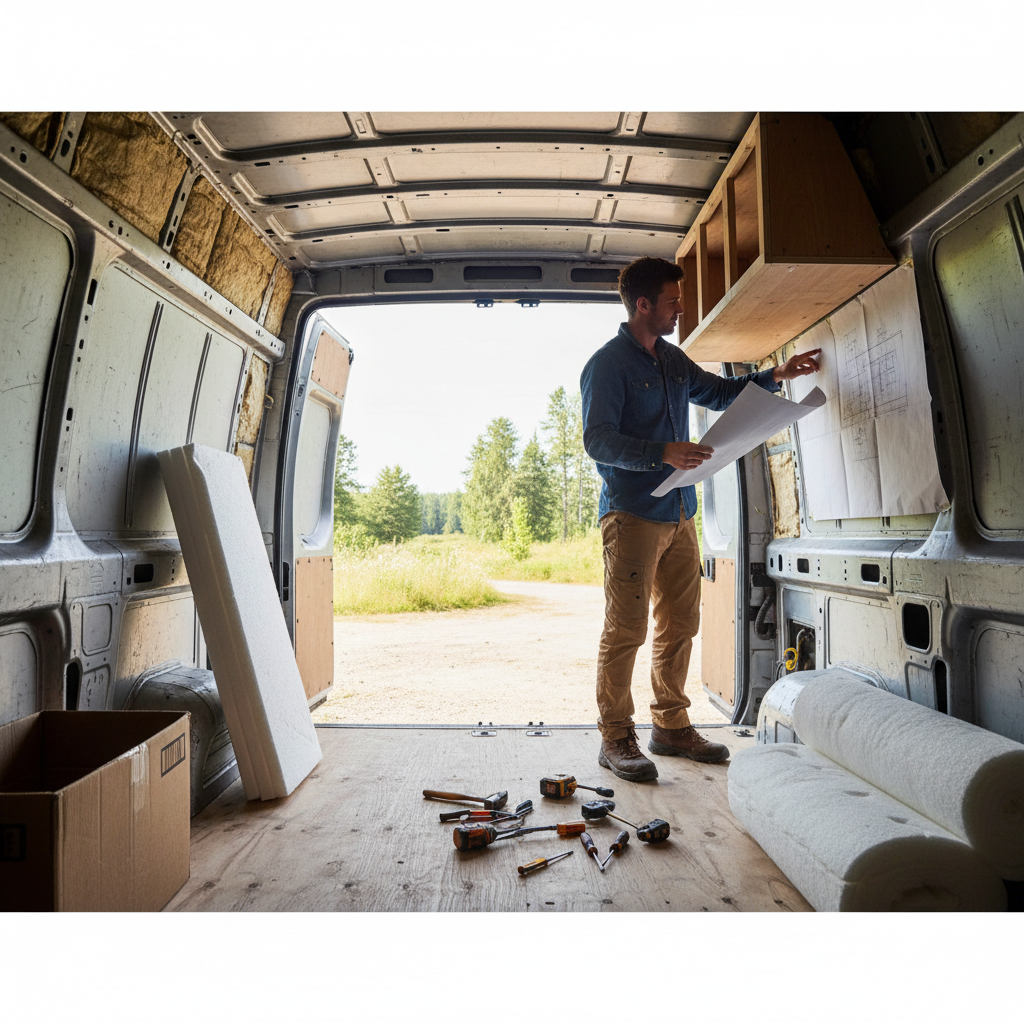
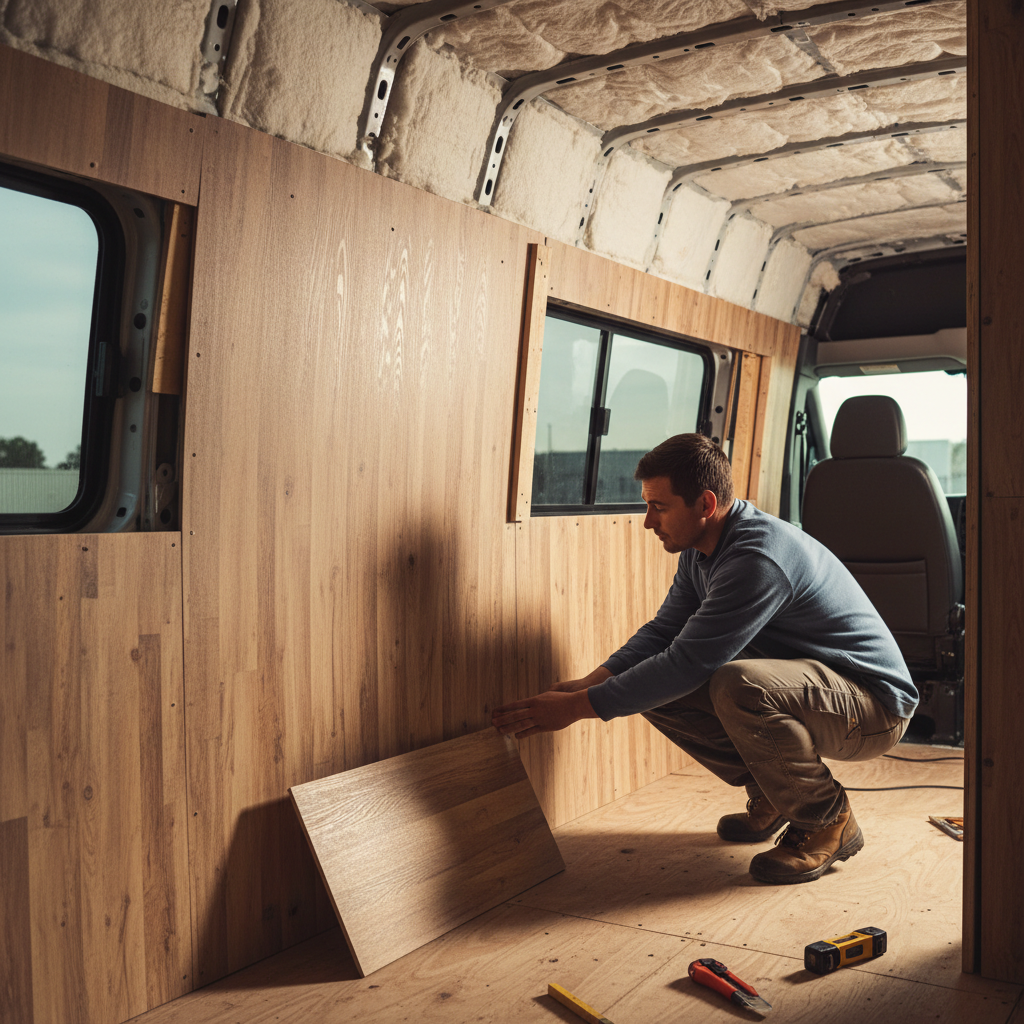
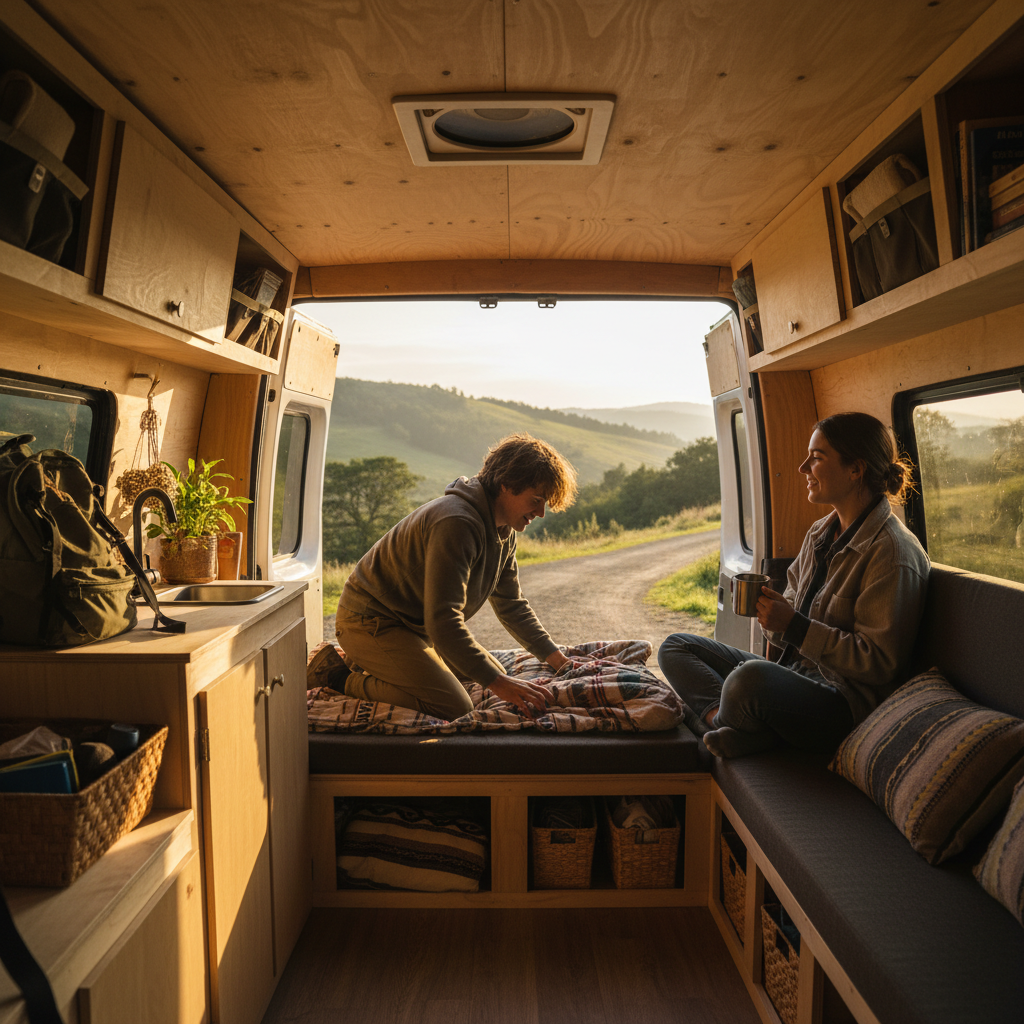
Here's where your decision branches into genuinely different financial territory. If you hand a shop a bare metal cargo van with nothing done, you're paying for every hour of framing, insulation, wall paneling, flooring, furniture building, and system installation. Full turnkey builds on a high-roof 144-inch Sprinter at a reputable shop commonly run $30,000 to $55,000 all-in, with premium builds (full residential kitchen, composting toilet, solar plus shore power, custom cabinetry) pushing past $60,000.
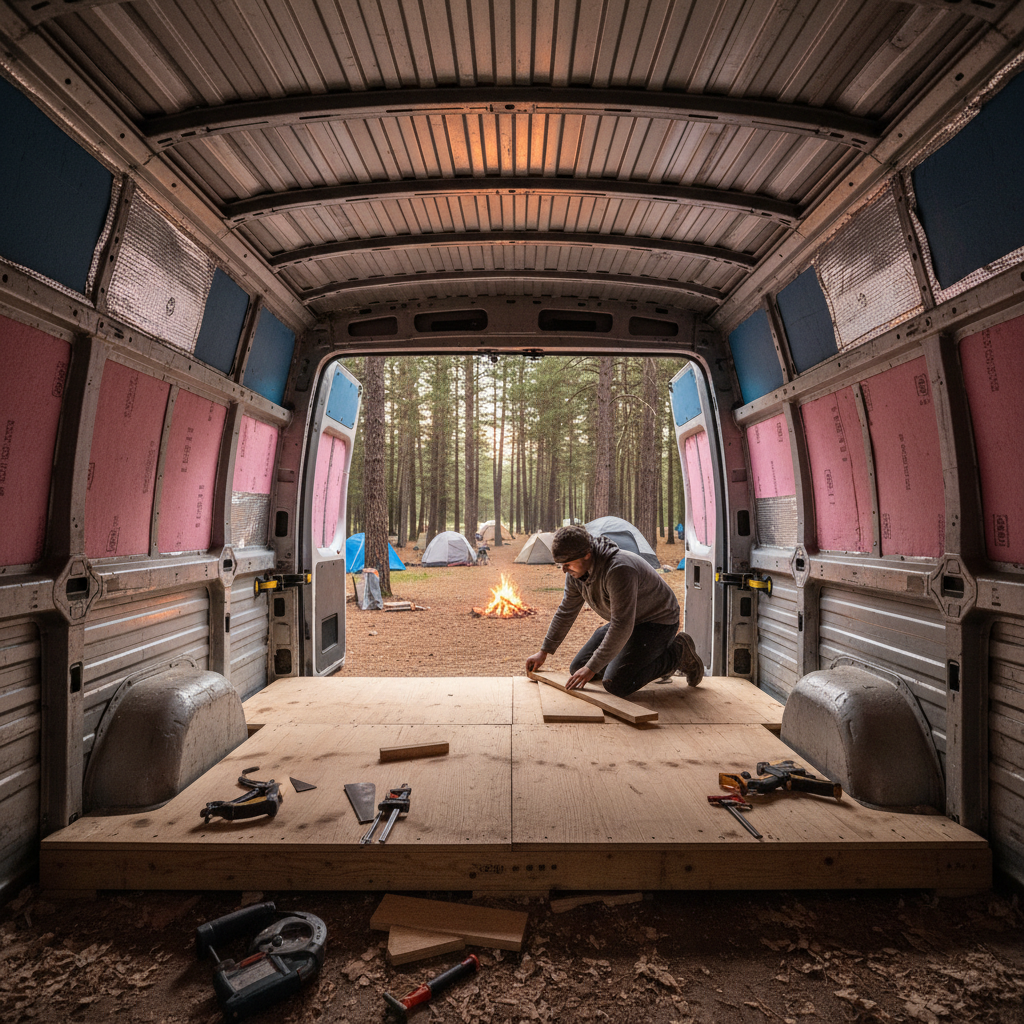
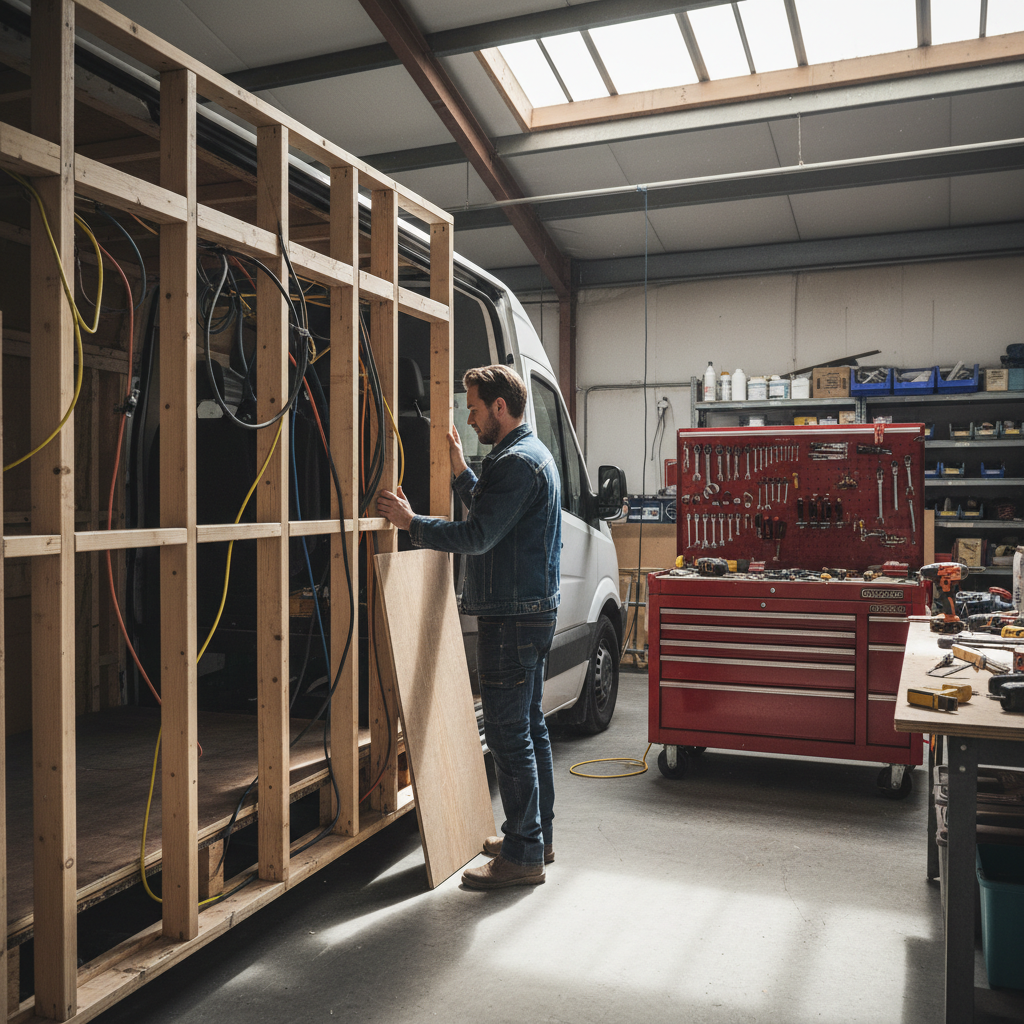
But if you've completed the insulation and basic framing yourself, you can hand a shop a significantly more tractable project. Shops report that a well-insulated, framed shell cuts their labor estimate by 20 to 35 percent on a typical build. On a $35,000 full build, that's a $7,000 to $12,000 reduction. The catch: shops will inspect your DIY work before quoting. If your vapor barrier is wrong or your framing blocks access panels, they'll price in the tear-down time.
What you'll notice when you compare quotes side by side is that shops itemize very differently. Some bundle materials into a flat project rate. Others charge time-and-materials, where every component is invoiced at their supplier cost plus a markup (typically 15 to 30 percent). Time-and-materials contracts are riskier for you as the customer because scope creep translates directly into dollars. Get a not-to-exceed clause in writing before work starts.
I'd start with a partial build if you have the time and basic woodworking skills: do the insulation and rough framing yourself, then hand the electrical, plumbing, and finish carpentry to a pro. That split typically delivers the best dollar-per-result ratio for owner-operators who aren't trying to resell.
When Hiring a Pro Stops Making Financial Sense
Hiring out a van build is the right call for specific situations. It's genuinely not the right call for others, and pretending otherwise would waste your money.
If your total van budget is under $20,000 including the vehicle purchase, a full professional build is almost certainly out of reach at most reputable shops. A used Sprinter or Transit in reasonable shape runs $15,000 to $25,000 before a single tool touches the interior. Add a $30,000 professional build and you're at $45,000 to $55,000 for a rig that a private seller might list for $35,000. The arbitrage doesn't work unless you're building a highly customized interior that commands a premium on resale, or you're building for long-term personal use where resale value is secondary.
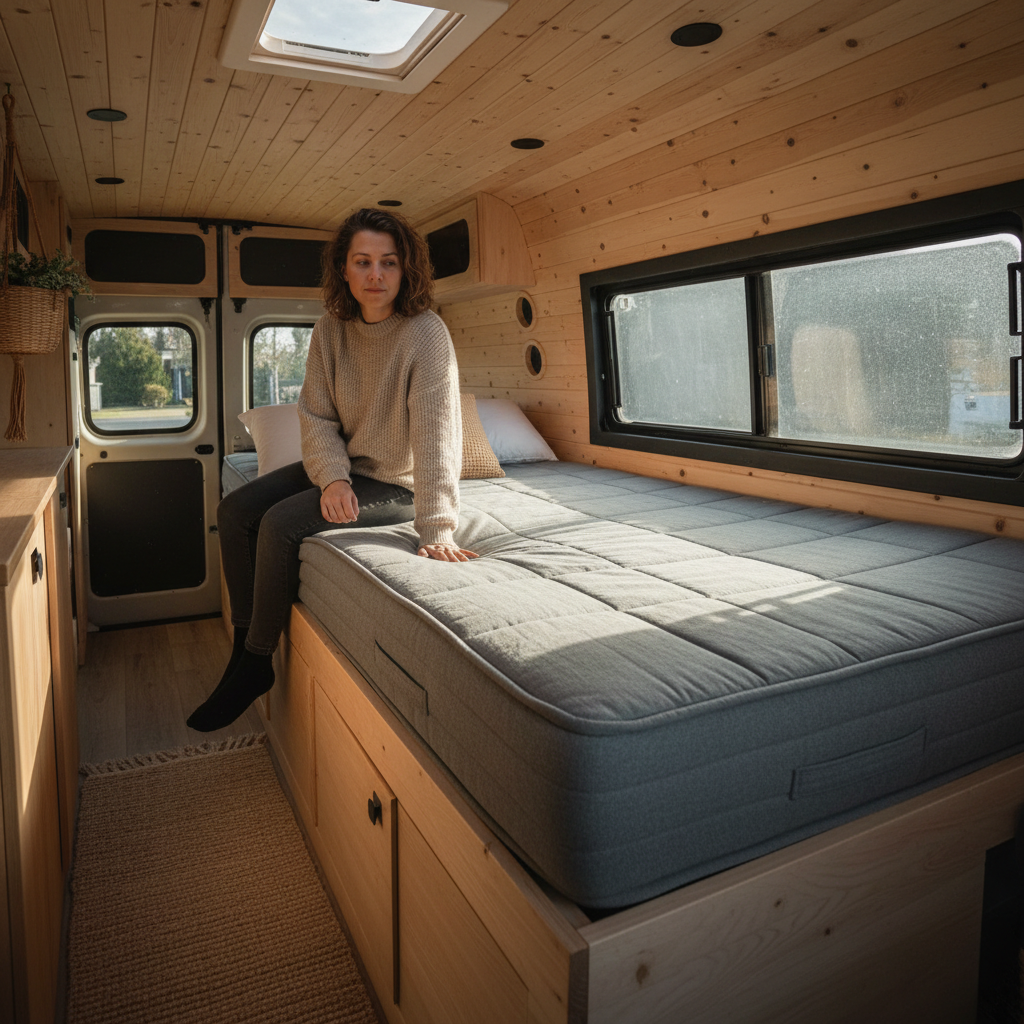
The alternative most buyers seriously consider is a pre-converted van from a private seller or a small-volume converter like Outside Van, Storyteller Overland, or Contravans. Pre-converted vans in the $25,000 to $45,000 range offer a known quantity: you can inspect the electrical work, verify the component brands, and price in any upgrades before buying. The downside is that someone else chose the layout, and van layouts are deeply personal. A bed that runs lengthwise works for some people and is a dealbreaker for others (especially anyone over 6 feet). Buying pre-converted trades customization for speed and price certainty.
If you skip the professional build entirely and do it all yourself, a realistic DIY material budget for a functional Sprinter build runs $8,000 to $18,000, depending on electrical ambitions and cabinet quality. The labor you're supplying yourself. If your time has a real opportunity cost, that math may still favor hiring out, especially for the electrical work, where mistakes carry genuine safety risk. Undersized wiring and improper fusing cause fires. That's not a scare tactic; it's a meaningful boundary for who should DIY electrical and who shouldn't.
How to Get an Honest Quote and Avoid Scope Creep
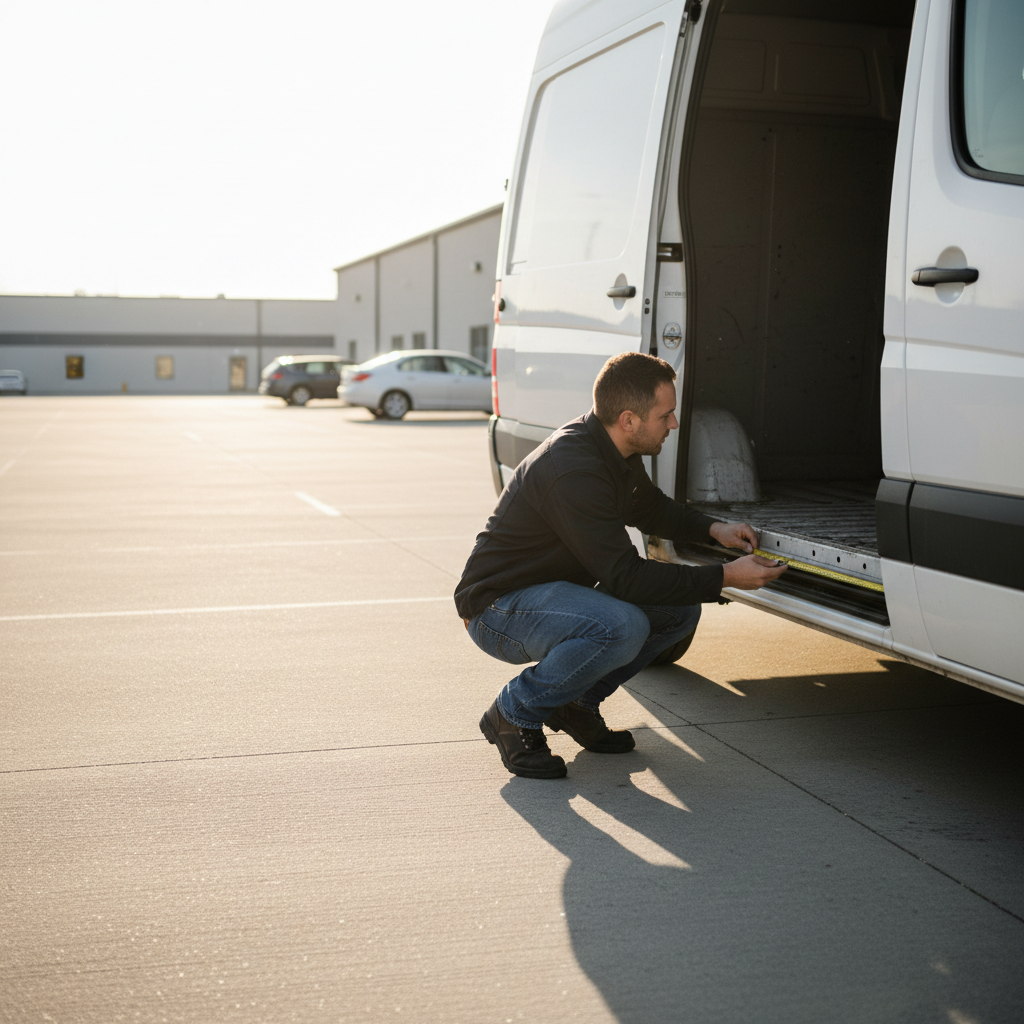
The most common mistake buyers make is getting a quote before they have a build spec. A shop cannot give you a defensible number if all you've told them is "a Sprinter with a bed and some solar." The quote you get in that scenario is a ballpark that will inflate as the scope gets defined, and you'll feel blindsided even though the shop is technically not at fault.
Before you contact a shop, nail down: your van model and wheelbase, your electrical target (total watt-hours of storage, solar wattage, whether you want shore power), your bed orientation and dimensions, your water system requirements, and your heating and cooling priorities. With those five things documented, a shop can give you a quote that holds up.
Ask the shop directly: Do you charge time-and-materials or fixed-price? What triggers a change order? What's your current lead time? Reputable shops have waitlists of two to six months. A shop that can start your build next week either has a gap in their schedule for a legitimate reason or is less busy than their reputation suggests. Neither is automatically disqualifying, but both warrant questions.
Check references. Ask to see builds similar to your spec, not just their best showcase work. A shop that builds beautiful $60,000 Sprinters but has never done a Transit on a tight budget may not be the right fit for a $22,000 scoped project. Fit matters as much as skill.
The derived cost to keep in mind: at $100/hour labor and a 200-hour build, you're at $20,000 in labor before materials. Add $12,000 to $18,000 in materials for a mid-spec electrical and plumbing setup, and your realistic all-in number is $32,000 to $38,000. If a quote comes in at $19,000 for the same scope, something in that spec is thinner than it looks.
What Happens If You Cheap Out or Wait Too Long
Hiring an underqualified shop to save $5,000 upfront is one of the more reliable ways to spend $8,000 fixing problems a year later. Electrical rework alone, when it involves pulling panels, re-routing wire, and replacing undersized components, regularly costs more than the original installation would have at a reputable shop. The same applies to moisture issues from improper insulation: condensation behind wall panels leads to mold that requires full interior teardowns to remediate.
If you delay the build decision while the van sits, you're also accumulating opportunity cost. A van sitting in a driveway unbuilt isn't depreciating much differently than a van in use, but every month of delay is a month you're not living or traveling in the vehicle you bought for that purpose. The builds most people regret are the ones they compromised on scope to get done faster or cheaper, then spent two years wishing they'd done differently. That framing matters: the cost of a professional build isn't just the invoice. It's the gap between what the build delivers and what you actually needed.
So get the spec right before you get the quote. Then get three quotes. Then check references. The shops worth hiring are busy enough that they don't need to oversell you.
Your Next Step
If your electrical target is modest (under 200Ah, single panel, no shore power) and you can do the insulation and framing yourself, a partial professional build in the $12,000 to $20,000 range is achievable at good shops in most US markets. If you want a full off-grid system with serious solar, lithium storage, and climate control, budget $30,000 to $50,000 and give yourself six months of lead time to reach the right shop.
If your total budget including the van is under $35,000, run the pre-converted market comparison first. You might find a built rig that saves you the build timeline entirely, even if the layout requires some compromise.
Build spec first. Then quotes. Don't reverse that order.