


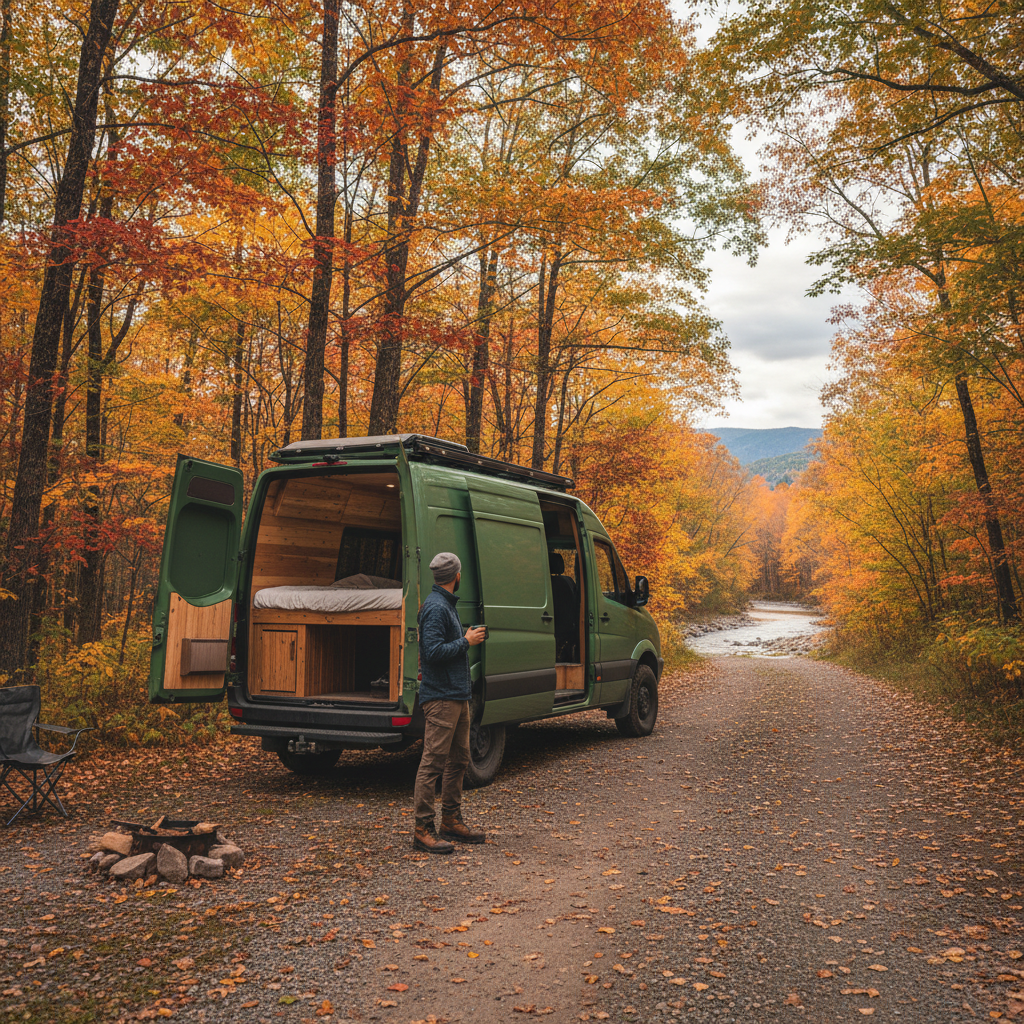







Experienced van builders will tell you to nail down your electrical load before you touch a single piece of wood, and there's a reason for that. The gap between a comfortable build and a miserable one usually isn't craftsmanship. It's planning. And the first planning decision you'll make, whether you realize it or not, is whether to buy a modular conversion kit or build everything from scratch.
That choice turns on three variables most online guides treat as footnotes: your actual tolerance for irreversible mistakes, what your van's specific floor plan allows, and how much of your budget is truly flexible versus how much is a hard stop.
Here's the tension nobody quite spells out: kits promise speed and predictability, but the vans they're designed for are a narrow subset of what's on the market, and the cost savings they advertise assume you won't need to modify anything. Custom builds offer total control, but for a first-time builder, that control comes with a real chance of compounding errors across systems that depend on each other. Choosing the wrong path doesn't just waste weekends. It can mean gutting finished work and starting over, a setback that runs $1,500 to $3,000 in wasted materials alone, by common builder estimates.
This article is for first-time van converters who are still deciding on an approach. It won't cover professional campervan upfitters, cargo van fleets, or anyone who has already completed a build and is planning a second one.
What a Conversion Kit Actually Gives You (And What It Doesn't)
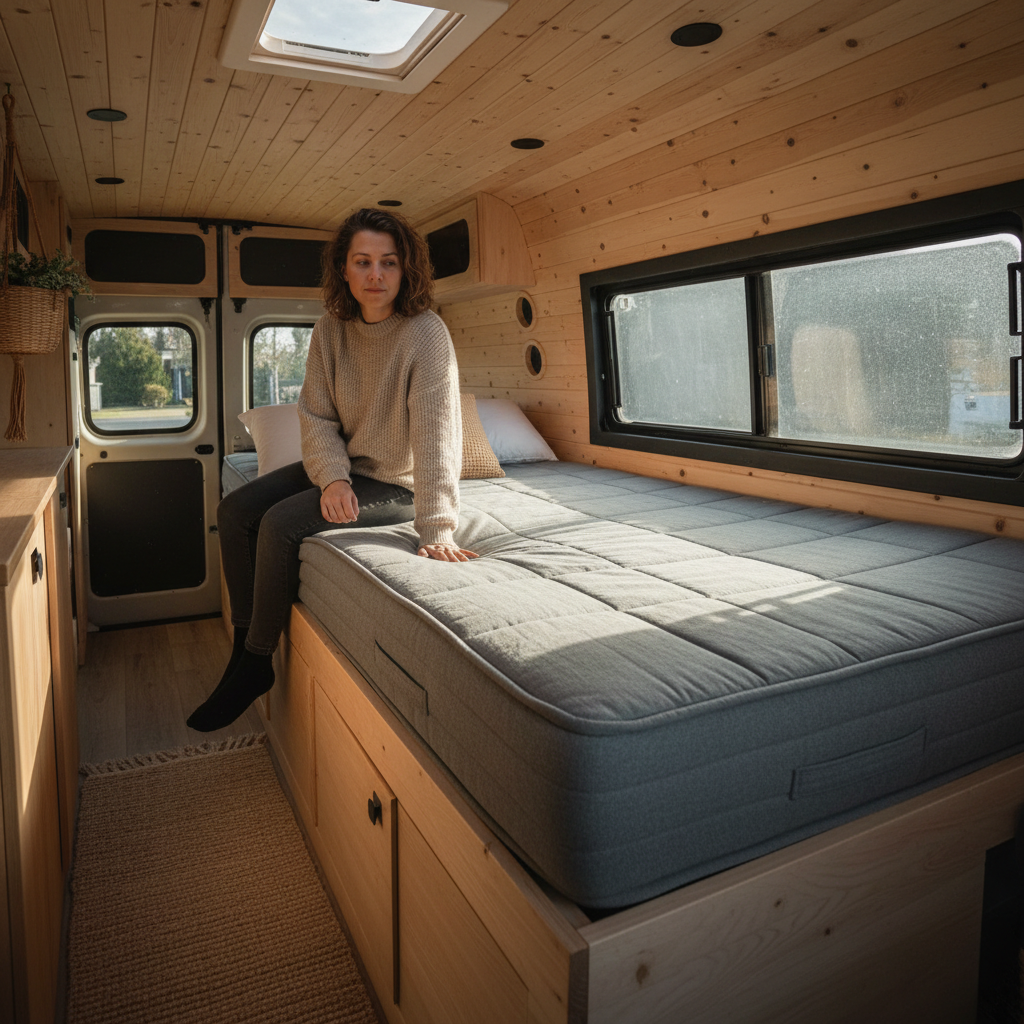
A van conversion kit is a prefabricated modular system, typically a bed platform, storage units, and sometimes an electrical package, designed to bolt into a specific van model without custom cutting or fabrication. The major US suppliers, including Thule, Decked, and Owl Vans, build their systems around high-volume platforms: the Ford Transit, Mercedes-Benz Sprinter, and Ram ProMaster. If your van isn't on that list, a kit probably won't fit without significant modification.
What kits actually deliver is reduction in decision fatigue. For a first-timer, that's genuinely valuable. You're not choosing lumber thickness, calculating load-bearing requirements for a bed frame, or figuring out whether 3/4-inch Baltic birch is overkill for a shelf. Someone else made those calls. The trade-off is that you're living with those calls even when they don't match how you actually use the van.
The cost picture is more complicated than kit manufacturers usually advertise. A mid-range modular bed and storage system for a 148-inch extended Transit runs roughly $1,200 to $2,800 depending on configuration. That's a real number, but it doesn't include insulation, electrical, ventilation, or finishing. A complete livable build still requires those components whether you use a kit or not. The kit replaces the carpentry and fabrication labor, not the systems work.
Or rather: a kit replaces the most forgiving part of the build. Cutting and assembling a bed frame is where most beginners feel intimidated, but it's also where mistakes are cheapest to fix. Miswiring a 12-volt system, undersizing a battery bank, or putting a propane line too close to a heat source, those are the errors that actually create safety problems or require professional remediation. A kit doesn't touch any of that.
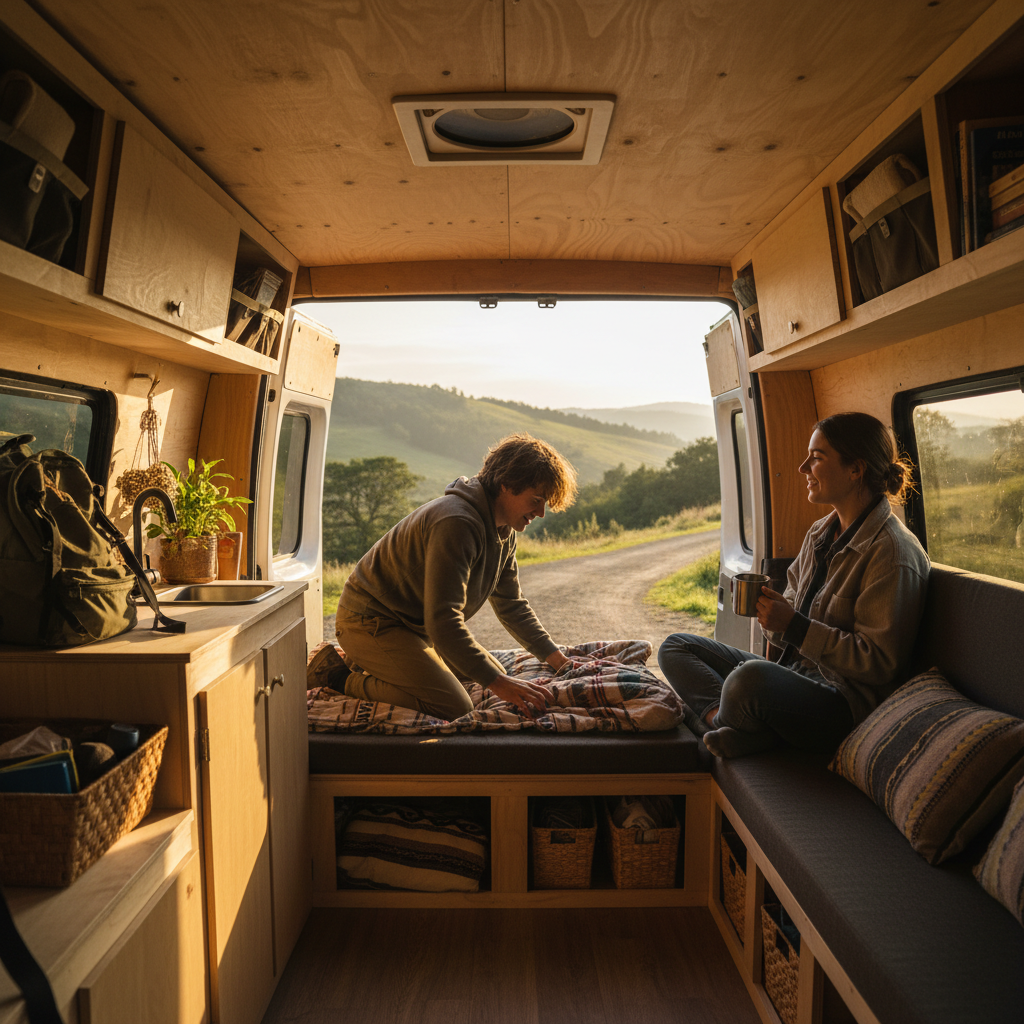
So a kit is the right call if your van is a supported model, you want to be functional within a weekend or two, and you're willing to accept a layout someone else designed. It's genuinely not the right call if you have a short wheelbase van, an older model outside the supported matrix, or strong opinions about how your sleeping, cooking, and working spaces should relate to each other.
What Full Custom Builds Actually Cost Beginners
Custom builds have a reputation for being expensive and slow. Both are partially true and partially a function of how you approach the work.
A realistic materials budget for a functional but not luxurious full custom build in a full-size van runs $3,500 to $6,500 for most first-timers in the US. That range assumes you're doing the labor yourself, buying mid-grade materials, and not installing a diesel heater or composting toilet. The spread between the low and high end of that range usually comes down to one factor: electrical. A 200Ah lithium battery with a 2000-watt inverter and solar input costs roughly twice what an equivalent AGM setup does, and the performance difference is real enough that many builders who started with AGM regret it within a year.
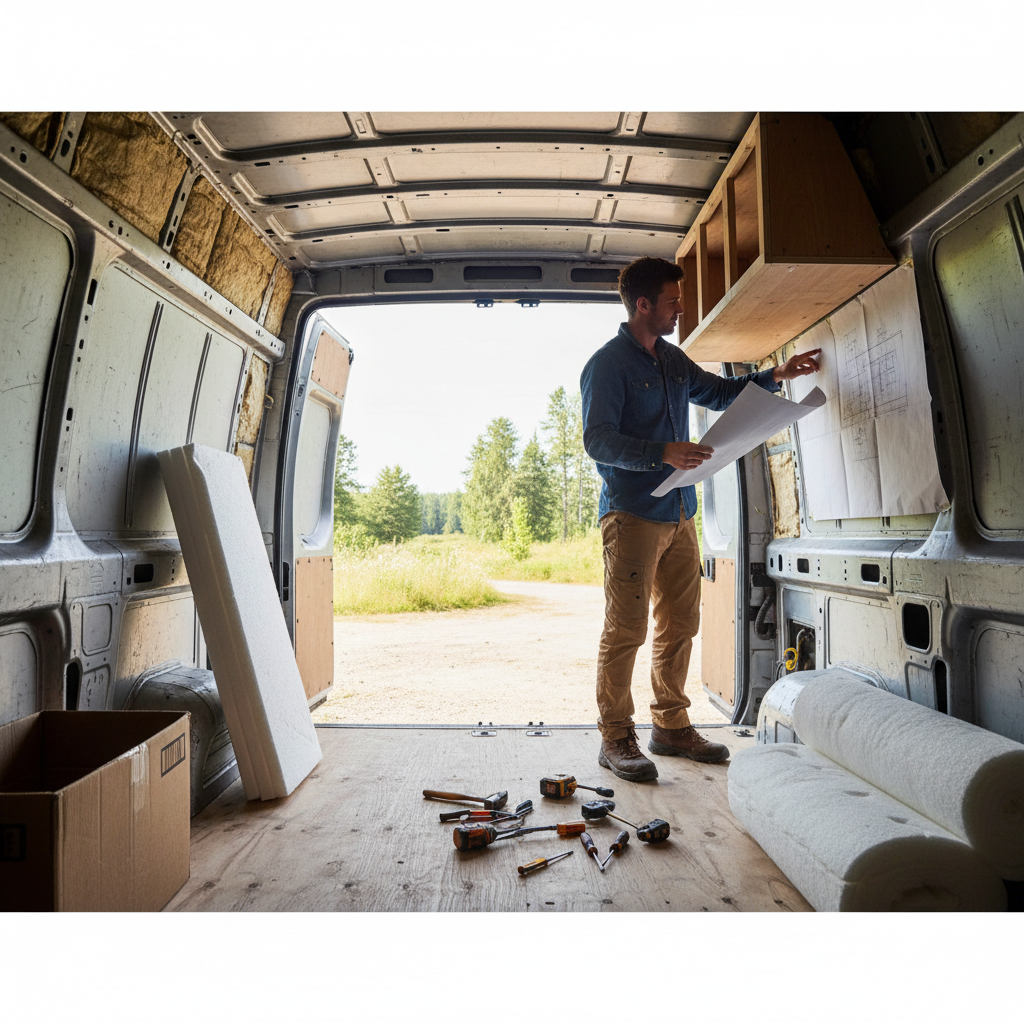
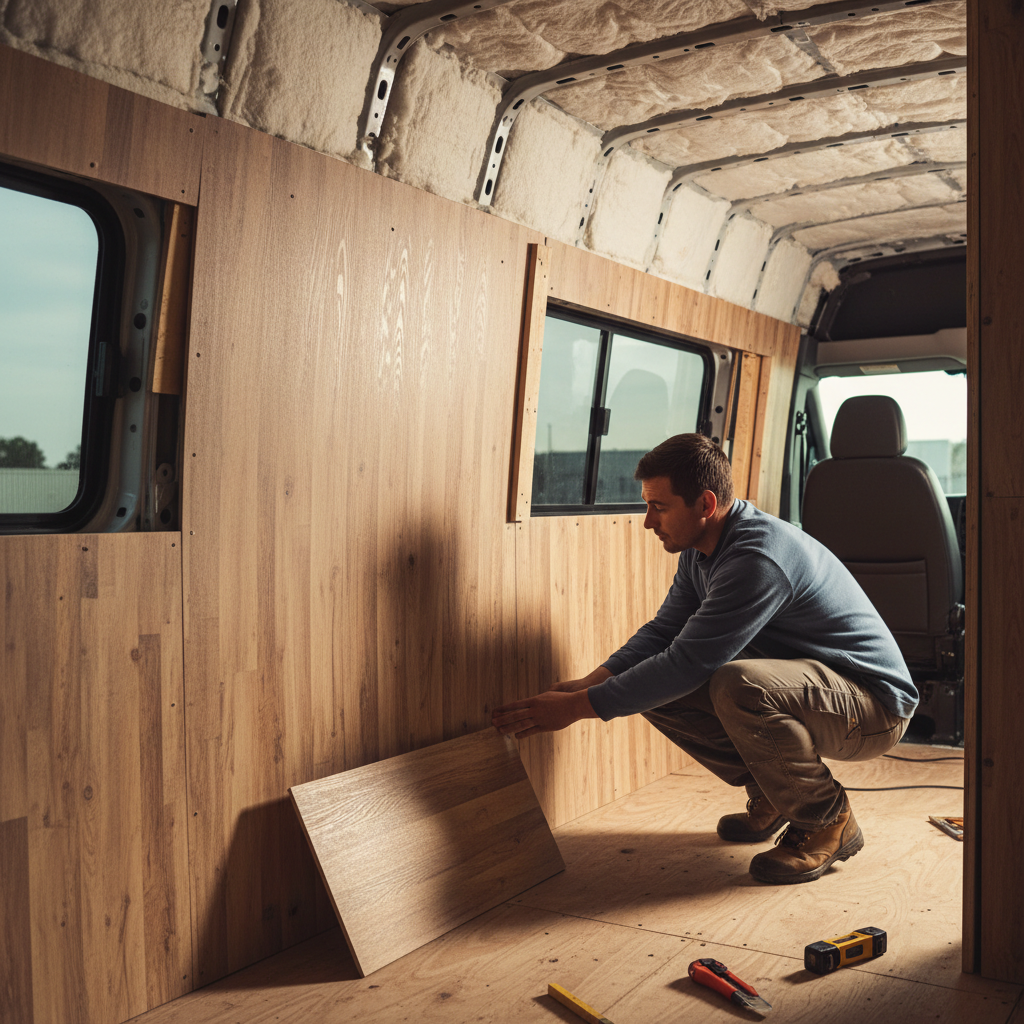
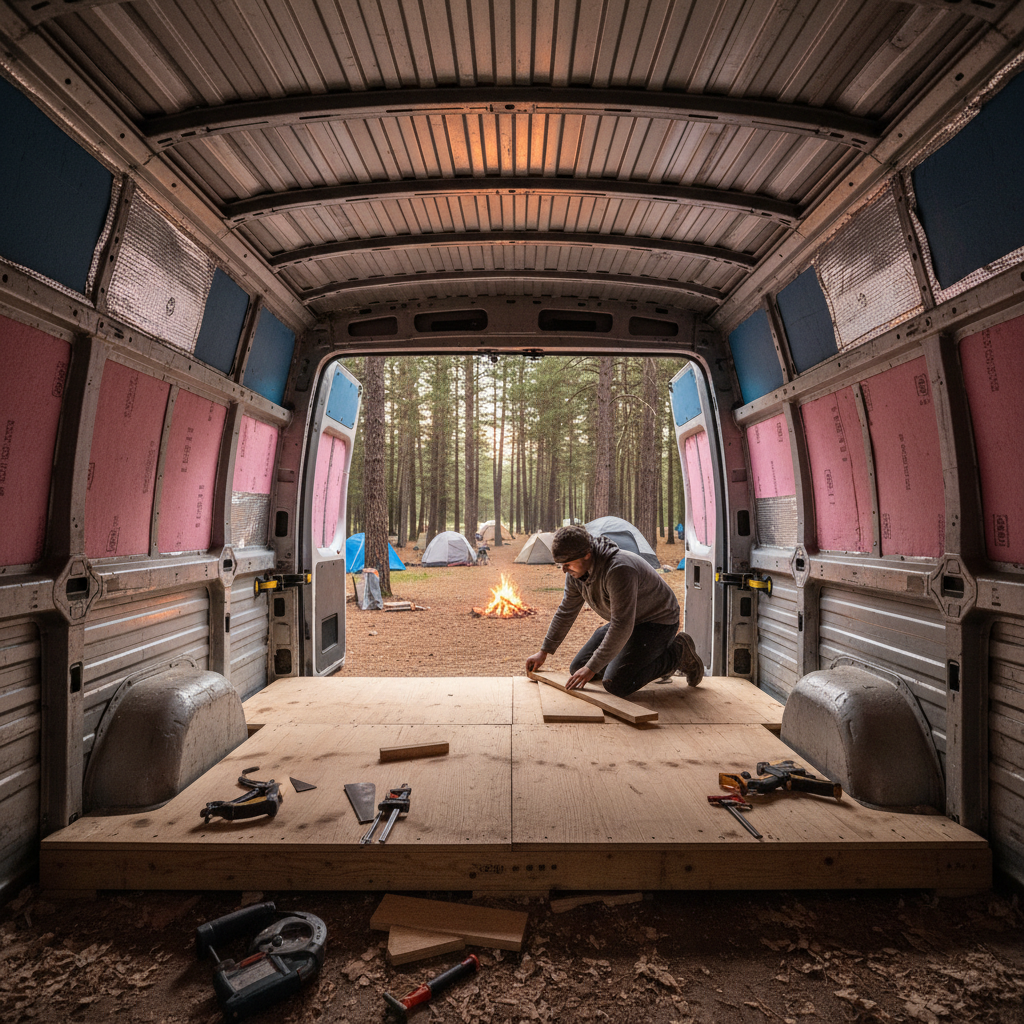
The custom build's actual advantage for beginners is layout control, but only if you plan before you build. The sequence matters enormously. Insulation goes in before walls. Electrical rough-in happens before cabinetry. If you build your bed platform and then realize you need to run a wire behind it, you're either pulling the whole platform or living with an ugly workaround. Buyers who skip detailed planning and just start cutting should know their error rate climbs fast, and wood and hardware costs add up quickly on a redo.
The Van Conversion subreddit (r/vandwellers) has well-documented build logs that show this sequence problem repeatedly. It's not a beginner failure, it's a planning failure. And planning is something a first-timer can control without any additional skill.
Check these four things before cutting a single piece of wood: your van's internal dimensions at the widest and narrowest points, the location of existing wheel well protrusions, where your electrical entry point will be, and whether you'll be building a fixed or convertible bed. That last choice determines almost everything else about your layout.
Comparing Kits and Custom Builds on the Criteria That Matter
Most comparison guides treat cost as the main variable. It's actually fourth on the list for beginners, behind timeline, layout fit, and error recovery.
Here's how the two approaches stack up on the dimensions that will actually determine whether you're happy with the result.
Before the table: these ratings reflect first-timer experience specifically. A builder on their third van would score custom builds much higher on timeline and error recovery.
| Criteria | Conversion Kit | Full Custom Build |
|---|---|---|
| Timeline to functional | 1-3 weekends | 6-16 weekends |
| Layout flexibility | Low (fixed by kit design) | High (fully configurable) |
| Upfront cost (furniture/structure only) | $1,200-$2,800 | $1,000-$2,500 in materials |
| Error recovery difficulty | Low (modular, swap components) | High (mistakes compound) |
| Van model compatibility | Narrow (Transit, Sprinter, ProMaster) | Any van |
| Resale value of components | Moderate (recognizable brand) | Low (custom cuts are van-specific) |
| Skill required | Basic assembly | Measuring, cutting, basic electrical planning |
The standout difference in that table isn't cost. It's the combination of error recovery and timeline. A kit's modular nature means a mistake is a component swap, not a reconstruction project. For someone who's never built anything and has a firm move-in date, that matters more than whether the storage layout is optimal.
When the Kit Path Fails and Custom Is the Only Answer
There's a condition where kits genuinely fail, and it's more common than the marketing suggests. If you're working with a high-roof extended Transit or a Sprinter 170, a kit's bed platform will almost certainly not reach the rear doors cleanly. The platforms are typically designed for the standard cargo area, and the dimensional variance between van trims is larger than most first-timers expect. You end up paying for a kit and then custom-cutting filler pieces anyway, which defeats the point.
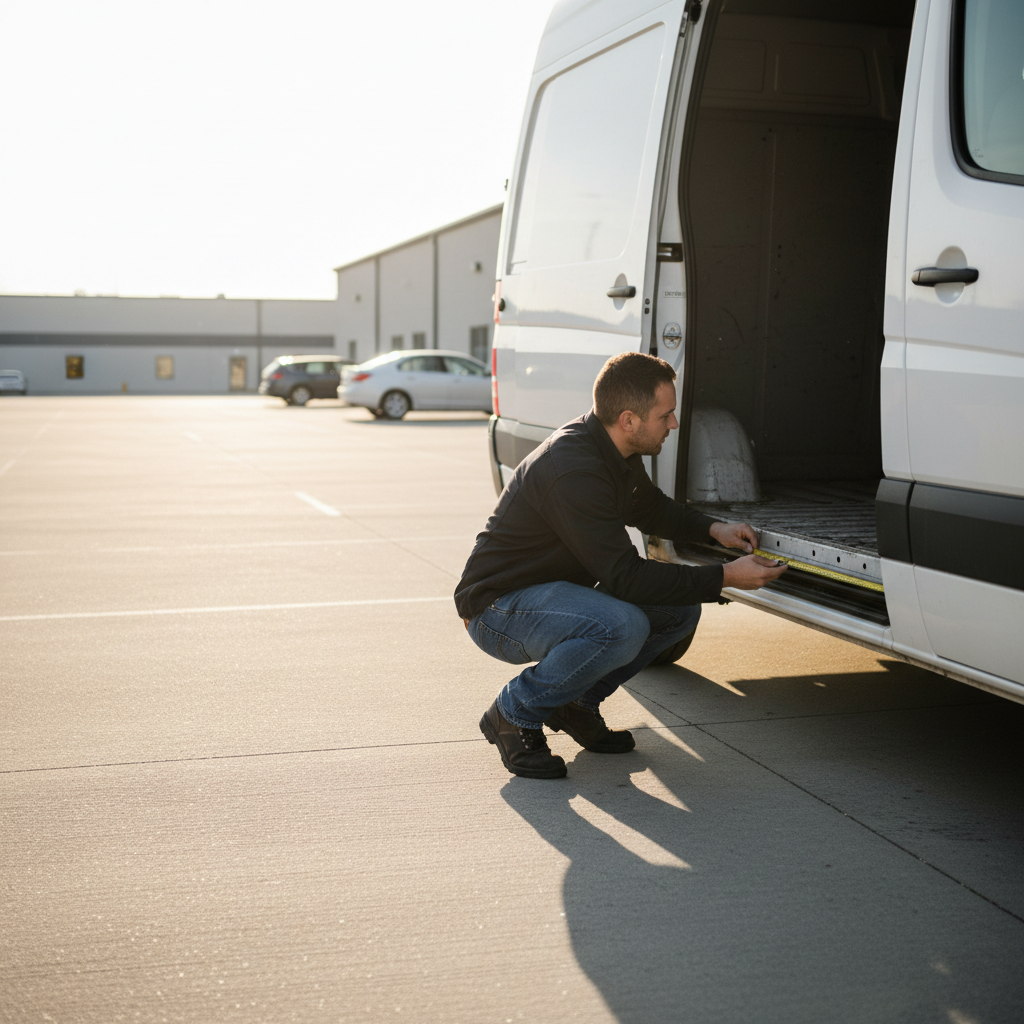
I'd start with a tape measure and your actual internal dimensions before you put a deposit on anything. Measure floor width at the wheel wells, at mid-van, and at the rear cargo area. If those three measurements differ by more than four inches, a prefab kit is going to leave gaps that bother you.
The harder case is the builder who wants a fixed queen bed oriented crosswise in a full-size van with a separate dedicated workspace. No current kit handles that layout. If that's your non-negotiable, you're building custom whether you like it or not. The question then is just how carefully you plan it.
If you ignore this entirely and buy a kit that doesn't fit your van's dimensions, the outcome is predictable: you spend a weekend assembling something that doesn't close properly, you either return it (possible with Decked, harder with others) or you modify it and void whatever warranty exists, and you've lost two to four weeks. That's a pain, and the time cost is worse than the money cost for most people on a hard timeline.
How to Decide: A Practical Framework
The decision comes down to four honest questions, not preferences or aspirations. Answer them with your actual situation, not the one you're planning for.
First: is your van a Ford Transit, Mercedes Sprinter, or Ram ProMaster in a standard configuration? If no, stop looking at kits and start with a custom plan. Second: do you have a functional deadline, a road trip, a job change, a housing transition, within three months? If yes, a kit almost certainly fits your timeline better. Third: do you have strong layout requirements, a fixed workspace, a specific sleeping configuration, storage for gear that doesn't fit standard modules? If yes, only a custom build can meet them. Fourth: what does your error budget actually look like? Not what you hope, but what you can afford if you tear out two weekends of work.
If you answered yes, yes, no, limited to those four questions in that order, a kit is probably the right path. Everything else points toward custom.
The reframe that matters here: a kit isn't a compromise version of a custom build. It's a different product category with a different value proposition. Treating it as a shortcut to the same outcome leads to disappointment in both directions, buyers who want a custom result and are annoyed by kit limitations, and custom builders who needed a kit's speed and got buried in a project that took four months.
A common guideline in builder communities is that first-timers underestimate labor time by 40 to 60 percent. That's not a precise figure, it's a heuristic based on forum reports and build logs, but the directional point is reliable: whatever you think your custom build will take, build in more time.
Making the Choice Stick
If the framework above points you toward a kit, buy for your van's exact trim level and verify the dimensions before ordering. Contact the supplier with your VIN if they offer that verification. Returns are available but not always easy, and shipping costs on large panels eat into any potential refund.
If the framework points toward a custom build, do one thing before buying materials: draw your layout to scale on paper or in a free tool like SketchUp, and trace your electrical rough-in on the same drawing. The single most common beginner mistake isn't a cut or a measurement. It's building furniture over a wire path you'll need later.
And if you're still genuinely unsure after working through those four questions? That uncertainty is itself data. It usually means your layout requirements are undefined, and starting a custom build with undefined requirements is how you end up rebuilding sections mid-project. Spend another week clarifying what you actually need before you spend a dollar on materials or a kit.