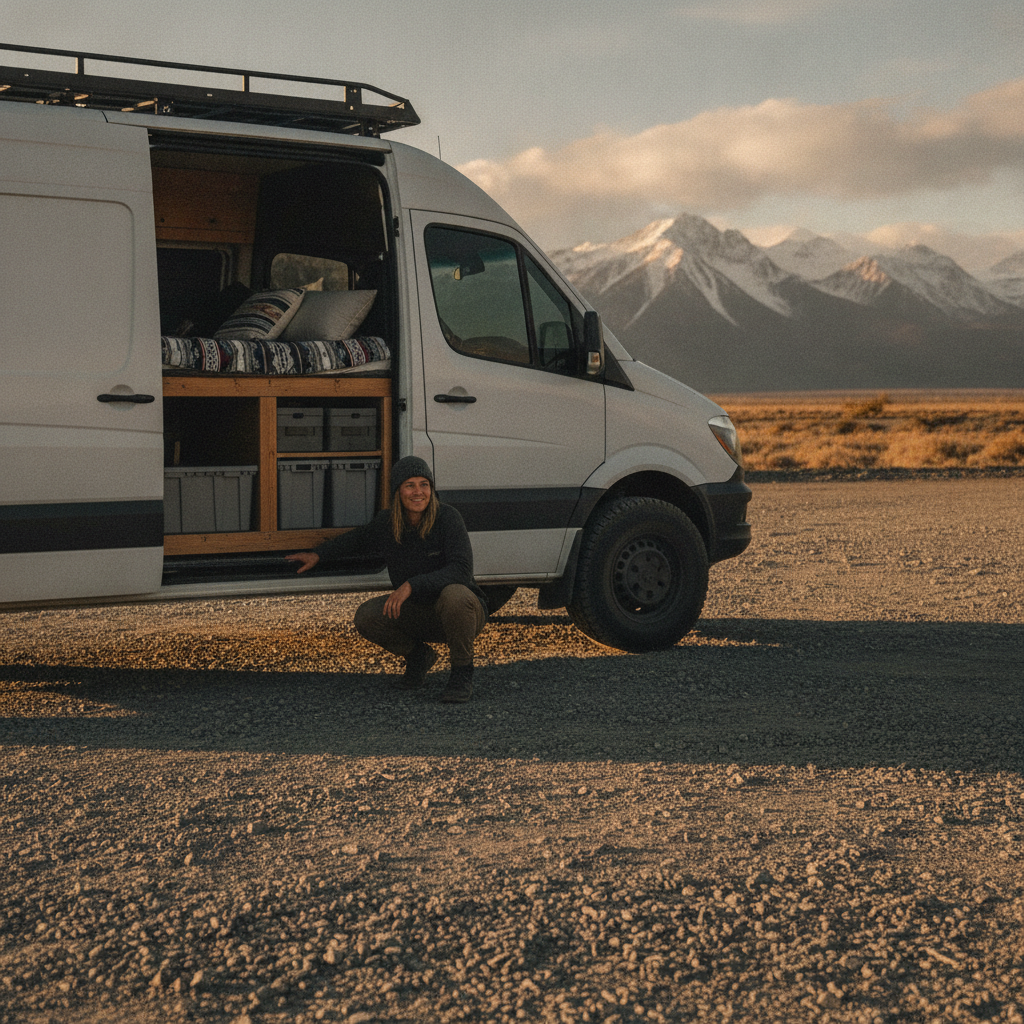





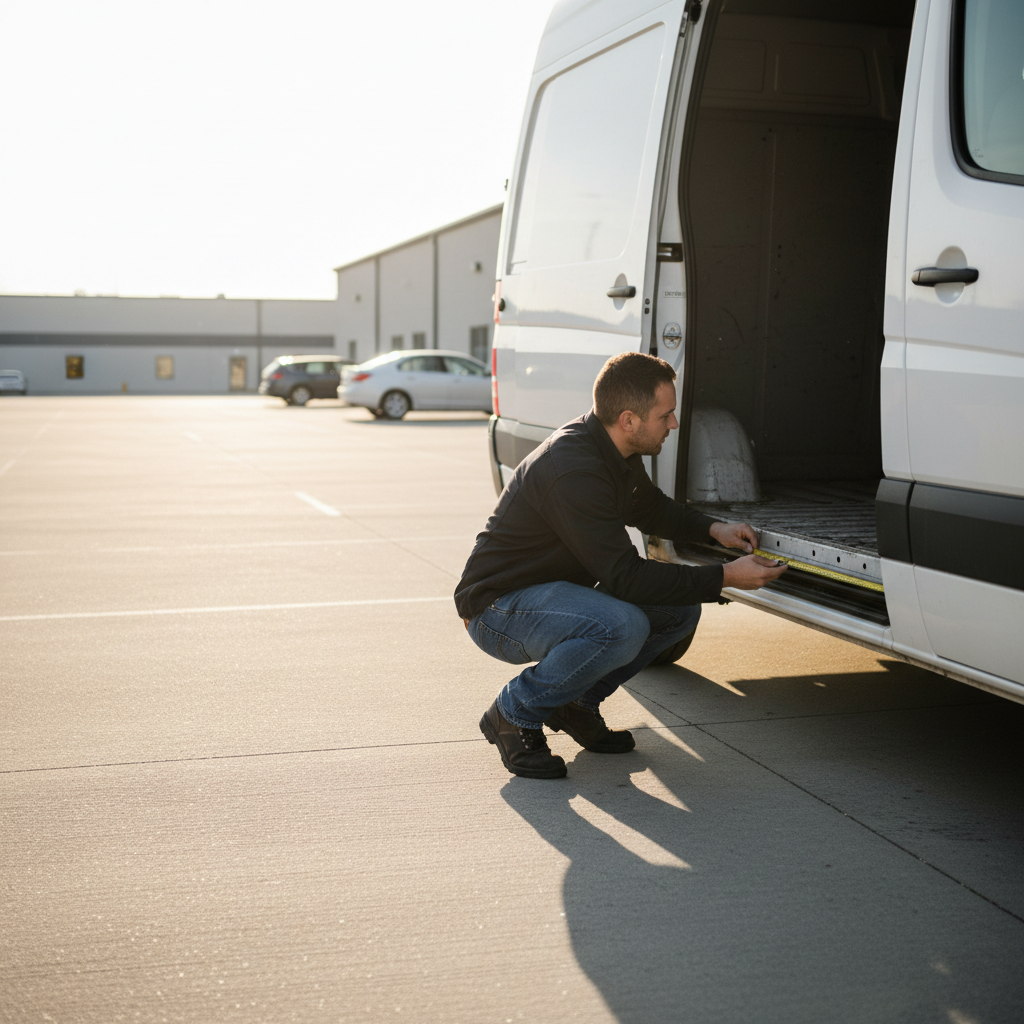



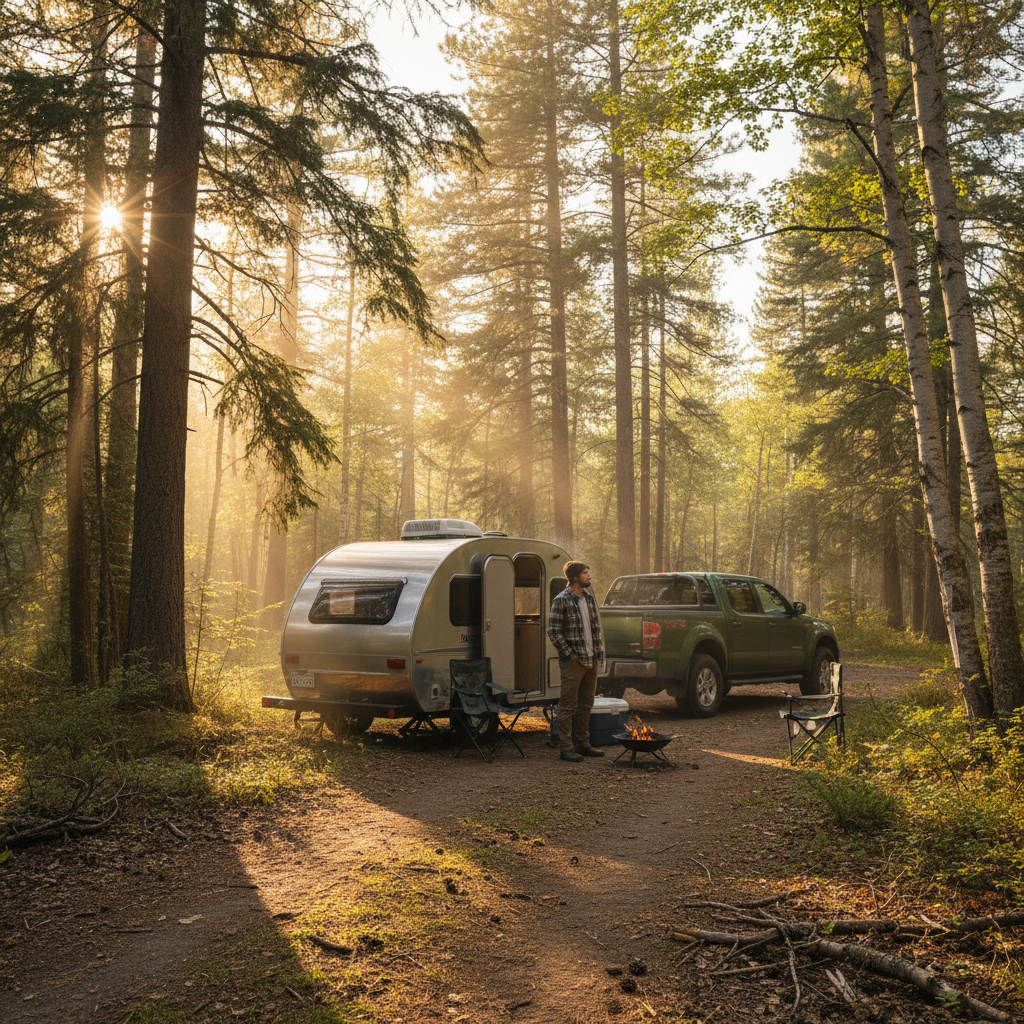
Dealers will tell you the Class B camper van is the most livable rig you can park in a regular campsite, and there's a reason they lead with that before discussing price. The class B van versus small travel trailer decision looks simple until you run the real numbers: purchase price spread, payload math, and the campsite access question that determines whether you can actually get where you want to go on weekends.
The gap between these two options is wider than most buyers expect. A well-equipped Class B from a brand like Winnebago or Airstream runs $120,000 to $160,000 new. A comparable small travel trailer, think 19 to 22 feet from a brand like Lance or Airstream Bambi, comes in between $25,000 and $55,000 new, with a decent used market starting well below that. That price gap doesn't disappear when you factor in the tow vehicle you already own.
What makes this genuinely hard is the access problem nobody mentions upfront: a Class B gives you a single vehicle that parks anywhere, but a trailer plus tow vehicle gives you a car at camp. Neither option is better in every scenario, and your answer depends on three variables most buyers don't think about until after they've signed paperwork.
The Real Cost Comparison: Sticker Price Is the Least of It
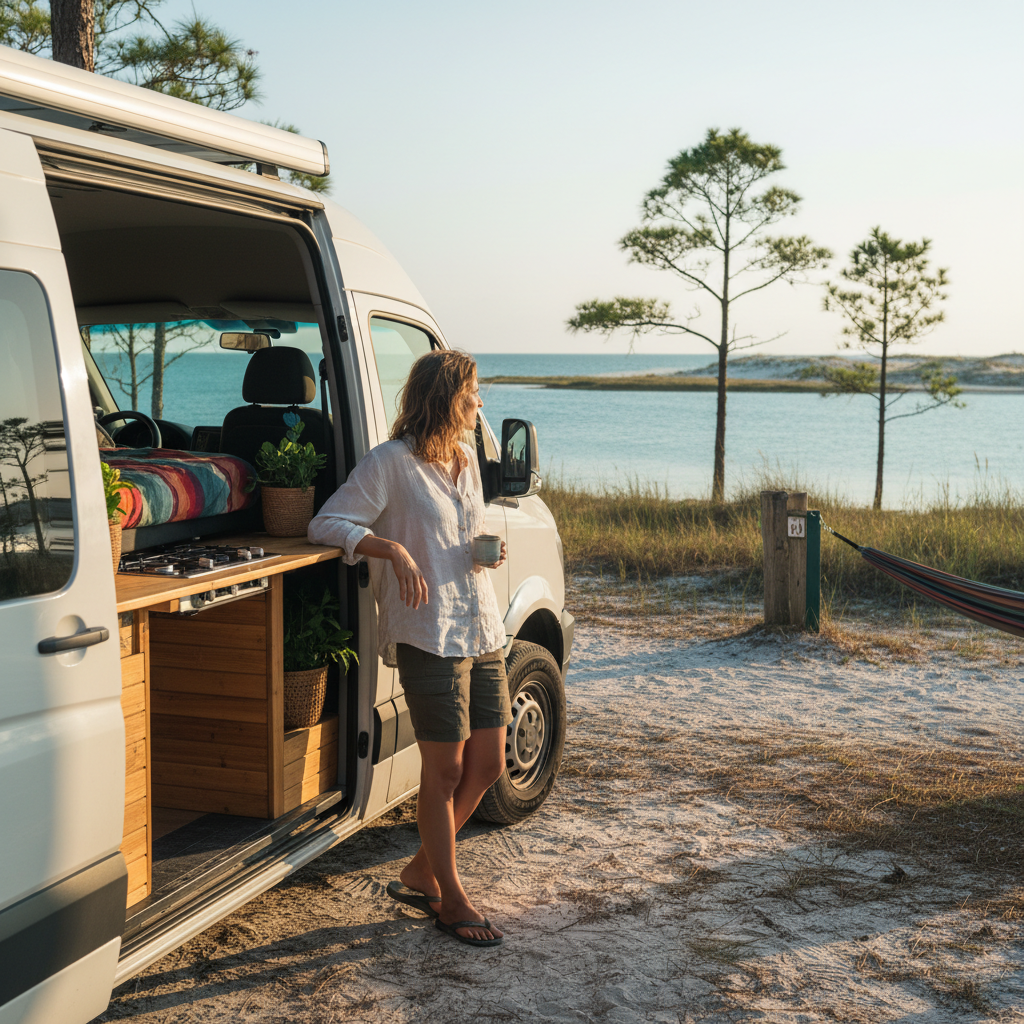
Start with total cost of ownership, not the sticker. A new Class B van from Winnebago (the Solis or Travato are the most common weekend-use examples) lists between $100,000 and $165,000 depending on floorplan and solar package. You're buying a motorhome, which means one vehicle does everything: it's your tow vehicle, your bedroom, and your camp kitchen. But it's also your only vehicle once you're parked.
A small travel trailer changes the math entirely. If you already own an F-150, a Chevy Silverado, or a midsize truck with a tow rating above 5,000 pounds, you can pull most trailers in the 19-to-22-foot class without buying anything additional. The trailer itself costs $25,000 to $55,000 new. That puts the all-in cost $60,000 to $100,000 lower than a new Class B, assuming the tow vehicle is already paid for.
Or rather: that framing understates the real tradeoff. The van buyer isn't just paying for a bed. They're paying to eliminate one set of maintenance cycles, one registration fee, and the psychological overhead of hitching and unhitching every trip. A trailer owner runs two sets of tires, two insurance policies, and a hitch setup that needs annual inspection. Those recurring costs add up to roughly $1,500 to $2,500 per year more than a single-vehicle setup, depending on insurance rates in your state and mileage. That's a practical heuristic based on typical multi-vehicle ownership costs, not a figure sourced from an insurer or the RV Industry Association.
The derived calculation that actually matters: if you camp 20 weekends a year and the van costs $80,000 more than the trailer package, you're paying $4,000 per year in capital cost premium for the van, before factoring in the higher fuel cost of driving a 20-mpg diesel van versus towing with a truck you already own. At 20 camping weekends averaging 300 miles round-trip, that's roughly 6,000 miles per year. The van averages 18 to 22 mpg; towing with a half-ton truck drops fuel economy from roughly 20 mpg to 13 to 15 mpg. At $3.50 per gallon, the trailer setup costs about $100 to $150 more per year in fuel on that mileage. The van's fuel advantage is real but not dramatic at weekend-trip distances.
Campsite Access and the Solo-Vehicle Advantage
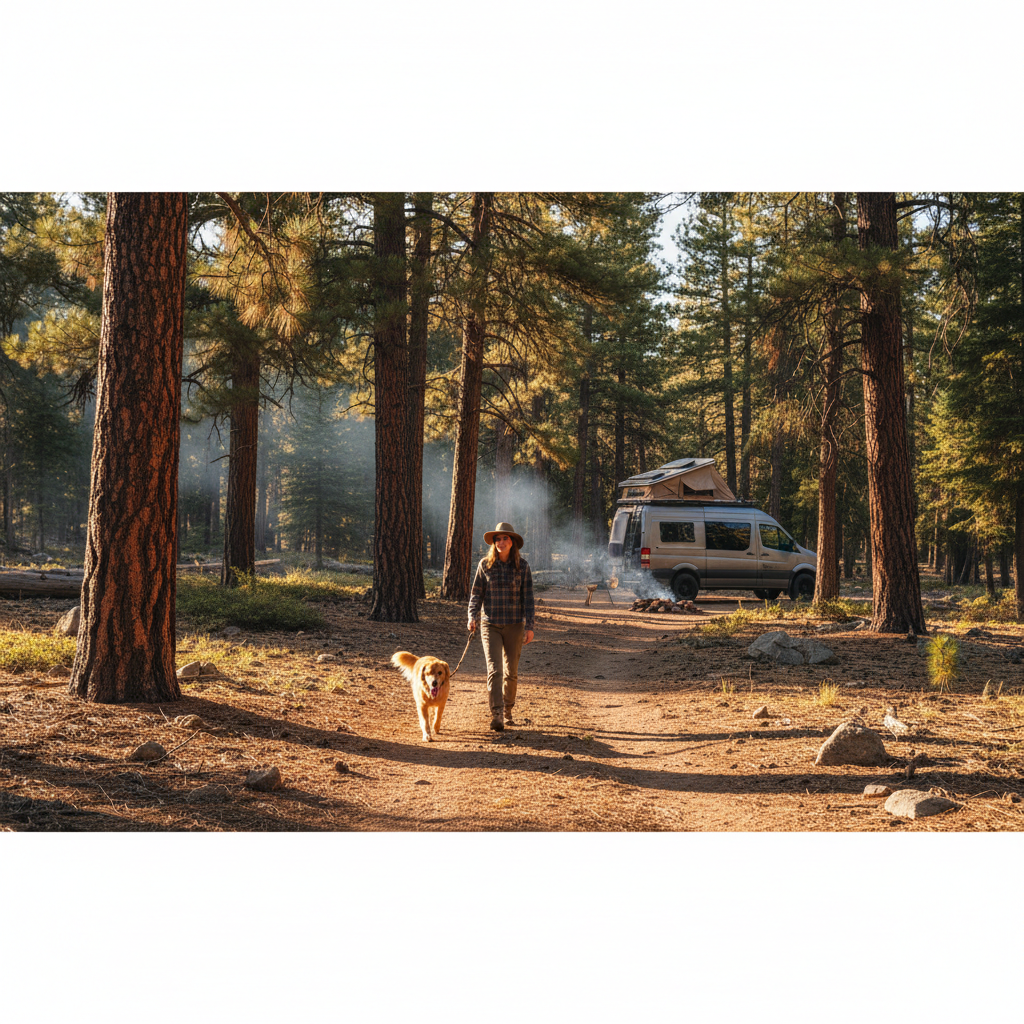
This is where the van wins, and it's decisive for a specific type of camper. National Forest dispersed camping, BLM land, and many state park overflow areas have sites that measure 30 to 40 feet from the road edge to the back of the pad. A Class B van is typically 19 to 22 feet long. A 20-foot trailer plus a full-size truck runs 45 to 52 feet combined. That combination locks you out of a meaningful portion of sites that the van can reach without any maneuvering anxiety.
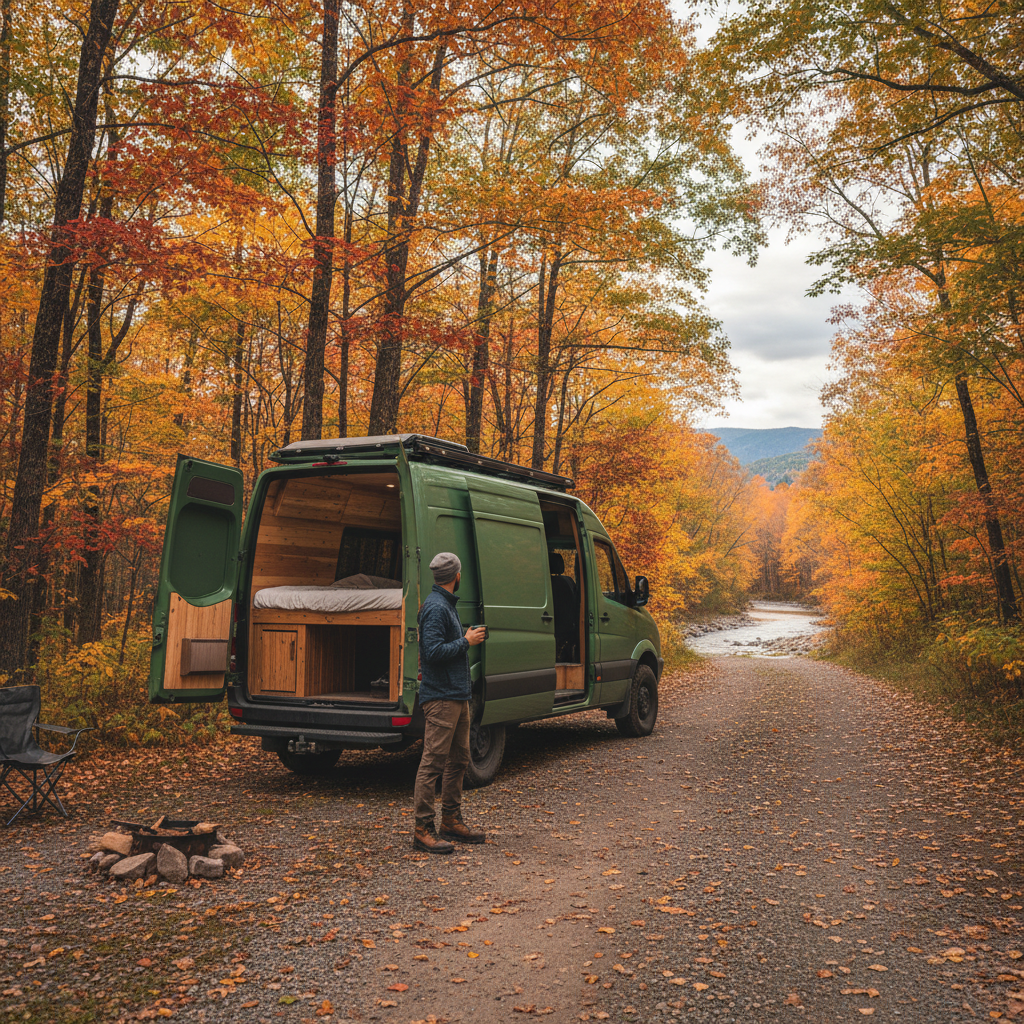
But the access advantage reverses once you're parked. The van is your only vehicle. If you want to drive into town for groceries, go mountain biking at a trailhead 8 miles away, or take a day trip without breaking camp, you're driving your bedroom. Trailer campers unhitch, leave the trailer level and stable, and drive the truck freely. At weekend-trip length, this matters more than people expect. You end up either over-planning your daily movements or driving the van more than you wanted to.
The most common mistake buyers make is optimizing for arrival and ignoring what life at camp actually looks like over a two-night stay. Think about campsite access, daily mobility, and setup time before you commit to either platform.
Buyers who skip past the access question end up in one of two frustrating positions: they bought a trailer they can't get into the sites they wanted, or they bought a van and feel stranded once they're parked. Neither is a failure of the rig. Both are failures of the decision process.
Living Space, Setup, and the Weekend-Trip Reality
Class B vans run 60 to 80 square feet of interior space. Small travel trailers in the 19-to-22-foot class run 100 to 140 square feet. That difference sounds modest until you're cooking dinner for two adults in rain with the door closed.
Setup time favors the van decisively. Pull in, level if needed, done. No slides to extend, no stabilizers to crank, no hitch to disconnect. A practiced trailer camper can be set up in 15 to 20 minutes. A van is set up in under five. On Friday night arrivals after a long drive, that gap matters.
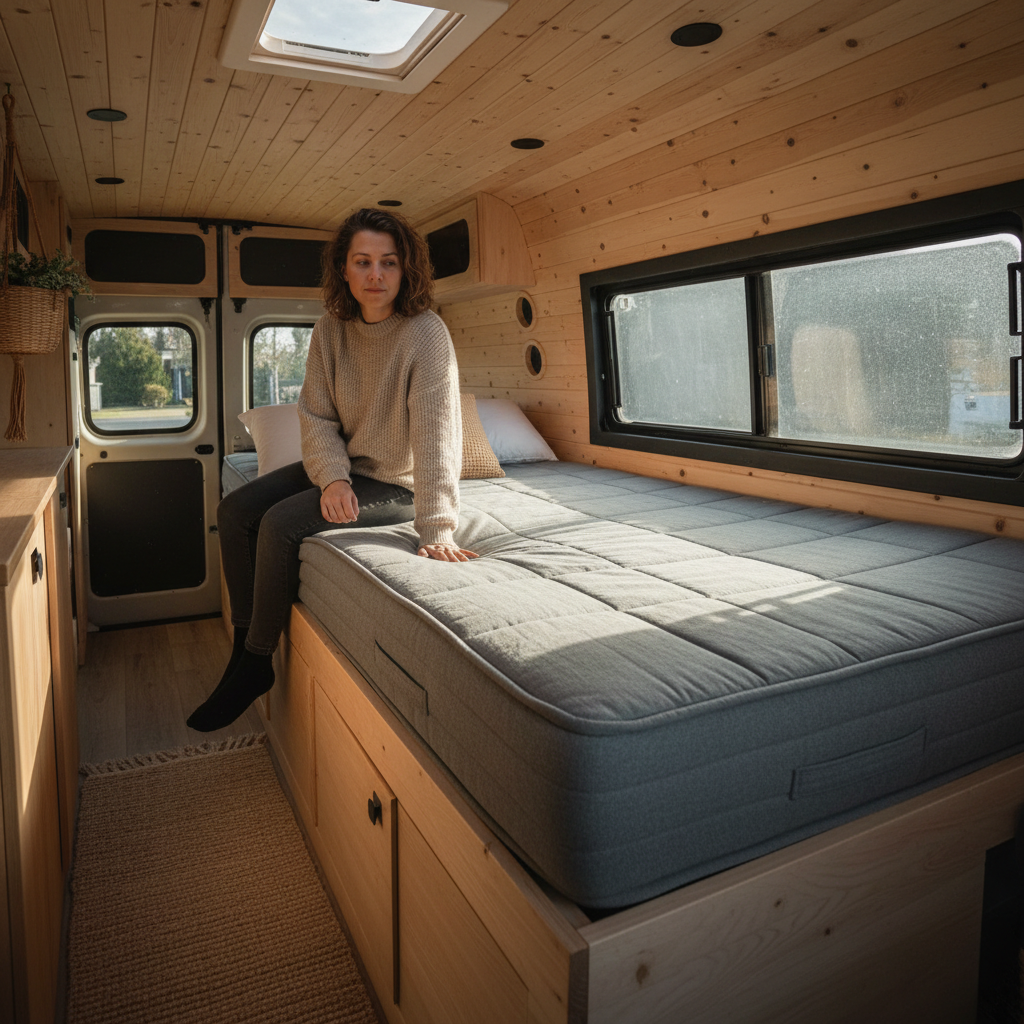
The sleeping situation deserves specific attention. Most Class B vans use a fixed queen bed or a bed that converts from the rear seating area. Fixed beds in newer Winnebago and Airstream vans are comfortable and genuinely usable without the nightly conversion ritual that plagued older Class B layouts. Small trailers in this size class typically have a fixed queen in a separate rear bedroom, plus a dinette that converts. For two adults without children, both options work. Add a dog or two kids and the trailer's extra square footage becomes non-negotiable quickly.
The reframe that changes how most buyers approach this: you're not choosing between a van and a trailer. You're choosing between mobility-at-arrival and mobility-at-camp, and those are genuinely different values. Deciding which matters more to you takes ten minutes and saves a six-figure mistake.
When the Van Is the Wrong Answer
The Class B camper van recommendation weakens fast in three specific scenarios. Know whether any of these apply before you spend the money.
First: if you camp with more than two people regularly, a Class B becomes uncomfortable in a way that compounds over a weekend. Two adults and two children in 70 square feet, with no option to step outside due to weather, is genuinely miserable. The trailer's separate bedroom and additional headroom aren't luxury. They're functional at that occupancy.
Second: if you already own a capable tow vehicle and your camping style leans toward established campgrounds with hookups, the van's price premium buys you nothing you'll use. Hookup-accessible campgrounds accommodate trailers easily, sites are longer and wider, and the daily-mobility problem disappears when the campground has a shuttle or you're staying put anyway.
Third: if you plan to use the vehicle as your primary daily driver, understand that a 20-to-22-foot van with a raised roof and a rear kitchen layout is a pain in urban parking garages, tight city streets, and any drive-through. Several Class B owners who made this compromise end up keeping the van for camping only and maintaining a separate commuter vehicle, which eliminates the single-vehicle efficiency argument entirely.
And if you ignore this distinction and buy the van for the lifestyle rather than the use case? You'll likely find yourself parking it for months between trips because the daily-driving friction is too high, which makes the per-use cost of that $140,000 vehicle genuinely difficult to justify.
Which One Is Right for Your Weekends
If you camp 15 or more weekends a year, you regularly target dispersed or primitive sites under 35 feet in depth, and you either travel solo or with one other adult, the Class B van earns its premium. The access, simplicity, and daily-use integration justify the cost at that use frequency.
If you camp fewer than 15 weekends a year, prefer established campgrounds, already own a capable tow vehicle, or camp with kids or a larger group, a small travel trailer in the 19-to-22-foot class delivers more livable space per dollar than anything else in recreational vehicles. I'd start with the Lance 1985 or the Airstream Bambi 16 depending on your budget, both have strong resale value and dealer networks that matter when something breaks three states from home.
This article covers weekend and short-trip camping decisions for two to four occupants. It is not addressing full-time living, cross-country extended travel, or the Class C and Class A motorhome categories, which involve a different set of tradeoffs entirely.
Check your tow vehicle's payload rating before you buy any trailer. Not the tow rating. The payload rating, which accounts for passengers, gear, and tongue weight simultaneously. Plenty of buyers discover their three-quarter-ton truck is already at or near payload capacity with two adults and camping gear before the trailer tongue weight is added.
The Decision in Plain Terms
If the Class B van fits your site access needs and you camp frequently enough to justify the price, buy the van. If it doesn't, the trailer package delivers more space, more money left in your account, and more flexibility at camp.
The variable that decides it isn't lifestyle preference. It's whether you spend more of your camping time getting to a site or living in it. Van buyers optimize for getting there. Trailer buyers optimize for being there. Neither is wrong. But only one of them is right for how you actually camp.
Run your specific numbers: typical site length at the campgrounds you use, how many nights per year you actually go, and whether your tow vehicle is genuinely rated for the trailer you're considering. Those three inputs resolve the question for most buyers faster than any amount of forum reading.