
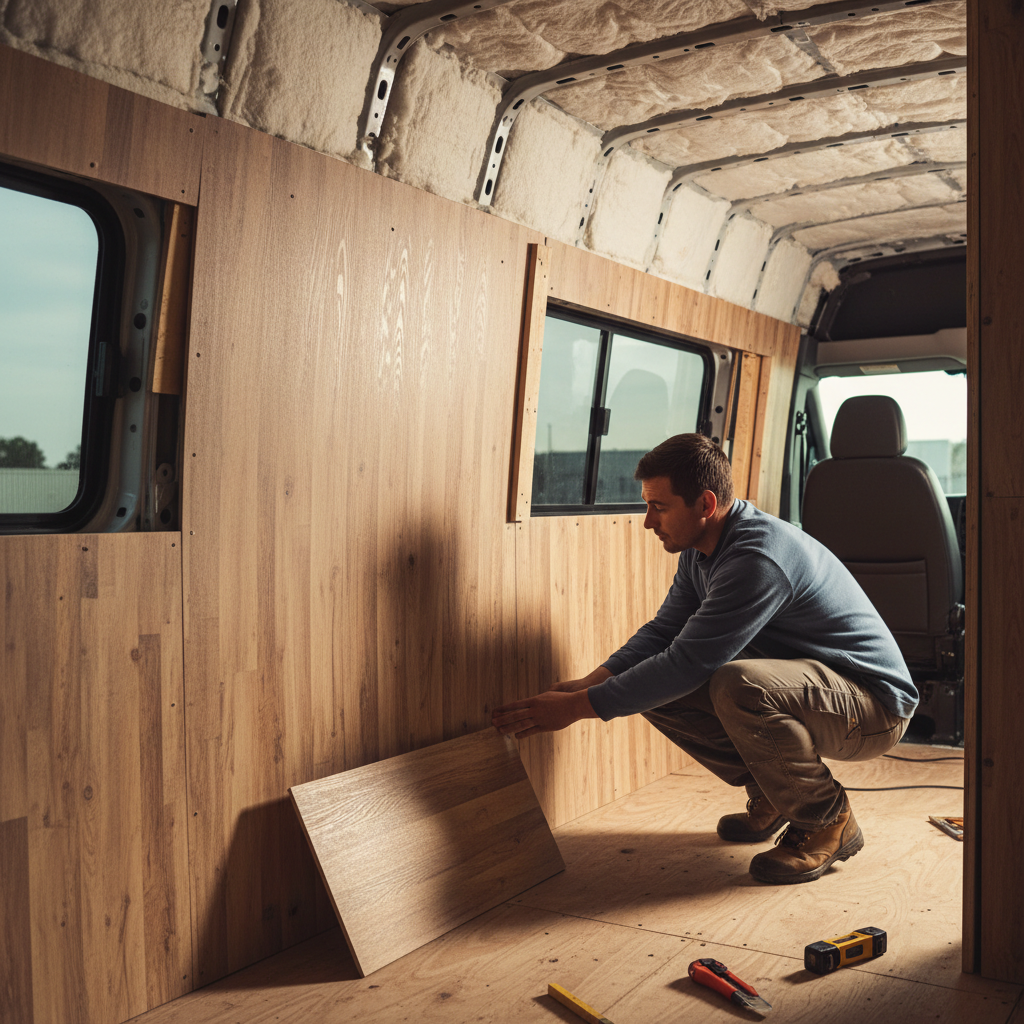



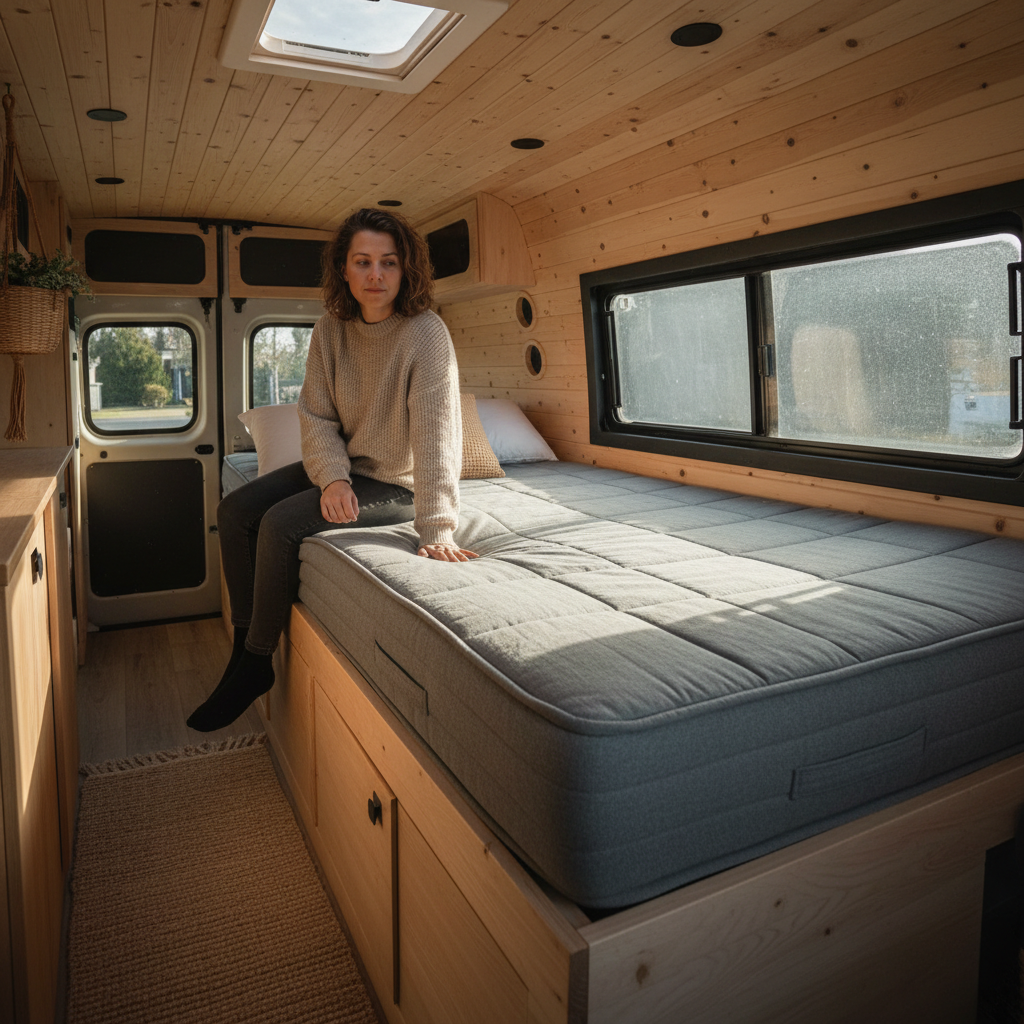











A Transit cargo van with a high roof clears 81.5 inches of interior standing height, and that number quietly determines whether your first build feels like a home or a crouch. Before you ever talk wheelbase or drivetrain, roof height is the decision that shapes everything else.
The choice between high-roof and low-roof vans isn't only about whether you can stand up straight. It folds in your parking reality, the aerodynamic penalty you're willing to absorb on fuel, whether you're building a mobile office or a weekend hauler, and how seriously you take the resale market. Builders who've done this before will tell you that standing height is the one thing you can't retrofit.
Here's the tension nobody spells out clearly: the high roof gives you a livable interior, but it costs you access to a significant share of parking structures in dense American cities. The low roof keeps doors open, literally, but trades vertical comfort for that freedom. If you park mostly on city streets or in covered garages, that tradeoff deserves more weight than most guides give it.
What Roof Height Actually Controls
Roof height isn't a comfort preference. It's a structural decision that cascades through your entire build.
Interior height determines whether you can install a full-length bed platform and still sit upright on it, whether your cabinetry can reach a functional storage volume, and whether another person can move around the van while you're cooking. A high-roof Transit or Promaster delivers roughly 81 to 83 inches of raw interior clearance before any floor build-up. Subtract a 2-inch subfloor and you're at 79 to 81 inches. A six-foot person is 72 inches tall. That's a real margin.
A low-roof or medium-roof van lands somewhere between 53 and 66 inches of interior height depending on model and trim. You're not standing. You're duck-walking, and over a weekend trip that's tolerable, but over three weeks on the road it accumulates into genuine fatigue.
Or rather: it's not just fatigue. Chronic low-ceiling living changes how you organize a build entirely. Low-roof converters typically shift toward a longitudinal bed that runs front to back rather than side to side, which eats into living space differently. Storage must go horizontal instead of vertical, which means more floor footprint consumed. The build logic is different, not just the height.
That said, the aerodynamic drag penalty of a high roof is real and worth naming. High-roof vans typically see fuel economy drop by 2 to 4 mpg compared to their low-roof equivalents, according to data shared across platforms like Farout and Expedition Portal community logs. On a 400-mile driving week, that difference adds up to roughly an extra tank of gas per month at current US prices. For daily commuters doubling as weekend adventurers, that's a real operating cost, not a rounding error.
The Parking Problem Is Bigger Than You Think
Buyers often underestimate this one until they've already committed.
High-roof vans typically stand between 9 feet and 9 feet 6 inches in overall exterior height. The majority of US parking structures are built to a 7-foot clearance standard, with some newer builds reaching 8 feet 2 inches. That gap isn't bridgeable. A high-roof Transit will be locked out of airport parking garages, most hospital decks, many downtown commercial garages, and a meaningful slice of big-box retail lots with covered sections.
If you're living in a city and using the van as a daily driver, run your own audit before buying: check whether your workplace parking, your regular grocery store, and your gym have covered structures. If three or more are covered and low-clearance, a high-roof van will tax you every single week. This isn't a scenario problem. It's a logistics problem that doesn't go away.
Low-roof vans, by contrast, fit almost everywhere a standard SUV fits. That's a genuine operational advantage for urban converters who want a stealth build, park in residential neighborhoods, or depend on covered parking year-round.
And stealth is worth a sentence here. A high-roof van reads as a commercial vehicle or a live-aboard immediately. Low-roof vans in white or grey are nearly invisible in suburban neighborhoods. For people who park on city streets overnight, that distinction matters more than any interior dimension.
Which Reader Should Actually Choose Low Roof
This article is aimed at people choosing their first van for conversion. It's not a guide for commercial cargo haulers, fleet operators, or people buying a van purely for passenger transport. If that's your situation, roof height decisions follow a completely different logic.
For conversion-focused buyers, the low-roof van makes sense under a specific set of conditions: your drives average under three hours, you sleep in a fixed bed that doesn't require sitting height above the mattress, you park regularly in covered structures, and your budget is meaningfully constrained. Low-roof vans typically sell for $3,000 to $6,000 less than their high-roof equivalents in the used market, and the simpler build reduces material and labor costs further.
Weekend warriors, surfers, skiers, and cyclists who need a mobile gear locker more than a mobile apartment are genuinely well served by a low-roof setup. So are people building a van as a secondary vehicle rather than a primary residence. If you're not sleeping in it more than 15 nights a year, standing height is probably not worth the fuel penalty and parking friction.
But if you're planning a full-time or near-full-time live-aboard setup, the calculus flips hard. Tall builds with proper insulation, a bed you can sit on, a countertop at elbow height, and 12-volt systems that need overhead routing all benefit structurally from high-roof clearance. The most common mistake I see in first-time build planning is underestimating how much daily comfort depends on not having to think about your head.
High Roof vs. Low Roof: The Core Tradeoffs
Here's how the two configurations compare across the dimensions that actually determine daily satisfaction.
| Factor | High Roof | Low Roof |
|---|---|---|
| Interior standing height | ~81-83 inches (pre-build) | ~53-66 inches |
| Parking clearance | Fails most covered structures (7-8 ft) | Fits nearly anywhere |
| Fuel economy impact | 2-4 mpg reduction (aerodynamic drag) | Minimal penalty |
| Used market price premium | $3,000-$6,000 higher typically | Lower entry cost |
| Stealth potential | Low (clearly a camper van) | High (reads as work van) |
| Build complexity | More vertical space, cleaner routing | Forces horizontal layouts |
| Best for | Full-time, live-aboard, tall occupants | Weekends, urban daily driver, stealth |
None of these rows works in isolation. A person who is 5 feet 4 inches tall, parks in a covered deck, and takes weekend trips twice a month is looking at a fundamentally different recommendation than someone who is 6 feet 2 inches, works remotely from the van, and travels rural highways. Read the table as a checklist for your specific situation, not as a verdict.
When the High-Roof Advantage Disappears
High roof is the right answer for most full-time converters. That framing misses something.
The high-roof premium weakens considerably if you're building in a very hot climate and have no plan for roof ventilation and insulation above the headliner. Without a quality fan and proper spray foam or rigid board insulation overhead, high-roof vans become heat traps. The greater interior air volume takes longer to cool, and roof surface area exposed to direct sun is dramatically larger. Builders in the Southwest who skip this step often report interior temperatures that make the standing room irrelevant because the van is unusable from noon to 4 PM.
It also weakens if you're planning a rooftop solar array without first checking the weight limits on your specific chassis. High-roof vans don't automatically support heavier rooftop loads. Ford's Transit documentation, for example, specifies roof load ratings that vary by trim, and exceeding them affects handling and warranty coverage. Check the figure for your model year before buying panels.
And the high-roof recommendation fails entirely if you need to store the van indoors. Home garages built to standard residential code have a door opening of 7 feet. A high-roof Transit won't fit. If your long-term storage plan involves a residential garage, you either need to confirm interior clearance or move to a low-roof configuration. Discovering this after the build is a real scenario, and it happens.
How to Make the Call
Start with three inputs before anything else: your height, your primary parking situation, and how many nights per year you'll sleep in the van. Height, parking, night count. If you're over 5 feet 10 inches and planning more than 30 nights annually, high roof is almost certainly right. If you're under 5 feet 8 inches and park in a covered structure more than three times a week, low roof deserves serious consideration regardless of trip length.
I'd start by physically standing in both configurations before committing. Transit Connect dealers often have high-roof and standard-roof Transit vans on the same lot. Spend ten minutes in each. The difference between 66 inches and 82 inches isn't fully legible on a spec sheet.
If you ignore the parking reality and buy high-roof for a daily urban commute with covered parking, you'll spend real energy every week rerouting, paying street parking fees, or absorbing the friction of a van that doesn't fit your actual life. That friction compounds. People who made this mistake and sold within 18 months typically list parking as the primary reason.
The reframe that matters here: roof height is not a comfort upgrade on top of a working vehicle. It's a decision about which version of your life the van can participate in.
Your Next Step
If your parking situation is mostly uncovered and you'll sleep in the van more than 20 nights a year, buy the high-roof configuration and don't second-guess it. If covered parking is a regular constraint, do the garage audit first, list every parking location you use more than twice a month, and check clearance before signing anything.
Get into a physical van before you finalize. Bring the tallest person who'll use it. Stand in it, cook a meal in your imagination, sit on a platform bed. The spec sheet won't tell you what your neck will know in 30 seconds.